English
 Español
 Français
 Deutsch
 Italiano
 Português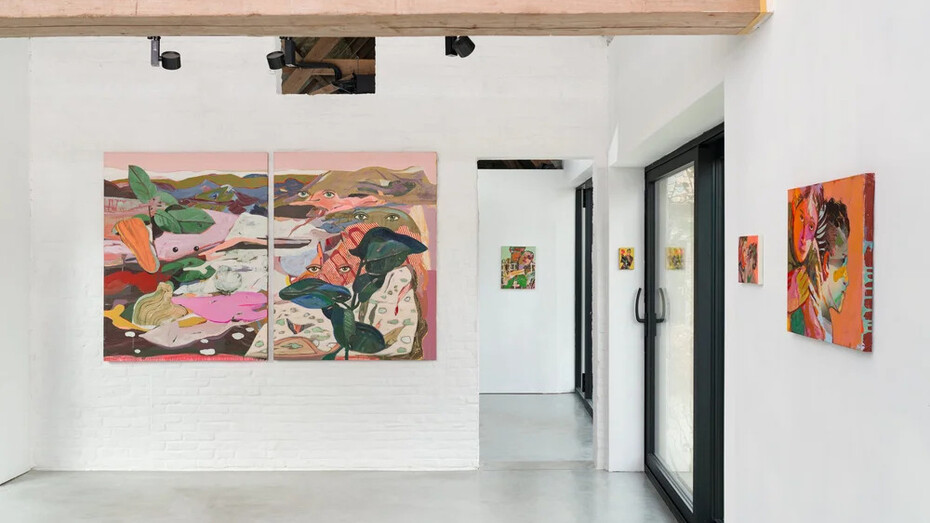
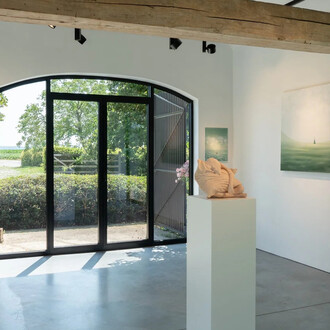
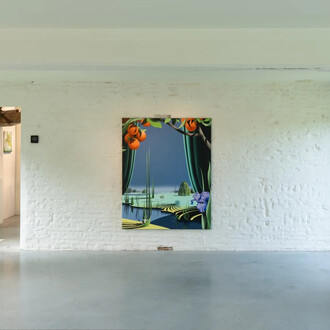
Tschiegg (b.1966, Mulhouse) has been chasing color for 30 years, capturing portraits, still life and landscapes in vibrant tones. Her paintings defy genre as she plays with abstraction. Allowing her pieces to take on minds of their own, Tschiegg revels in imbalance and spontaneity.
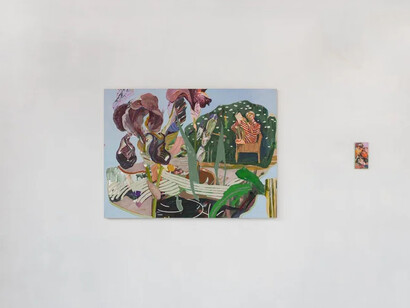
Colors of love explores how color becomes a language for intimacy, memory and emotional connection. For Tschiegg painting is not a representation of the world as it is, but as it is felt: layered, unstable and deeply relational. Bodies, gardens, animals and landscapes flow into one another, forming spaces where affection, vulnerability and desire take visual form.
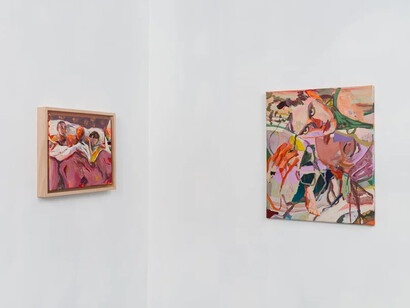
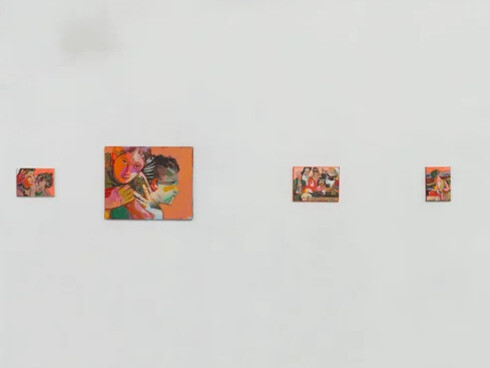
At the heart of these works lies the presence of a beloved figure. Lovers appear sleeping, embracing, or simply sharing space — sometimes clearly visible, sometimes dissolved into color and form. The beloved is not portrayed as a fixed portrait, but as a recurring presence: a body remembered through touch, warmth and proximity rather than through precise features.
Figures gradually lose their contours and merge into their surroundings. Environmental elements become abstract, while bodies and skins begin to function as landscapes themselves. Only the eyes often remain fully recognizable — floating within color, embedded in layered surfaces, or emerging from blurred forms. Plants, bodies and space collapse into a single visual field, where distinction gives way to entanglement.
Color plays a central role in shaping this emotional world. Acid greens, dusty pinks, warm oranges and deep violets carry emotional resonance rather than symbolic meaning. They function as emotional temperatures — traces of longing, comfort, desire, or loss. Through layering and revision, time becomes visible: love is not a single moment, but something that accumulates, fades and returns.
The garden emerges as a recurring metaphor for love itself: a space that must be tended, where growth and decay coexist. It is both a physical setting and a psychological landscape, where memories take root and intimacy unfolds slowly.
Colors of love ultimately presents love as a form of perception — a way of seeing shaped by closeness, attention and shared experience. These paintings invite us into a world where affection becomes space, memory becomes color and the beloved remains present even in absence.