English
 Español
 Français
 Deutsch
 Italiano
 Português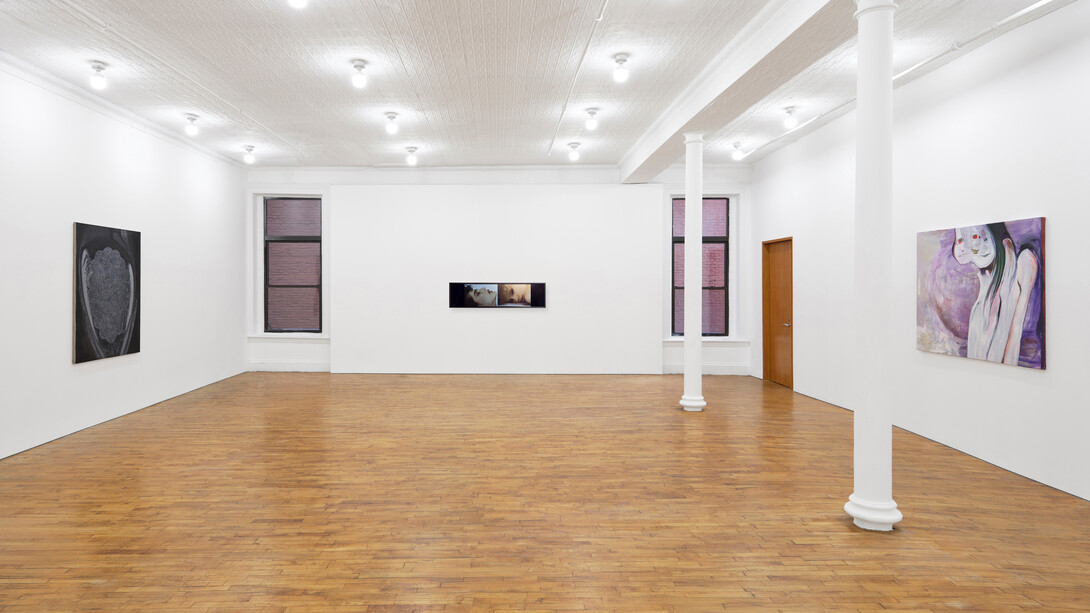
Rare aesthetic: driving to Newark airport in the morning. Rare aesthetic: rural middle school in 2012. Rare aesthetic: texting a situationship during a family roadtrip. Rare Aesthetic: surreal old cartoons. Rare aesthetic: when aesthetic was aesthetic. The TikTok trend Rare Aesthetic began as a joke about the internet’s seemingly unlimited capacity to produce microcultures, but quickly transformed into something else: slideshows of images, often innocuous smartphone pics, accompanied by highly specific, highly relatable, usually nostalgic captions. Some will resonate immediately, others remain inscrutable; we didn’t all have that strange toy growing up, and we don’t all know what it’s like to be a “divorced librarian.” As social media increasingly professionalizes, Rare Aesthetic does something that in itself might be nostalgic – it disturbs the feed with truly amateur, truly weird, but also completely banal, content. It brings social media back to its absurdist origins.
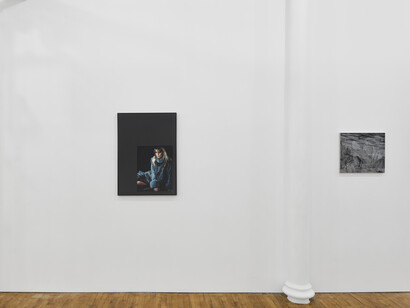
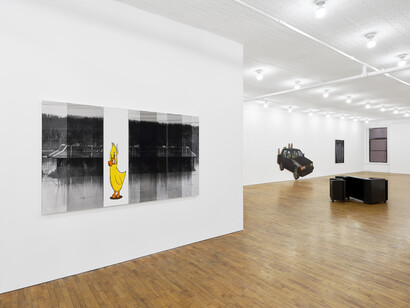
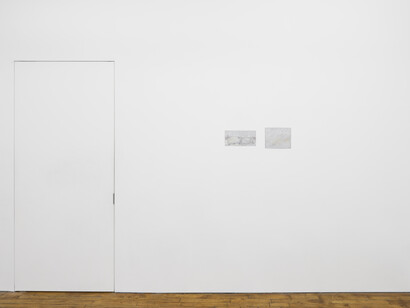
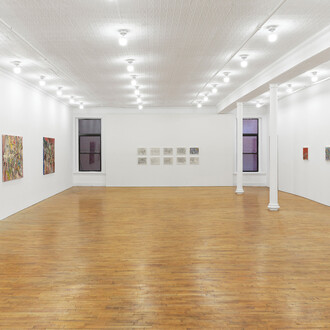
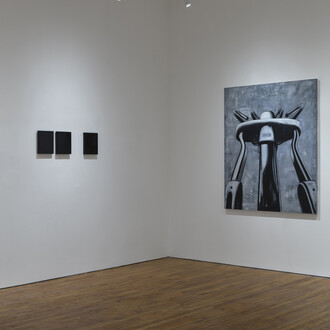
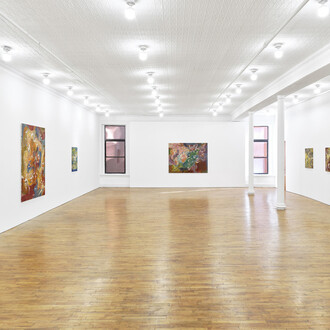
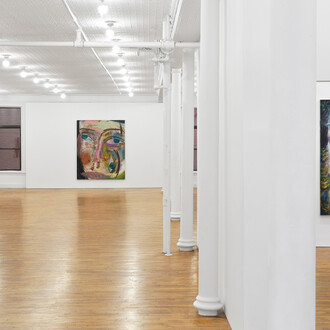
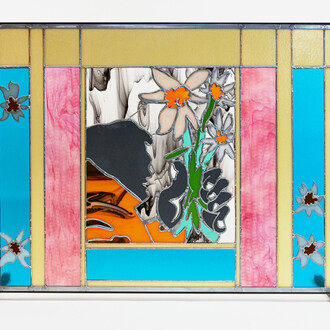
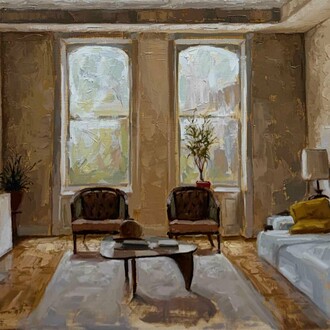
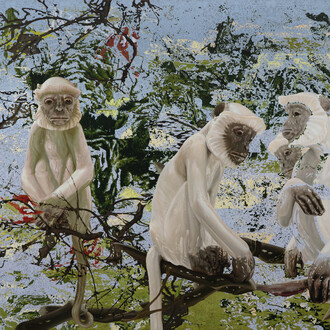
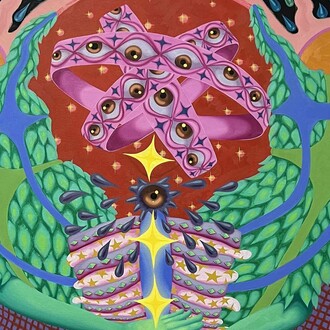
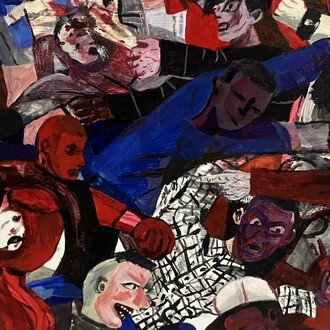
The exhibition Rare aesthetics gathers together works by Vikky Alexander, Nancy Dwyer, and Julia Wachtel, all artists whose practices surfaced in the wake of paradigmatic 1980s exhibitions like Pictures and infotainment, and places them in conversation with a number of emerging artists, including Katherine Auchterlonie, Sophie Giraux, Madeleine Ray Hines, Connor Marie Stankard, Sofia Sinibaldi, Marius Steiger, and Alix Vernet. While the artists in this constellation are not stylistically unified, they all share a sustained engagement with how images are produced, circulated, and internalized. Conceptually heterogeneous as well, these artists contend discretely with the processes by which images both structure and elicit desire. But rather than confronting or critiquing image culture directly, they more often attend to the image’s affective dimensions, foregrounding atmospheric renderings of interiority, ambient traces of cultural detritus, or playful evocations of social performance within their work.
Some works on view also serve as meta-commentary on the formation of cultural
nostalgia: Vikky Alexander’s photographic appropriations of fashion editorials – Blue of
noon, 1980 – may have appeared knowingly commonplace when they were first exhibited,
but through time they have become evocative of a glamorous lost world, a Rare Aesthetic.
Although created more recently, Julia Wachtel’s painting Flood, 2024, and Nancy Dwyer’s
Lazy girl, 1989, both extend formal strategies devised by the artists in the second half of
the Twentieth Century, carrying their incisive social observations into the present. As
suggested by Dwyer’s humorous flip on La-Z-Boy furniture, questions of gender, and
particularly its codification through imagistic representation, are never far from mind.
If all of these artists seem to revel in pop imagery and phrasings, it makes sense their
digital-native companions would turn more decisively toward material abstraction,
seemingly allegorizing the ways in which we interface with images through screens or
encapsulating the lingering feeling left by a glut of content.
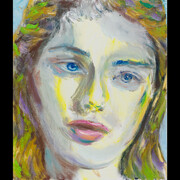
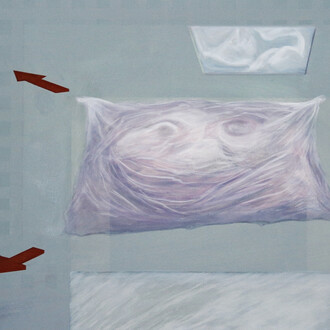
The Rare Aesthetic here is more closely linked to the subjective experience of consuming the algorithm – swiping or skimming or doomscrolling content – than it is to a reflection upon the cultural past. Through markedly different approaches, Sophie Giraux, Madeleine Ray Hines, and Alix Vernet all deal in residual imprints, signs of wear or indices of process, traces of things left behind. Elsewhere, Sofia Sinibaldi aggregates photographs and scanned imagery into densely layered abstractions; the source photographs capture ordinary experiences on the street, yet in composite they appear to function as afterimages, hazy impressions left by visual overstimulation. There are outliers, too: Katherine Auchterlonie’s Pillow Study, 2025, serves here as a counterpoint, a gestural depiction of sustained observation; and Connor Marie Stankard’s portraits return us to the contentions of gendered subject formation through digital media. One final splashy disruption is provided by Marius Steiger’s Car (A still life for the drunken ones), 2026, a largescale painting of a Volvo sedan. The Volvo is topped by trompe-l’oeil alcohol bottles and apples, the latter one of Steiger’s recurrent motifs, but the graphic rendering of the vehicle itself is more real than real – a moment of screen-space crashing into the gallery.