English
 Español
 Français
 Deutsch
 Italiano
 Português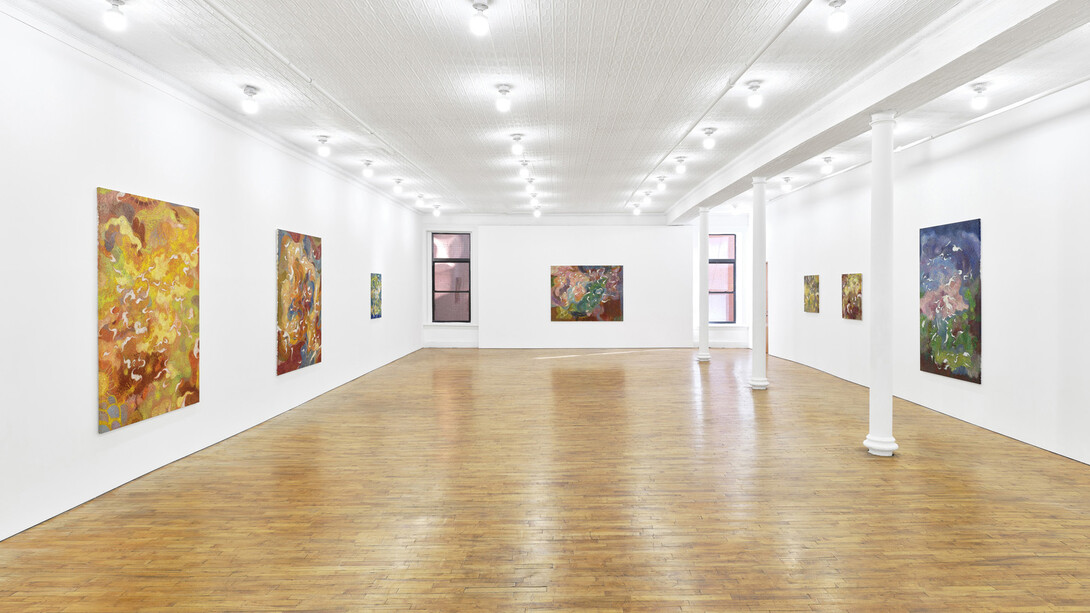
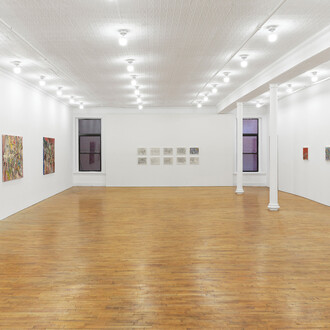
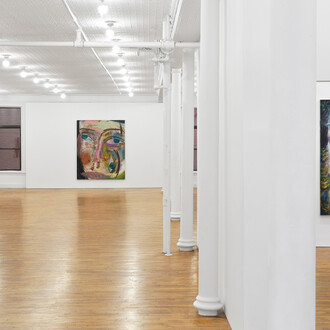
Tara Downs is pleased to present Even when the gods lose their will, the afterglow remains, the gallery’s inaugural exhibition with Yirui Fang. Comprising a new body of paintings, the exhibition also marks the first solo presentation of Fang’s work in the United States.
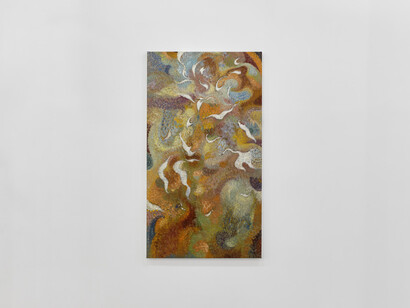
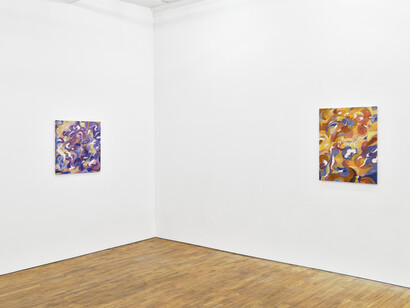
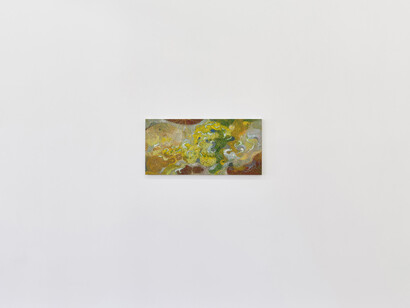
Informed by Greek mythology, processes of Western modernism, and the poetic cadences of Chinese calligraphy, Fang’s densely layered works construct a richly multivalent approach to painting. Educated in both Shandong and Venice, where he is now based, Fang produces a memorable cross-pollination of historical lineages, conjuring a sense of hybridity that animates his work. The compositional play between abstraction and representation inherent to Chinese landscape painting and the sumptuous surfaces of fresco painting coalesce in works that dwell upon natural harmonies and discordances, stasis and fluidity. One might intuit echoes of Seurat or Signac in their dappled brushwork, which obscures the artist’s hand. The omnidirectionality of each painting – and each painting’s lack of a clear horizon line – deepens these correspondences, and might also elicit associations with additional forms, including thangka, vividly colored scroll paintings depicting Buddhist deities.
Yet as much as Fang may draw upon these lineages, he also appears invested in his own modes of world-building and mythicizing. If we are to think of these paintings, in part, as thangka, then they are thangka without deities. Their absence attests to Fang’s notion of his work as a reconciliation between the spiritual practice of painting and a secular, atheistic, or post-mythological world. Drawing upon a number of thinkers, including Hannah Arendt, Maurice Merleau-Ponty, and the novelist Yu Hua, Fang conceives of light not as a divine force, but as, after Merleau-Ponty, “a way in which the world presents itself,” a device of human action, presence, and perception. Manifesting abstract worlds within his compositions, the artist places particular emphasis on light, often punctuating each canvas with several pure white, cloudlike formations. Far from ornamental, these gestures signal a convergence of forces or surface fracture – moments of rupture within the painting. They might break the illusion of a swirling skyscape, but in returning the painting to painterly concerns, demonstrate how the artist’s action asserts itself within this conceptual schema. “Light,” Fang notes, “emerges from the trembling of the lines, rather than descending from above.”
The titular “afterglow,” therefore, not only signals a denouement, but also a form of persistence. Grounded by a prismatic layer of underpainting, which the artist conceals or exposes with additions of stippled brushwork, the paintings become formal embodiments of this often intangible precept. In this context, it is not surprising that Fang centers around liminal temporalities: ensconcing fluid gestures as if in amber, or otherwise accumulating an almost sedimentary texture, these paintings deftly evince the artist’s capacity to capture fleeting or transitory moments of perception. Centering around dusk, another kind of afterglow, the exhibition gathers the resplendent array of colors we associate with the brief window of time after sunset but before nightfall. It suggests a correspondence between this temporal state and periods of cultural uncertainty; it reifies the aesthetic potential of small, minor, or individual actions that can only emerge in the wake of lost collective belief.