English
 Español
 Français
 Deutsch
 Italiano
 Português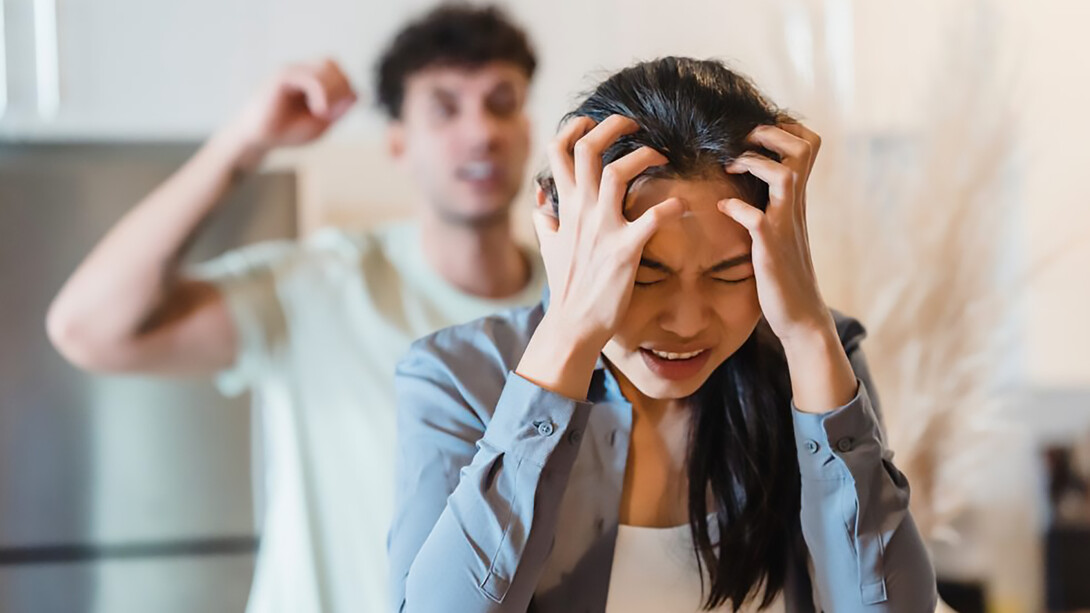
Solidarity between women can be a powerful force of change and can influence future development in ways favorable not only to women but also to men.
(Nawal El Saadawi)
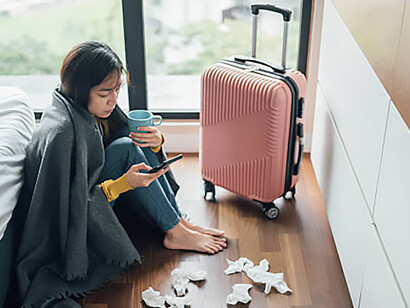
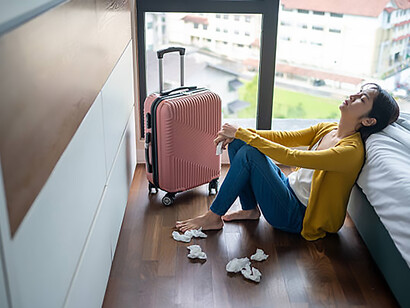
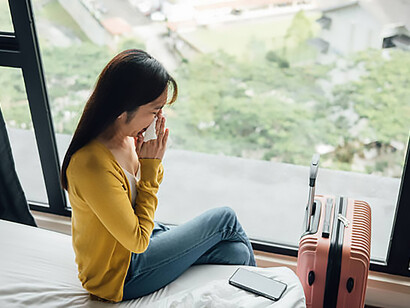
There are stories that do not begin with a dramatic rupture or a scene designed to catch attention, but with gestures so mundane that they would go unnoticed by anyone who did not know the underlying tension, like a woman preparing a small suitcase for a weekend trip, folding sweaters with a deliberate calmness that betrays nothing on the surface yet contains, in that quiet choreography, the weight of months or perhaps years of a slow internal erosion. That seemingly ordinary scene, which in another context would be irrelevant, becomes the precise point at which a broader social phenomenon becomes legible: the persistence of emotional violence against women, a form of harm that rarely produces visible marks and therefore often escapes public recognition, despite its capacity to reorganize an entire life from within.
In contemporary discourse, where feminism is sometimes repackaged as a marketing aesthetic, flattened into slogans, and recycled in campaigns that invoke empowerment while skirting the deeper structures that produce inequality, there remains a kind of systemic blindness toward psychological violence, precisely because it does not lend itself easily to the visual grammar of activism or the immediacy of social media outrage.
Emotional abuse is ambiguous, slow-moving, and embedded in everyday life; understanding it requires patience, attention, and a willingness to look at the small fractures that preceded the collapse.
The woman with the suitcase does not think of theoretical frameworks or gender studies terminology. She thinks, instead, of how she came to normalize a succession of behaviors that, when arranged chronologically, form a coherent pattern of domination: subtle remarks that undermine, strategically timed silences, shifting interpretations designed to generate doubt, and accusations that blur the line between responsibility and blame.
Emotional violence, unlike physical violence, does not arrive with noise; it infiltrates the routines of daily life until it becomes difficult to distinguish what is unacceptable from what has been habitualized.
My friend's story
Her story, which could unfold in any European city, gains relevance precisely because of its ordinariness. The apartment with a small terrace, the child learning her first words, the early years filled with shared projects and quiet evenings that seemed full of promise—these elements make the subsequent unraveling harder to detect. When the deterioration begins, it does so almost imperceptibly. They both work; they both navigate the uncertain terrain of raising a child away from extended family, and the distance from her home country, which once felt like a symbol of independence, becomes an invisible layer of vulnerability.
This part is crucial: migration alters the map of support, leaving women far from kin, from the cultural cues that help interpret warning signs, and from the informal networks that often serve as early intervention lines. In this vacuum, emotional violence expands without friction.
The situation worsens when he loses his job. Not because unemployment inevitably triggers abuse, but because it activates a set of gendered expectations and fragile masculinities that have been tolerated and even romanticized in many social narratives.
His wounded pride becomes the organizing principle of the household. He rejects job offers he considers unworthy, positions himself as misunderstood, and gradually channels frustration through criticism and manipulation. She becomes, simultaneously, a financial provider and emotional buffer, performing a kind of unpaid labor that society still assumes women are naturally equipped to deliver.
For the daughter, the home becomes a soundscape of rising tension. Her presence on the other side of the door, quiet, frightened, and withdrawn, is one of the clearest indicators that what is happening is not a “bad moment” but a systemic form of harm.
The pandemic as silent accelerator
When the pandemic arrives, the situation intensifies. What was once a tense home becomes a sealed container. She finds reasons to go to the supermarket—bread, fruit, anything—to access a few minutes of air, not because she needs groceries, but because she needs to breathe without fear. Meanwhile, he tightens his control over the digital infrastructure of the household: passwords changed, documents inaccessible, a subtle but effective form of administrative confinement. These details, seemingly minor, are part of the broader ecosystem of emotional violence that often remains unrecognized by institutions, precisely because it operates through everyday objects rather than visible acts.
The bureaucracy of divorce, such as forms, certificates, and legal terms, becomes a battlefield. Without any access to a home computer, she navigates it with my help. I perform the essential work of accompaniment: requesting certificates, reading documents, calling associations, gathering information, and mapping the exit. It is a vivid example of sorority not as a slogan but as a practical architecture of resistance.
Leaving without applause
When she finally signs the divorce papers, nothing in the external world announces the magnitude of what has occurred. There is no symbolic sunrise waiting outside the courthouse, no dramatic swell of music, and no cinematic closure that neatly resolves years of tension. The city continues with its ordinary pulse—buses passing, conversations drifting from café tables, and the familiar choreography of people heading somewhere with purpose—while she steps over a threshold that is invisible to everyone except herself.
In the days that follow, life does not rush back in with urgency; instead, it returns in small, almost tentative gestures: walks by the sea where the wind feels different because it no longer carries the weight of dread; conversations that unfold without the need to anticipate danger; the gradual recovery of appetite, sleep, and curiosity; the rediscovery of a laughter that, for the first time in years, does not tremble beneath the surface.
These moments would seem trivial to an outside observer, yet they constitute the architecture of healing, the profound sequence through which a person slowly reclaims herself.
Recovery from emotional violence is rarely a revelation or a dramatic rupture. It is in these incremental acts of self‑restoration, not in any grand narrative of triumph, where the true dimension of liberation becomes visible.
Beyond individual biography: a social imperative
This story is about the intersection of gendered expectations, precarious migrant conditions, insufficient institutional mechanisms, and cultural narratives that still allow emotional violence to be dismissed as “personal problems” rather than recognized as part of a broader system.
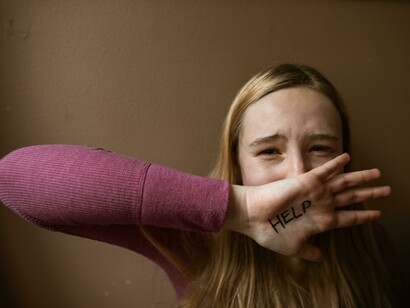
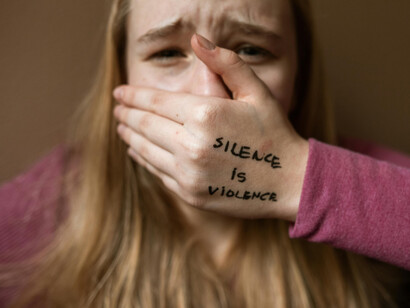
Naming emotional violence is a political act. Understanding it is a social responsibility. Preventing it is a collective task.
And yet, despite its prevalence, emotional violence remains relegated to the margins—overlooked in public debate, underdocumented in institutional frameworks, and misread within families and communities that still struggle to distinguish endurance from harm. It is here, in these quiet omissions, that the real contours of inequality reveal themselves.
Perhaps the most powerful lesson lies not in the crisis itself, but in the quiet aftermath: four years later, that same woman sits at an outdoor café on a bright afternoon, lifting a glass and saying a simple “thank you" to me and to the version of herself that refused to disappear.
In a world that still romanticizes resilience while failing to dismantle the structures that necessitate it, her survival offers a reminder that emotional violence is a cultural symptom.
And until we learn to recognize the subtle ways in which fear becomes routine, silence becomes strategy, and doubt becomes architecture, we will continue to overlook one of the most pervasive forms of inequality shaping women’s lives.