English
 Español
 Français
 Deutsch
 Italiano
 Português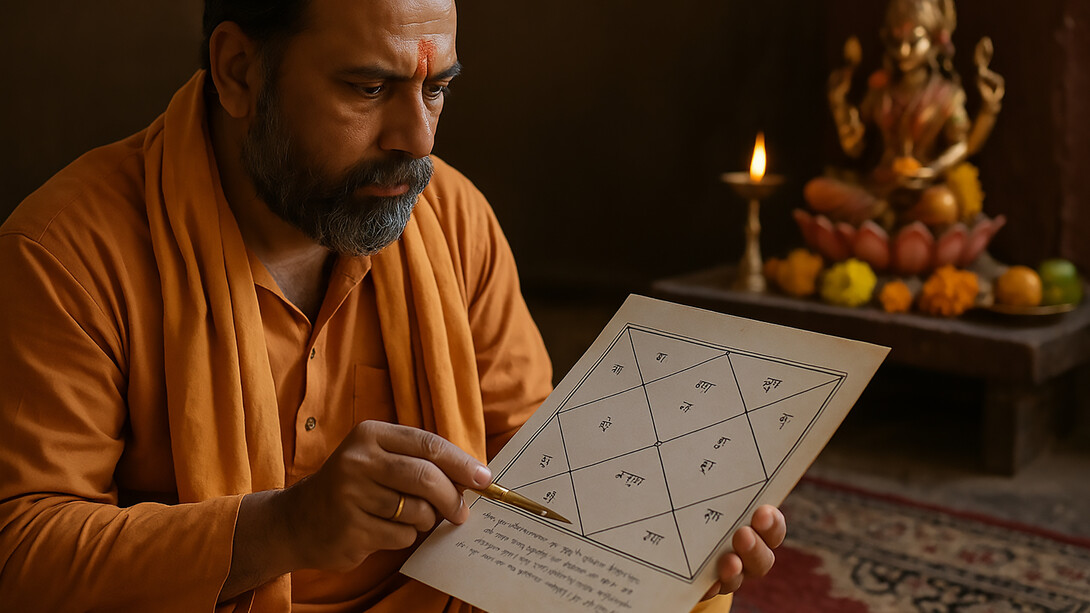
Astrology, in its most general sense, is the study of celestial patterns and their correlation with human life. From Mesopotamia and Egypt to Greece, China, and Mesoamerica, cultures across the world have looked to the stars to find order, timing, and meaning. Farmers observed planetary cycles to mark sowing and harvest seasons; rulers consulted the heavens to legitimize their authority; individuals found in the stars a mirror of their lives and destinies. Across civilizations, astrology has operated less as a faith and more as a cultural technology of time, linking human affairs to celestial rhythms. Yet, because it was often practiced by priests, preserved in sacred texts, and embedded into religious rituals, astrology came to be misperceived as inherently religious. The truth is that astrology, whether Western, Chinese, or Indian, contains no worship, no moral code, and no doctrine of salvation. It is a symbolic system, not a theology. Its apparent religiosity arises from context, not from essence.
Astrology’s historical entanglement with religion in India
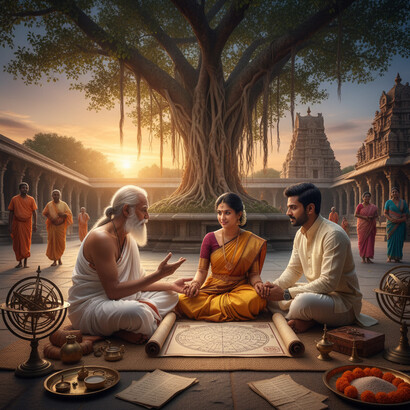
When people think of astrology in India, the immediate image is of a Hindu priest consulting planetary charts before fixing a wedding date, choosing the auspicious time for house construction, or initiating a religious festival. This cultural reality has led to a widespread belief that astrology is itself a religious practice, perhaps even a branch of Hinduism. The roots of this perception run deep into antiquity. Vedic astrology, or Jyotiṣa, derives its earliest references from the Vedanga Jyotisha (c. 1200–700 BCE), one of the six Vedangas, or “limbs of the Veda,” auxiliary sciences designed to aid in the proper performance of Vedic rituals. Since sacrificial rites required precise timing, astronomical calculations of solstices, equinoxes, and lunar cycles became indispensable. Over time, the same system was extended to predict seasonal changes, royal fortunes, and individual destinies. Because it emerged from within a religious-cultural framework and was preserved by Brahmin scholars for ritual use, astrology acquired a sacred aura, a close association with divine authority.
Yet to identify astrology with religion is to misunderstand its essential nature. Even in its Vedic formulation, astrology functioned as a tool, a science of time and symbolism, rather than a theology. The Vedanga Jyotisha contains rules for calendar construction and planetary tracking, but no hymns to deities or doctrines of salvation. What it offers is a method to observe celestial cycles and apply them to human life. The religious association arose because those cycles were used to guide ritual performance, not because astrology was itself an object of worship. Religion seeks ultimate truths, prescribes moral codes, and connects humanity with divinity. Astrology, by contrast, interprets patterns, identifies auspicious timings, and correlates celestial rhythms with terrestrial events. The reason astrology appears religious is therefore contextual rather than essential: it was practiced by priests, recorded in sacred texts, and deployed in rituals, but it does not contain the theological core that defines religion.
The technical and symbolic core of astrology
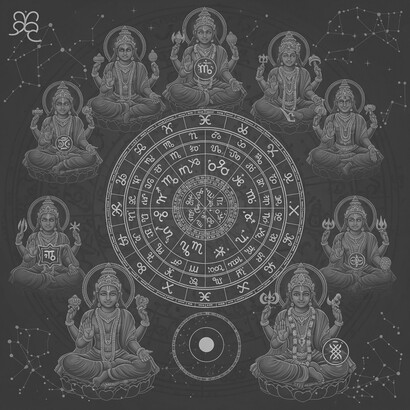
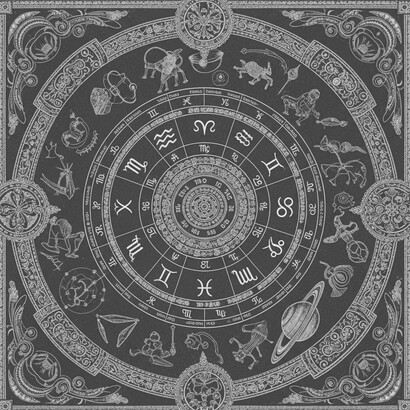
A closer look at Vedic astrology demonstrates that it is far more technical than devotional. At its heart lies the construction of the horoscope, a mathematical chart mapping the positions of planets against the twelve zodiac signs and twenty-seven lunar mansions at a given time and place. This requires knowledge of astronomy, calculation of planetary longitudes, and an understanding of time cycles. The astrologer interprets these placements through symbolic correspondences: Mars is associated with courage and conflict, Venus with affection and creativity, and Saturn with discipline and hardship.
Houses of the horoscope represent different domains of life: wealth, marriage, health, and career, while planetary aspects describe relationships between forces. None of this involves prayer, worship, or religious confession. One does not need to accept the authority of the Vedas, believe in any deity, or follow any ritual in order to consult an astrologer. A Christian, a Muslim, a Buddhist, or an atheist can and frequently does seek guidance from Vedic astrology without violating their faith or lack thereof.
The interpretive method of astrology further underscores its distinction from religion. Religious faith typically rests on revelation or divine authority. Astrology rests on correlation: the belief that celestial cycles mirror human experiences, not because planets cause events by divine command, but because time itself manifests in patterned ways. This is closer to a symbolic language or an ancient psychology than a religion. Carl Jung described astrology as the “sum of all psychological knowledge of antiquity,” and indeed, Vedic astrology shares with modern psychology a concern with patterns of behavior, life stages, and archetypes. It provides a vocabulary for meaning-making, a framework to reflect on personality traits, opportunities, and challenges. While religions address salvation and ultimate reality, astrology addresses timing, tendencies, and cycles—secular matters clothed in symbolic form.
It is also telling that Vedic astrology has been institutionalized in modern India not as theology but as an academic subject. Several universities, such as Banaras Hindu University and Andhra University, have departments where astrology is taught alongside astronomy and Sanskrit studies. The government even recognized it as a discipline within higher education. This academic placement reveals its character as a field of knowledge, not a faith. The debates around whether it constitutes science are complex, but what remains clear is that its methods are analytical, not devotional. An astrologer casts a chart by computation, not by prayer. Interpretations may vary, but the process is grounded in mathematics and symbolism, not in religious ritual.
The cultural interweaving and the essential distinction
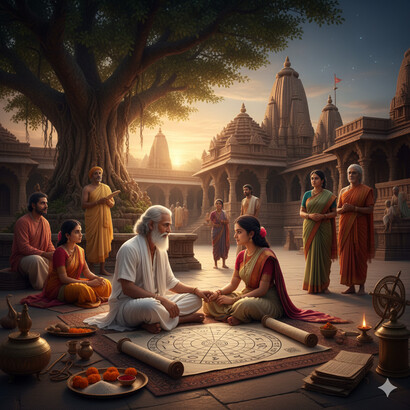
If astrology is not religion, why does the misconception persist so strongly, particularly in India? The answer lies in the way astrology has been woven into the cultural fabric of Hindu society. In most Hindu ceremonies, from birth to marriage to death, astrology plays a decisive role. A newborn is named according to the syllables linked with their lunar constellation; marriages are arranged after careful comparison of horoscopes; death anniversaries are observed at astrologically chosen times. Temples often employ astrologers, and many rituals begin only after consulting an auspicious hour. Thus, astrology acts as the timekeeper of religious life, but it is not itself the religion. It is the calendar, not the worship; the advisor, not the deity.
This interweaving has blurred the distinction in public perception. Since priests often double as astrologers, and since religious rites often depend on astrological timings, people assume that astrology is inherently a religious act. But if we strip away the cultural layers, astrology reveals itself as a neutral framework that can be employed in any context. In fact, its adaptability proves the point: Vedic astrology is practiced not only in Hindu settings but also among Jains, Buddhists, Sikhs, and increasingly in secular urban contexts where religion is secondary to personal guidance. A businessperson may consult astrology for choosing a launch date, a politician for timing an election speech, and a student for planning studies. None of these uses requires religious belief.
The essence of astrology lies not in faith but in interpretation. One may accept or reject its validity, but one cannot mistake it for religion unless one conflates cultural application with essential nature. Religion answers the “why” of existence; astrology addresses the “when.” Religion organizes communities around shared worship and ethics; astrology offers individuals a mirror of their tendencies and timings. Religion is about divinity, morality, and salvation; astrology is about cycles, patterns, and probabilities. The two intersect in history and culture, but they remain distinct in essence.
To insist on this distinction is not to diminish the cultural importance of astrology nor to undermine its role in Hindu tradition. On the contrary, it allows us to appreciate astrology for what it truly is: a symbolic science of time and meaning, capable of transcending religious boundaries. By recognizing that Vedic astrology is not a religious practice but a technical and interpretive system, we free it from misplaced critiques and misplaced worship alike. It becomes what it has always been: a tool to align human life with the rhythms of the cosmos, a cultural language for understanding time, and a mirror for self-reflection. Religion may use astrology, but astrology does not need religion.