English
 Español
 Français
 Deutsch
 Italiano
 Português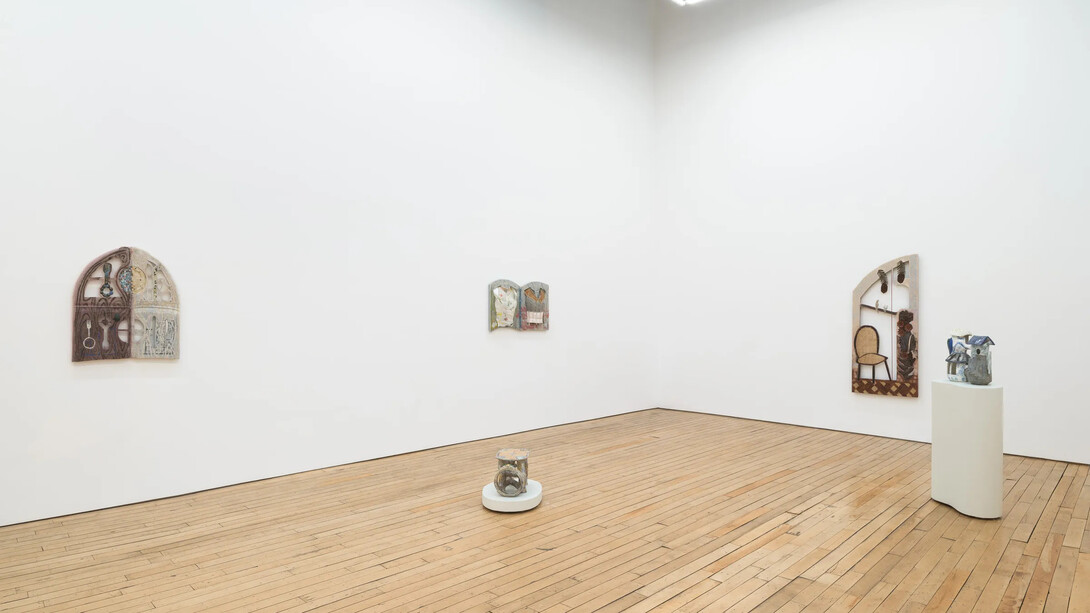
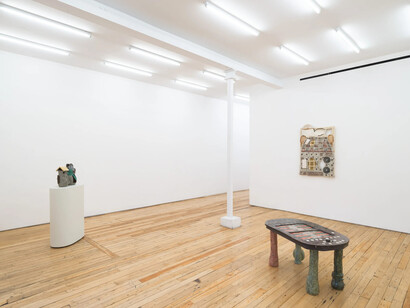
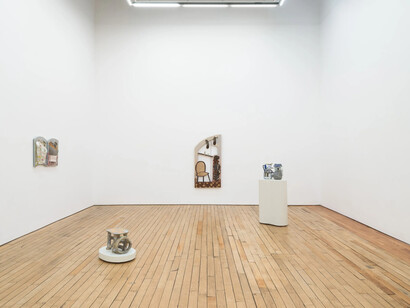
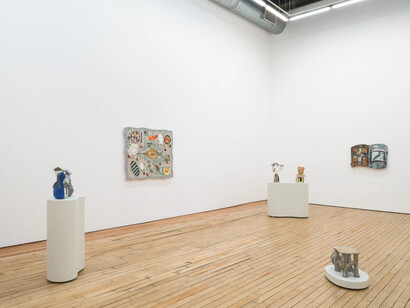
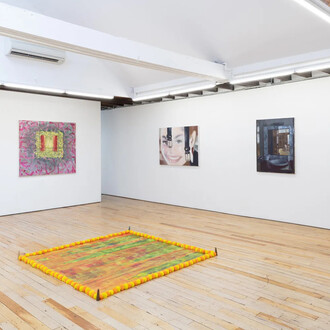
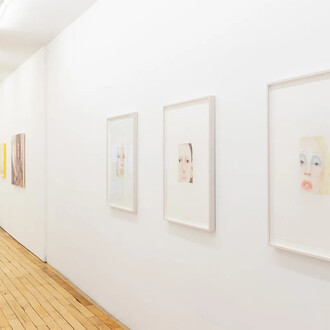
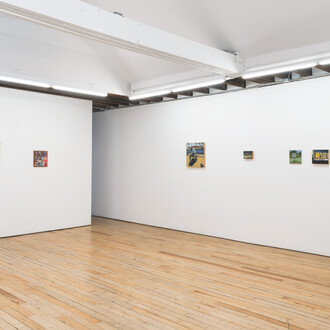
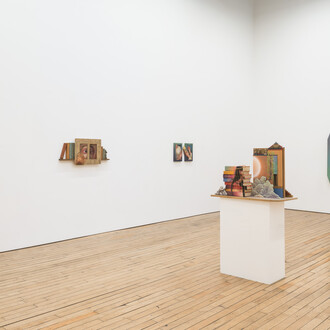
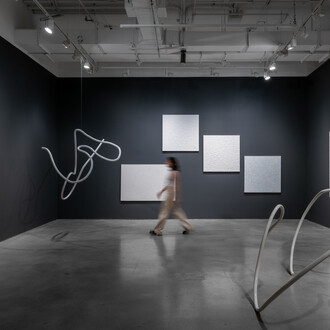
Uffner & Liu is pleased to present Two, Sacha Ingber’s second solo exhibition at the gallery. The exhibition transforms the downstairs space into a hand-built environment of cast pigmented resin wall works, conjoined ceramic vessels, and functional sculptures that examine the charged space between two bodies, two objects, and two histories.
The title Two refers both to the recurring structure of the exhibition, and the dynamic exchange within interdependent relationships. Nearly every work operates in pairs. Resin “notebooks” open to mirrored but asymmetrical compositions; pairs of ceramic figures share spouts and handles; a game board is designed for two participants. These are not oppositions but co-dependent forms — elements that generate meaning through proximity and comparison.
Ingber’s material process is highly tactile. Resin slabs are poured by hand, becoming grounds into which ceramic fragments, plaster casts, caning, textiles, and metal elements are physically engulfed, set or sewn. Almost every element is fabricated by the artist herself.
The conjoined ceramic sculptures, such as Two and Duas, draw from Pre-Columbian Peruvian ceremonial vessels of the 2nd–8th century, where two clay vessels are seamlessly connected, suggesting a shared interiority where liquid can travel between them in a symbiotic relationship. Ingber approaches glazing as a form of “dressing” the figures: surfaces are applied like tailored garments, referencing athletic wear that accentuates and frees the body. Skirt-like elements function as both awnings and clothing. Often across Ingber’s works, architecture intersects with figuration — bodies become vessels; vessels become homes. In Subindo na montanha da mamãe, two curved plaster-cast spines provide structural support beneath a double-arched roof that nods to Brazilian architect Oscar Niemeyer. The two spines were inspired by Ingber’s pregnancy and the female body as a literal architecture for another person.
Domestic memory anchors the exhibition. Marzita and Lucia references the artist’s grandmother and great aunt, incorporating details from their garments, including a collar rendered in rattan cane-webbing.* Farewell Fazenda* depicts Ingber’s old family farmhouse in Brazil, with ceramic foliage based on native plants and a chair fashioned out of cane webbing. A window becomes a door becomes a constructed memory of a place that no longer exists.
In the gallery’s front room, Ingber constructs a fully functional backgammon table, scaled to the human body. Its game board is composed of embedded eating utensils arranged to face one another like opposing forces. Throughout the show, kitchen tools and table settings echo the artist’s sculptural process, where assembling materials resembles preparing a meal.
Across Two, Ingber unifies sculpture, furniture, garment, and architecture into singular forms. Fabric is painted, sewn, and tailored to fit specific works; plaster spines are cast from molds made by the artist; ceramic is shaped by hand. Duality here is structural — two sides of a book, two spines in a body, two players at a table — proposing relationality as something physical, architectural, and inseparable.