English
 Español
 Français
 Deutsch
 Italiano
 Português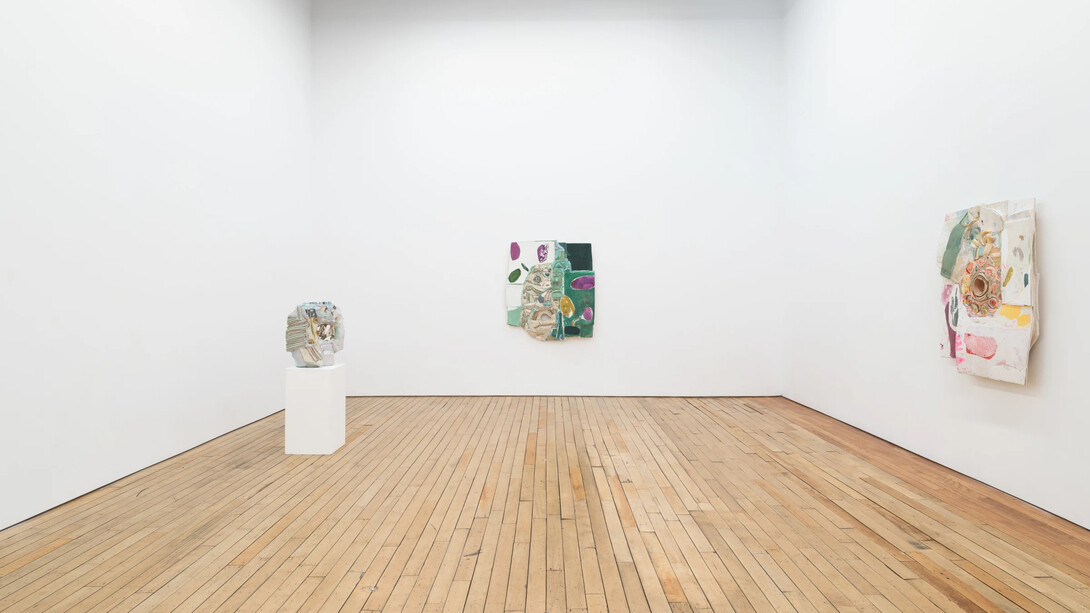
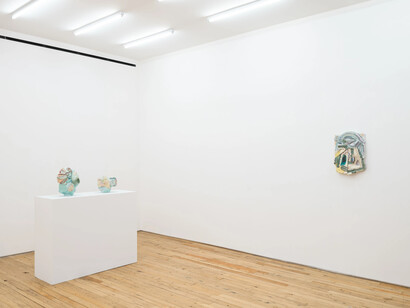
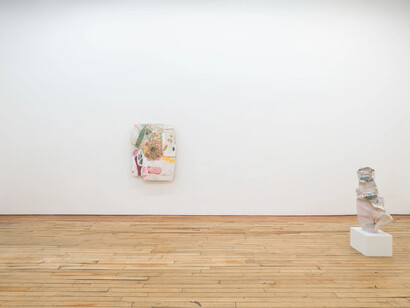
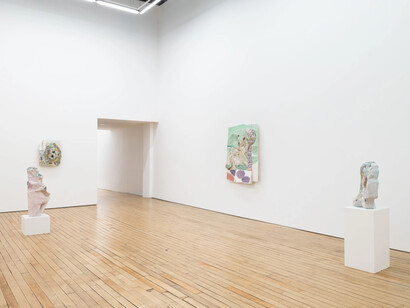
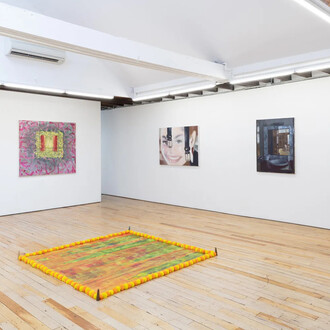
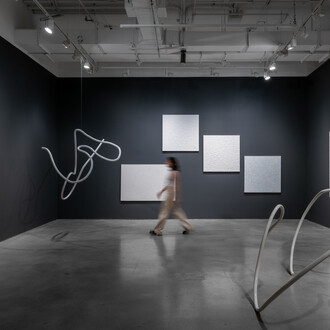
Uffner & Liu is pleased to present Songs for clouds, Hilary Harnischfeger’s fifth solo exhibition at the gallery. Marking a significant development in her multimedia sculptural practice, the exhibition debuts three new wall-based works at the largest scale Harnischfeger has produced to date.
Harnischfeger’s work is grounded in a sustained engagement with material transformation and the slow processes of the natural world. Drawing inspiration from specific landscapes—often mountain peaks—her works evoke geological formations shaped over vast spans of time. Rather than presenting direct representations of place, Harnischfeger constructs forms that appear weathered, stratified, and eroded, as if shaped by tectonic pressure, sedimentation, and mineral accretion rather than by human hands.
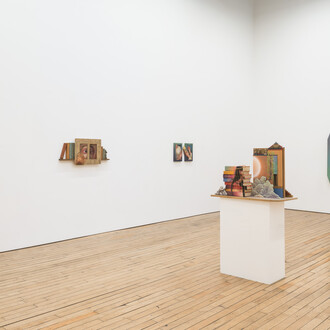
Her material vocabulary includes ceramic, pigment, paper, ink, quartz, mica, wood, and hydrostone. Among these, paper plays a particularly central and unexpected role. Painted cardstock is meticulously cut, stacked, and adhered in layers, creating dense surfaces that resemble sedimentary rock strata. These paper formations are then embedded into cast ceramic and hydrostone bodies, where they function both as structural components and as material interruptions. Compressed planes of color and texture blur distinctions between drawing, sculpture, and relief, transforming fragile materials into final forms that are weighty, durable, and geological.
In the newly scaled works presented here, this process becomes increasingly immersive. Expanded surfaces allow Harnischfeger to push her stratigraphic constructions further, building complex topographies that oscillate between abstraction and landscape. Veins of mineral material punctuate layered fields of paper and pigment, while fissures, cavities, and protrusions suggest natural forces at work beneath the surface.
Across these works, time operates as both subject and method. Harnischfeger’s practice embraces accumulation, repetition, and slow construction, mirroring the rhythms of the environments that inspire her. The resulting forms feel simultaneously ancient and immediate—objects that seem to carry the memory of the earth while remaining resolutely handmade.