English
 Español
 Français
 Deutsch
 Italiano
 Português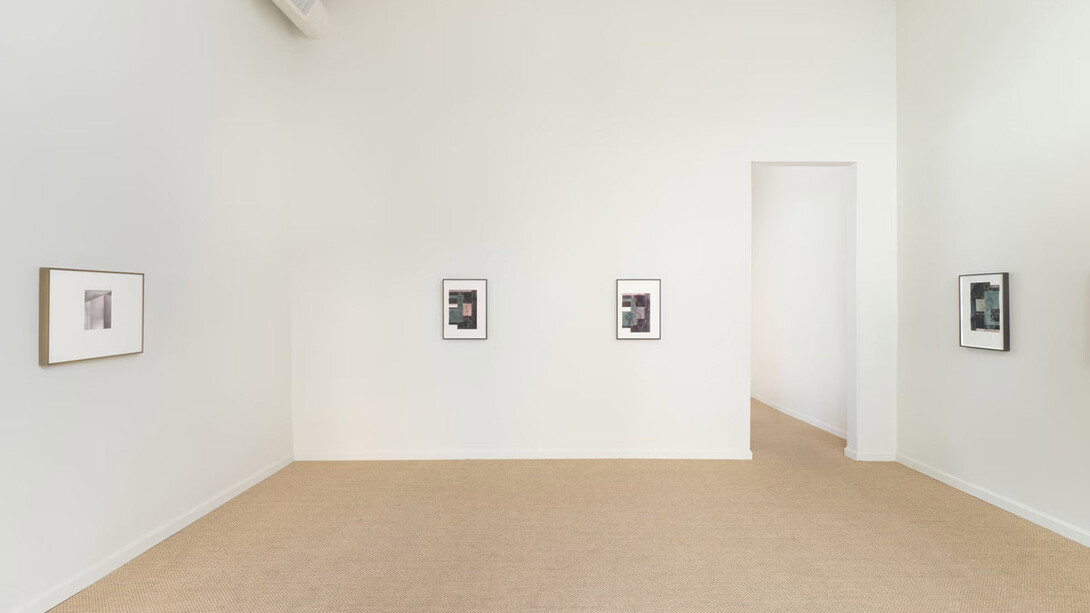
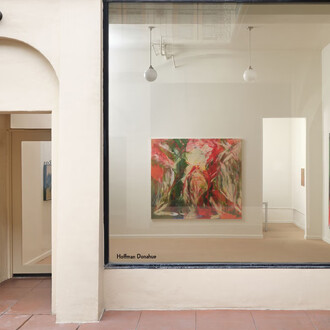
Hoffman Donahue is pleased to present an exhibition of new work by Monica Majoli. Majoli’s practice is defined by endurance. Specific bodies of work extend for nearly a decade at a time, sustained with what she has described as a monogamous focus. Deeply committed to analog, individualized, and meticulous material processes, her career can be mapped through a sequence of series — untitled works, Rubbermen, black mirror, untitled (Pam), and Blueboys. Across these projects, Majoli consistently works to destabilize singular categorization in the realm of sexuality and gender, approaching the psychological charge of intimacy with material precision.
For almost twenty years, Majoli avoided depictions of women because of the fraught precedent of objectification. Representation, in her practice, is never straightforward. It becomes a site where desire, memory, absence, and projection converge. This often involves restoring context to the subjects she portrays, allowing the images to hold emotional complexity rather than fixed meaning.
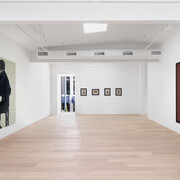
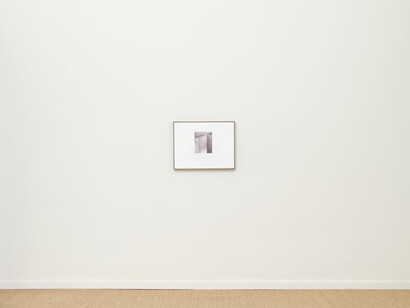
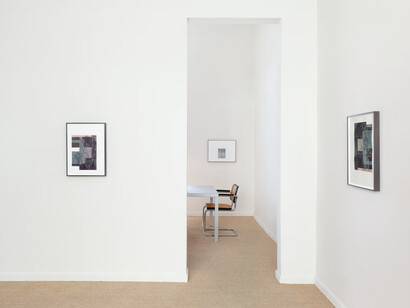
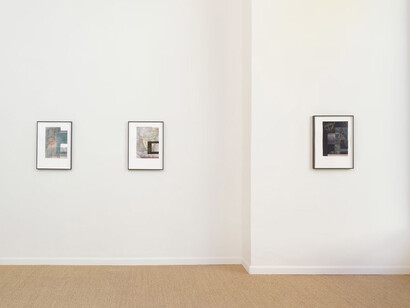
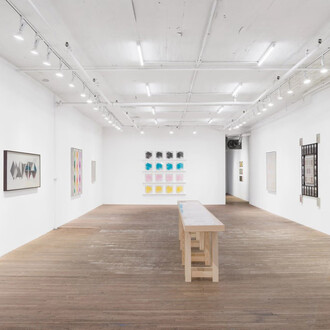
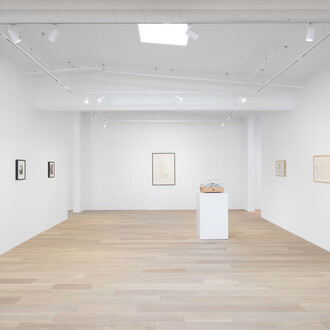
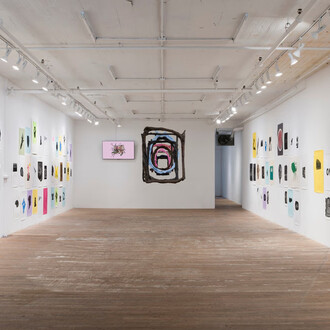
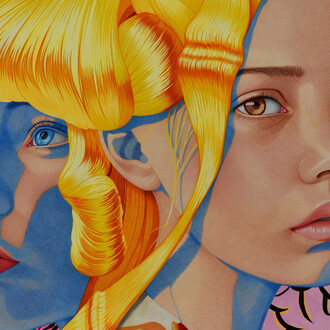
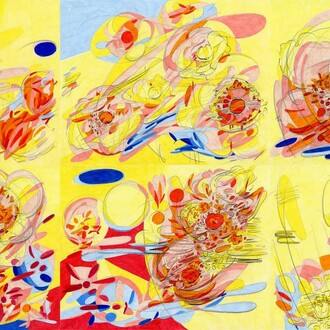
The series of colored pencil drawings on lithographs currently on view marks Majoli’s first depictions of women she did not know personally. Even so, an autobiographical intimacy is threaded through the works by way of material history and research. Each lithographic composition was made years ago for the Black mirror project, originally as non-representational studies. Repurposing these earlier works instigates a layered superimposition, creating a collaborative framework very much in the spirit of the women Majoli renders here: Donna Gottschalk*, Tee Corinne, Honey Lee Cottrell, Joan E. Biren (AKA JEB), and Clytia Fuller.
These lesbian feminist photographers met in the late 1970s and early 1980s through a series of workshops called Ovulars, held at Rootworks, a lesbian commune in Oregon. Named in opposition to the word “seminar,” with its etymological emphasis on the “spreading of seed,” the Ovulars gathered women to create, define, and question the lesbian gaze. They implemented experiments and rituals around photography that sought to subvert typical power dynamics – photographers appearing nude, women photographing women photographing women, imbuing process with collaboration. Even the language of the medium was reconsidered, as they rejected violent metaphors of “shooting” and “capturing” in favor of something more mutual.
It is impossible to say that the lesbian gaze was ever fully defined, but the work that emerged from this community carried clear ethical commitments. Often published in lesbian feminist journals such as Sinister wisdom and in their own self-published photojournal The blatant image: a magazine of feminist photography (1981–1983), these photographs emphasized collaboration over individual authorship, deliberately created as part of a movement. The impulse to document became an extension of romance and sexuality, structured for support instead of competition. Work from this period held a utopian spark – tied to nature, invested in self-sustaining community, and animated by a pioneering self-determination.
Majoli was exposed to this material as a pre-teen at Sisterhood Bookstore, a feminist establishment in Westwood that opened in 1972. These were the first images she saw of lesbians fully realized – on posters and in self-published photography books – lesbians with lovers, careers, concerns, and complete lives. This public-facing, at times erotic, imagery was pivotal in her own early selfidentification and self-concept, offering recognition where there had previously been absence.
For many years, Majoli sought to curate a photography exhibition focused on this pivotal period of lesbian image-making, supported by her own research at Cornell and the University of Oregon.
Instead of presenting the source material directly, she created these honorific works on paper, portraits of the photographers and their photographs, placing herself in the room among the women. The original reference images contained a triangulation of looking, but these new works add the dimension of Majoli’s hand and lived biography, introducing touch as a form of historical return.
Pulled back to the body, Majoli’s drawings are both reflective and generative, recontextualizing the past as something with a life beyond the archive. They offer queer history not as didactic record but as emotional presence, insisting that intimacy, memory, and representation remain charged, living forces.