English
 Español
 Français
 Deutsch
 Italiano
 Português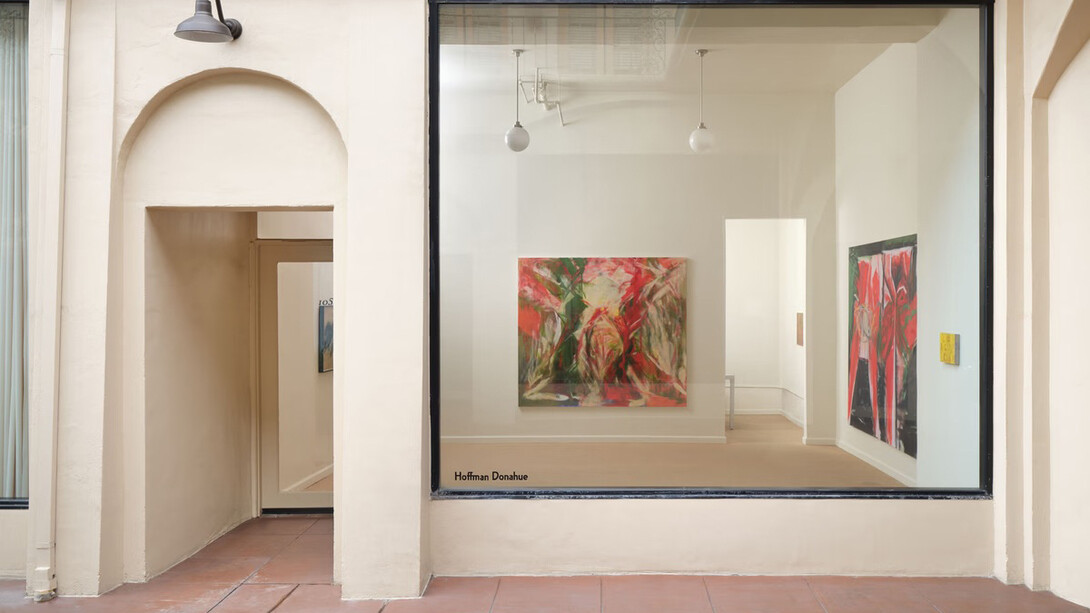
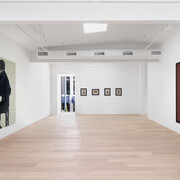
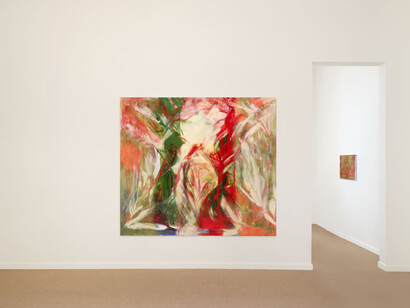
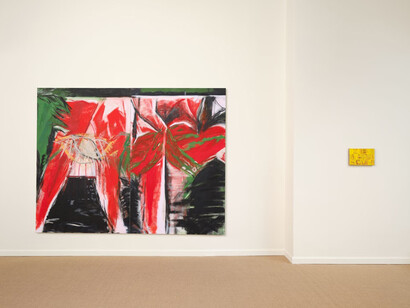
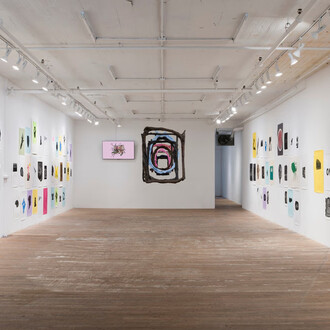
Hoffman Donahue is pleased to present a solo exhibition of work by Sydney Acosta. Textured, visceral, and direct, these works maintain a strictly rigid color palette. Her saturated reds and greens, concentrated whites and blacks avoid realism and instead function as symbols for emotional immediacy. These paintings emerge from the night, the street, the club, the present.
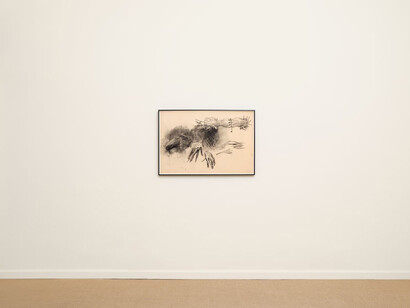
Needing to stand on art history is out. The present tense is in. These lines in Acosta’s painting manifesto cut to the heart of her project. At odds with the slow pace of oil painting, Acosta pushes her medium to achieve a swift communication usually reserved for drawings. Often working with a dry brush and very little solvent, she emulates the texture of charcoal scribbled on paper. Ephemerality and permanence coexist, with ancient religious motifs alongside memories from yesterday. Acosta is clear that despite ritualistic references in her work, she is not interested in the transcendent. Rather, the city, the corporeal, the embodied. Bricks, blood, and concrete. Die Nazi Scum acts as a hinge between the painted surface and the world, linking the immediacy of gesture to Los Angeles’s history of community action. These sensorial reference points are part of why Acosta balks at pure abstraction. Hands, rosaries, and Egyptian deities are all rendered from observation.
Acosta thinks about the complimentary nature of red and green as a metaphor for the complementary nature of individuals. This integration of color theory and eroticism results in surprising tenderness amidst harsh contrasts, like the meeting of the hands in Rushing home, caught that - second take/second glance. Acosta calls it the “nightness” or “the operatic register.” Red and green like streetlights reflected on the pavement – red, green, and white like Palestinian flags waved during anti-war demonstrations. Pure color to communicate unvarnished, intimidating sensuality