English
 Español
 Français
 Deutsch
 Italiano
 Português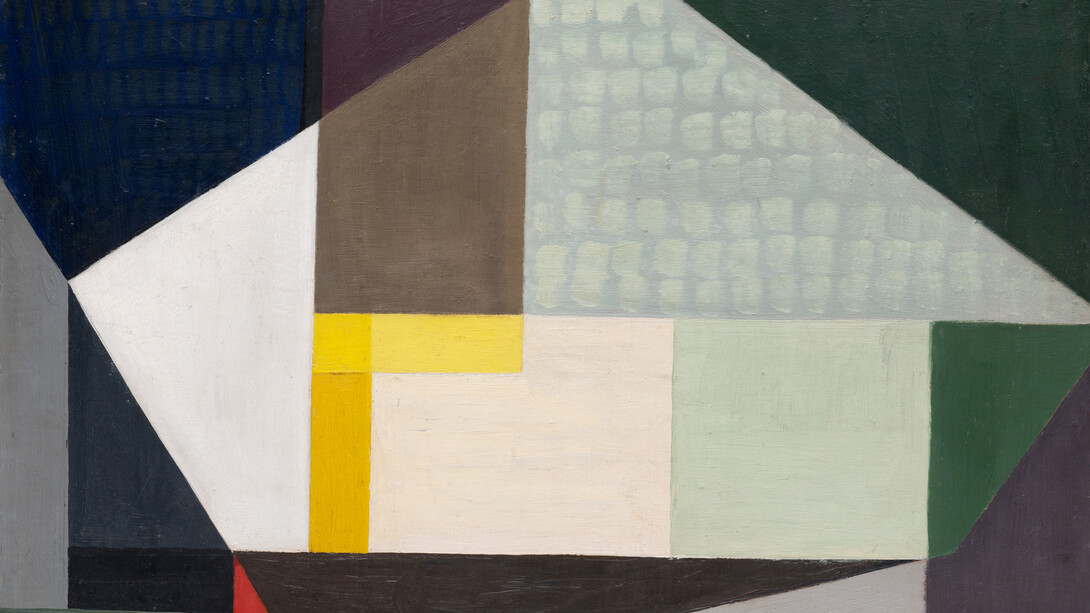
Kurt Schwitters (1887, Hanover – 1948, Kendal, UK) ranks among the most influential and idiosyncratic figures in the history of modern art. Working on the fringes of the major modernist currents of his time, Schwitters remained an independent voice that remains strikingly relevant today. Schwitters: on the fringes of the avant-garde is the first major museum exhibition devoted to his work in Switzerland in more than twenty years. It traces the extraordinary range of his œuvre across all stages of his career - from iconic Merz paintings, assemblages, and collages to an immersive reconstruction of the Hanover Merzbau, as well as lesser-known portraits, landscapes, and sculptures from his years in exile. The Zentrum Paul Klee also presents examples of his graphic and literary oeuvre, along with his activities as a publisher and writer. Taken together, the exhibition presents Schwitters as a radical innovator whose distinctive synthesis of art, architecture, design, and literature shaped generations of artists.
A singular figure of the avant-garde
Following an academic education in painting, Schwitters began with representational and figurative work before turning to Expressionism and later to abstraction. Although he developed and maintained active ties with international avant-garde movements such as Dada, De Stijl, and Constructivism, he never aligned himself with any group. Schwitters remained an individualist – projecting a self-ironically bourgeois persona that challenged audiences and unsettled many of his fellow artists.
My name is Kurt Schwitters.
I am a painter.
I nail my pictures.(Translated from: Raoul Hausmann, Am Anfang war Dada, edited by Karl Riha and Günter Kämpf, Giessen 1972, p. 63)
While many artists in post‑revolutionary Germany became politically active - for example, the Berlin Dadaists – Schwitters maintained political independence and placed the autonomy of art at the centre of his practice.
Merz: art from the ruins of civilization
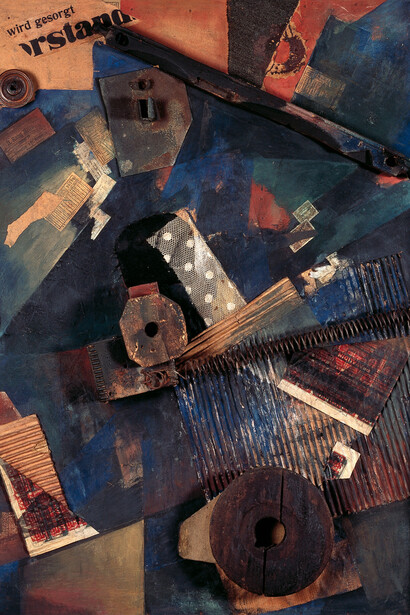
In the 1920s, Schwitters embodied the spirit of freedom and artistic renewal emerging from the ruins of the First World War. His self-developed concept of ‘Merz’ became his artistic signature:
It is possible to cry out using bits of old rubbish, and that's what I did, gluing and nailing them together. […] Everything was broken anyway, and the task was to build something new out of the fragments. That, in essence, is Merz.
(Translated from: Kurt Schwitters, 1930, in: Gefesselter Blick. 25 Monografien und Beiträge über neue Werbegestaltung, edited by Heinz Rasch und Bodo Rasch, Stuttgart 1930, p. 88)
Using found and discarded materials, he created collages and assemblages – his so-called Merz works. Beginning in 1923, he also developed the Merzbau in his house in Hanover: a walk-in sculpture that translated collage into architecture, and is now regarded as an early precursor to contemporary installation art. ‘Merz’ was an early concept of artistic recycling and remix. For Schwitters, the value of art did not lie in its materials but in the intellectual act of creation – its aim was to generate a new, harmonious order out of chaos, and to confront transience and decay through artistic means.
Transcending artistic categories
Schwitters’s work consistently transcends traditional artistic genres. Beyond his artistic production in the narrower sense, he was also an influential graphic designer, publisher, and writer. He helped shape modern graphic design, founded the international group ‘ring neue werbegestalter’ (association of new advertising designers), and set new standards for integrating art and design. His aim was to establish design and typography not merely as technical or decorative tasks, but as cultural and artistic practices in their own right. In doing so, Schwitters also made a decisive contribution to the development of Swiss graphic design.
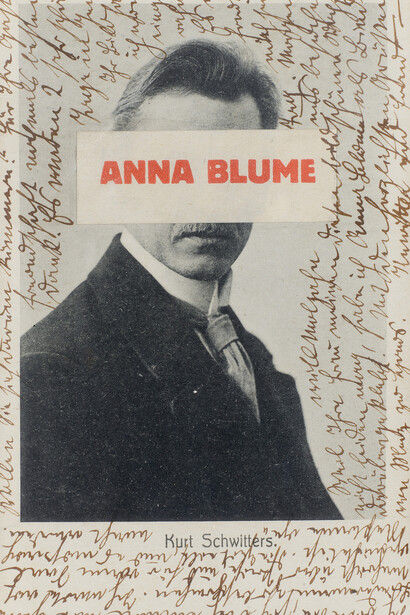
His avant‑garde journal Merz became a laboratory for typographic experimentation and a platform for his international network of artists. He also published manifestos, critical and autobiographical short stories, theatre plays, poetry, and even fairy tales. He became well known for provocative Dada poems such as An Anna Blume (1919) and for the Sonata in primeval sounds (Ursonate) (1923–1932). This landmark work of Dadaism will be performed live as part of the public programme of the exhibition at the Zentrum Paul Klee on Saturday, 18 April 2026, at 14:00, and on Sunday, 19 April 2026, at 11:00., by the Brussels‑based musician Michael Schmid.
Exile and new beginnings
Schwitters pursued his experimental understanding of art with uncompromising consistency. Yet the utopian aspirations of his work stand in stark contrast to the tragic turns in his biography. His denunciation as a ‘degenerate’ artist in Nazi Germany, together with his personal contacts to the political opposition, had profound consequences and effectively deprived him of his livelihood from 1933 onwards. In 1937, he fled with his son Ernst to Norway, settling in Oslo and spending the summer months in the region around Molde.
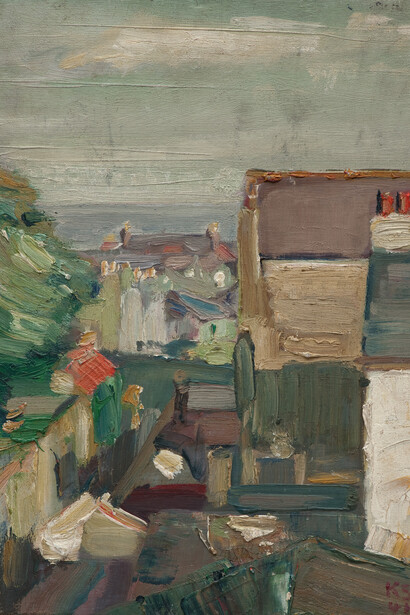
After the German invasion of Norway in 1940, Schwitters and his son fled to Britain. There they were relocated and interned at Hutchinson Camp on the Isle of Man, alongside other refugees from Nazi Germany, including numerous artists and intellectuals. After his release, Schwitters settled first in London and later in the Lake District in northern England. Despite declining health and harsh conditions, he continued his work with unwavering determination, beginning new Merzbau installations in both Norway and England and earning a modest living with portraits and landscapes, all while continuing his ‘Merz’ practice. While his figurative works gained recognition in Norway and England, his avant-garde ideas remained largely misunderstood in both places.
Through both his art and his life, Schwitters shaped generations of artists, from postwar figures such as Robert Rauschenberg and Jean Tinguely to contemporary practitioners like Thomas Hirschhorn and Phyllida Barlow. He demonstrated how everyday, discarded materials could give rise to new visual and spatial worlds - and how, in a broader sense, art and life might be brought into alignment.
(Martin Waldmeier, Curator of the exhibition)
An immersive exhibition experience
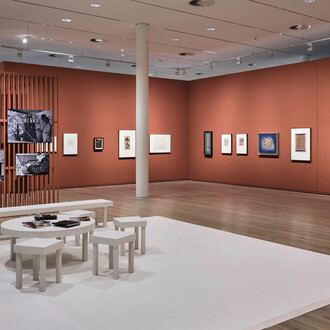
The exhibition showcases the remarkable diversity of Schwitters’s artistic production. It offers visitors a unique opportunity to encounter his avant-garde œuvre in all its forms, while also introducing lesser-known aspects of his practice – from his sculptures and his experimental writing to landscapes and portraits from his years in exile, including some that have never before been exhibited. The exhibition follows a chronological structure, tracing Schwitters’s development from his early work to his final years in exile.
At its core is an immersive reconstruction of the Merzbau in Hanover, destroyed in 1943. This is complemented by around twenty iconic assemblages, reliefs, and sculptures, as well as large-scale projections that powerfully document the later Merz installations created in Norway and England. Surrounding thematic galleries unfold a comprehensive panorama of his work, featuring some fifty collages, twenty paintings, and numerous drawings, watercolours, prints, publications, and typographic pieces. Collage – central to the ‘Merz’ principle – forms the exhibition’s guiding thread.
Dynamic text projections bring Schwitters’s manifestos, dadaist prose, satirical pieces, and autobiographical writings into dialogue with his artworks. At the end of the exhibition, the film Kurt Schwitters. Immortality is not for everyone (1982) by Klaus Peter Dencker gives voice to Schwitters’s friends and family, offering an intimate portrait of the artist. The exhibition also invites visitors of all ages to create works themselves in an interactive collage workshop, located within the exhibition. It concludes with a collaboration with Zurich University of the Arts (ZHdK), Department of Visual Communication, whose students have reinterpreted Schwitters’s poem An Anna Blume using typographic means. The resulting posters are presented within the exhibition.
Publication with a literary focus
Kurt Schwitters was also a prolific and highly original writer. His texts – ironic, socially incisive, and rich in linguistic play – are milestones of experimental literature and offer a key to understanding his overall body of work. They break with traditional forms and structures, reflect the historical context, comment on the trajectory of his career, and articulate the theoretical foundations of his practice.
To accompany the exhibition, the Zentrum Paul Klee is publishing an extensively illustrated volume designed by Harald Pridgar in collaboration with Hirmer Publishers, Munich. Placing Schwitters’s literary production at the forefront, it brings together art and literature and is complemented by a substantial, accessible introductory essay.
![Gego, Bicho 89/17 [Bug 89/17], 1989. Courtesy of Zentrum Paul Klee](/attachments/f079a1f4646d2c18046e435b0d7c6a40c4d590ab/store/fill/330/330/15240f8a7c2620c149272c56d3458458d719746e821a8c6a92e906b56287/Gego-Bicho-89-slash-17-Bug-89-slash-17-1989-Courtesy-of-Zentrum-Paul-Klee.jpg)