English
 Español
 Français
 Deutsch
 Italiano
 Português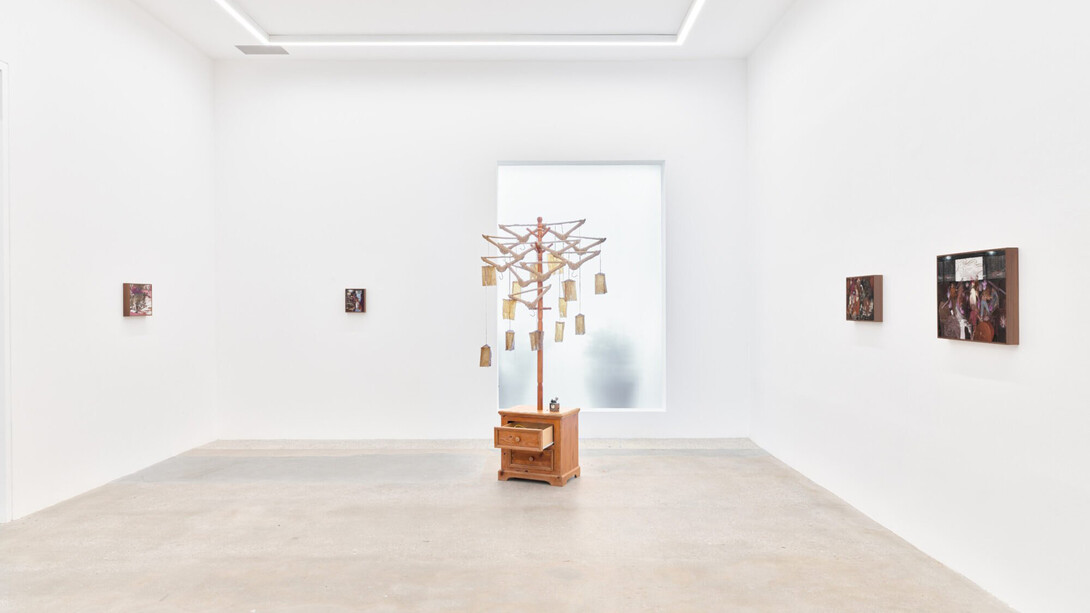
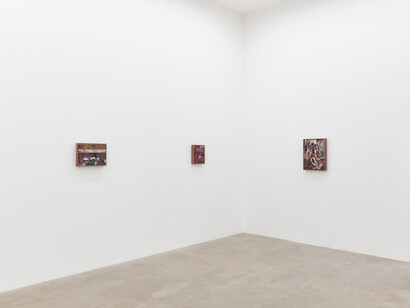
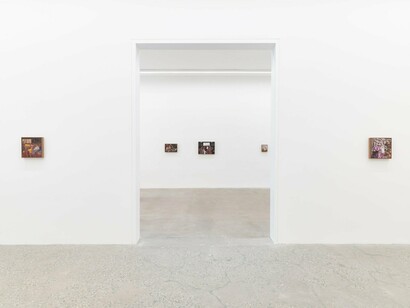
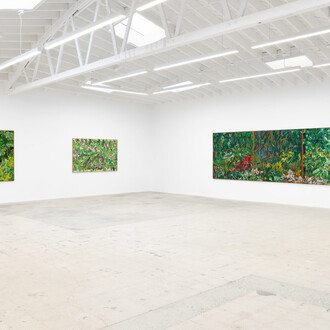
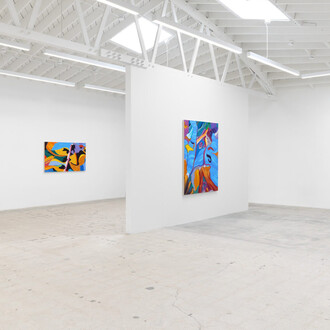
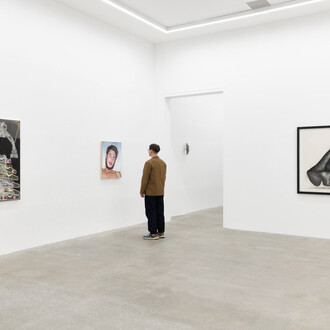
Anat Ebgi is pleased to present new paintings and sculpture by Los Angeles artist Veronica Fernandez. The exhibition, entitled Prey, is the artist’s first solo exhibition at the gallery. On view at 6150 Wilshire Blvd, Los Angeles from February 21 April 4. An opening reception will be held on Saturday, February 21, 5-8 pm.
Veronica Fernandez’s figurative paintings invest narrative with her own life experiences. Storytelling gives way to mood, duration, and the residue of memory, resulting in vivid characters and dramatic environments that feel alive. While they have elements of autobiography, Fernandez resists overly specific Realism, opting for a dreamlike and at times fantastical backdrop.
Children and adolescents occupy a central role in these memories. They are not idealized innocents but playful figures brimming with private sentiment. Many works show a child claiming their own space within scenes crowded by friends, siblings, neighbors, and caretakers appearing as doubled or shadow-like forms behind beds and at the edges of rooms. Pickup games, parties, and pranks introduce social and behavioral dimensions. Two works, Kids feel alive (Mischief night) and Chased through the night (all works 2026) depict draped and looping toilet papered trees, capturing territoriality and adolescent boundary testing.
Raised by a single father, Fernandez’s family endured periods of homelessness during her early life, moving between various temporary housing situations. These formative experiences of adversity—marked by vulnerability, adaptability, and resilience—shaped the artist’s sensitivity to environment and belonging. Her paintings frequently reflect on these early conditions, but rather than recounting events directly, she transforms lived experience into apparatus of emotion.
Fernandez’s scenes are fluid. Shaped by subtle pressures and proximities, they move continuously between interior and exterior, from motel rooms to vacant lots. These settings are granted poetry and frankness, as she uncovers layers of humanity through depictions of daily obstacles and curiosity. Fernandez’s subject matter recalls the Ashcan School, an American artistic “movement” of the late 19th and early 20th centuries, unified by the desire to tell certain truths about modern life in urban New York City’s poorer neighborhoods. Similarly unfettered, Fernandez shines a positive light on her memories, painting towards a youthful vitality.
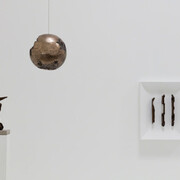
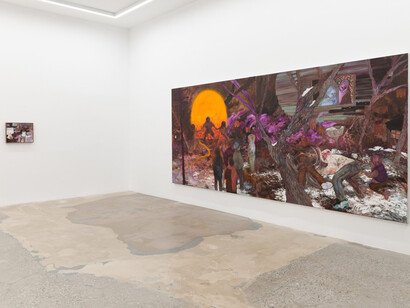
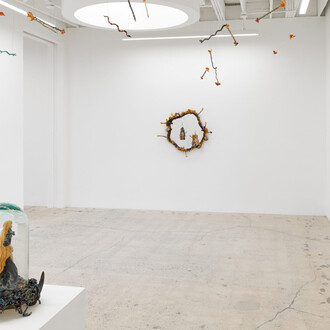
In one corner of the gallery, a tree-like sculpture titled Play comprises a wooden coat rack, twine-wrapped hangers, and a chunky nightstand base. Fernandez suspended brown paper bags dipped in resin from the “branches,” turning them into translucent carapaces. These humble forms—protective skins or hardened shells—also refer back to her childhood, when she would craft “dollhouses” from on-hand materials. The paper bag image is repeated in the largest painting in the exhibition, Some things don’t stay for tomorrow, as well as Stranger asks for toilet paper, where a child plays on the floor with her paper neighborhood.
Tactile attention turns the space of memory into surfaces of inscription. Streaked passages in Spaghetti car or thickly applied paint in Closer to power create a physical density that invigorates Fernandez’s environmental psychology. Boundaries between inner life and the external world dissolve in Lost foundation, as children jump and climb on crumbling bricks, while other figures illuminated by a lamp, huddle in the center of the compositions on a mattress and blankets.
Furniture, stuffed animals, toys, quilts, storage bins, and televisions play a structuring role, interrupting sightlines and creating psychological distance in the compositions. Beds and couches become charged zones of rest, withdrawal, intimacy, or impasse. The specificity of her palette—formed primarily from umber, ochre, sienna, and quinacridone magenta—amplifies the richness and drama of her memories, while the deliberate speed of her paint application situates viewers in a textured and concretely constructed world. The tactile quality of her surfaces mirrors the accumulation of memory itself, where impressions build and overlap.
The exhibition title, Prey, alludes to the state of defenselessness through which children move in the world, exposed to situations, circumstances, and inherited roles that act upon them. It also invokes its homophone Pray, the personal act of communication with the divine. In Fernandez’s paintings, emotional life is shaped by the quiet systems we grow up inside, narrated by our private thoughts and supplications. To be human is to be open, impressionable, and affected: to move through our environments as they leave their marks long before we can name them.