English
 Español
 Français
 Deutsch
 Italiano
 Português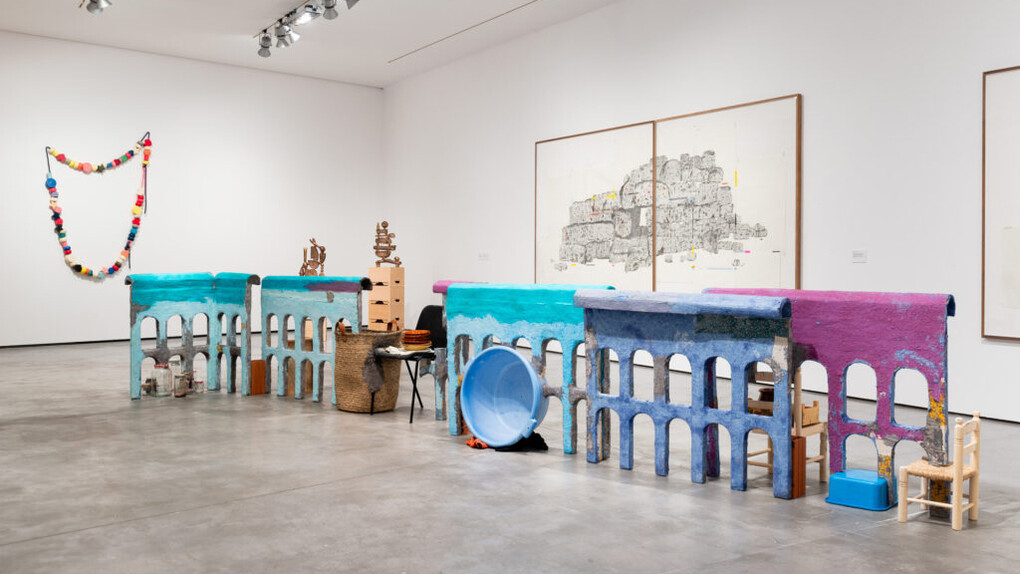
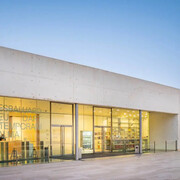
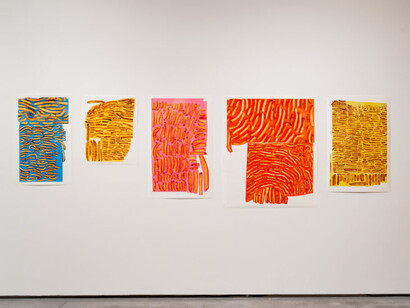
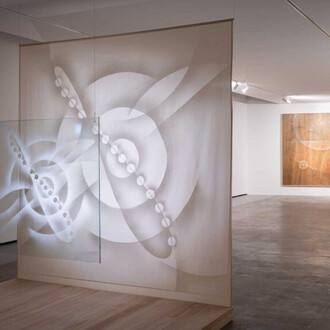
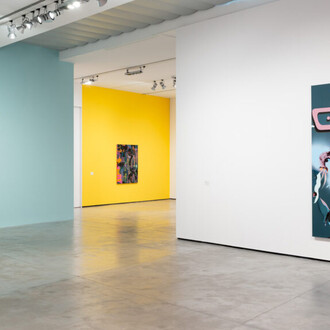
The Ester Partegàs exhibition, conceived jointly for Es Baluard Museu d’Art Contemporani de Palma and Museo Centro de Arte Dos de Mayo in Madrid, provides a comprehensive review of her work over the last three decades. Far from a retrospective approach, it proposes a circular journey in which works are intertwined, opening a porous, permeable dialogue between them. The artist’s maxim, that she cannot stand still on the creative level, serves as a metaphor for the tone pursued by the exhibit: an itinerary full of gesture and swing, balance and resistance, twists and turns, comings and goings.
The exhibition also takes a close look at the idea of minor history, small gestures, minimal actions, bastard traditions, limited audiences, or chance encounters with certain cultural materials. With a layout reminiscent of a large archaeological site, the show seeks to generate that space of tension found in her works, whether through the play of scales or the intrinsic contradictions in them. A tension that is, in turn, the artist’s space of vital and philosophical inquiry. A free, pleasant and speculative space that allows her to question what we assume to be real.
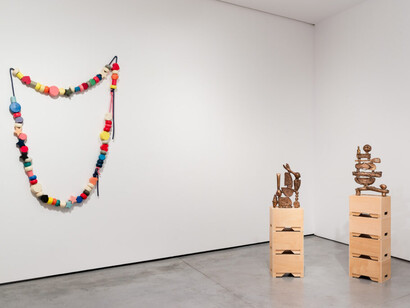
Minor architecture focuses on vernacular, unpedigreed architecture produced by spontaneous activity—the art of building as a universal phenomenon that represents a statement for the artist and connects with the marginal, the imaginal and the feminine. While in her early works Ester Partegàs looked at boards, containers, slogans, wastebaskets, labels, barcodes and magazine headlines, today she looks at baskets, tombs, bridges, thermal baths, milestones, crypts, pockets and aqueducts. Like animal architecture, her constructions today are inward-looking, somewhere between a hiding place and a refuge, and they bring together those bodily gestures that have not been appreciated or that lack a worthy architectural tradition.
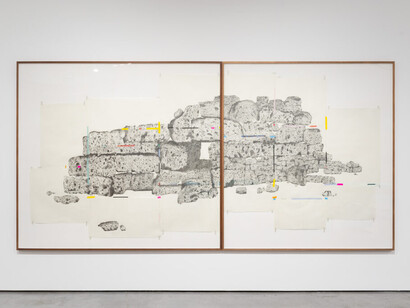
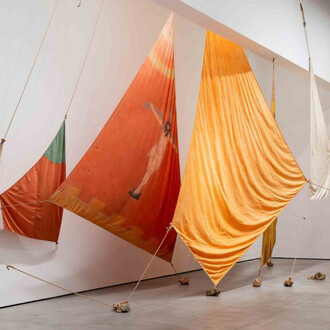
From this perspective, we can interpret Line II (Laundry baskets) (2025), the large installation that the artist created specifically for the exhibition, using certain objects of Mallorcan craftsmanship, such as chairs, pots and plates. In it, as in her other most recent works, she considers the interior of the sculpture, which appears hidden but liable to be occupied. Likewise, two large drawings follow in the wake of her knead, penetrate, let go (2022–2023) and continue to grow in size, this time as a nod to the talayots, the prehistoric constructions so characteristic and abundant in Menorca and Mallorca. Here, her piles of breadcrumbs become large walls full of holes. A look back at archaeological time and, by the same token, a recognition of everything that is beginning.
Minor architecture is complemented by a catalogue that invites readers to delve into the artist’s career and the uniqueness of her work over the past three decades. Texts by Martin Herbert, Pilar Bonet and Michael Taussig accompany the curator’s analysis.