English
 Español
 Français
 Deutsch
 Italiano
 Português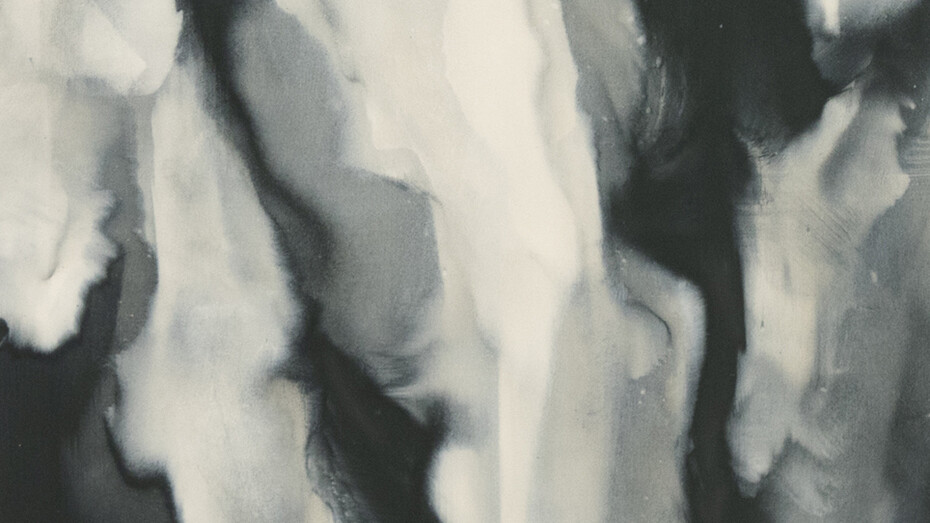
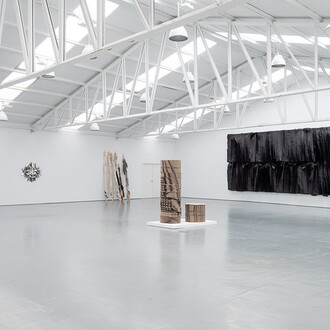
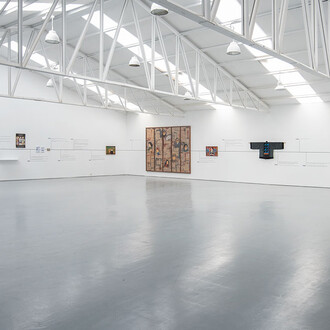
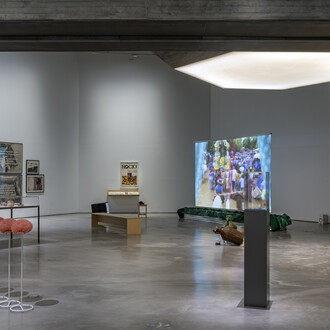
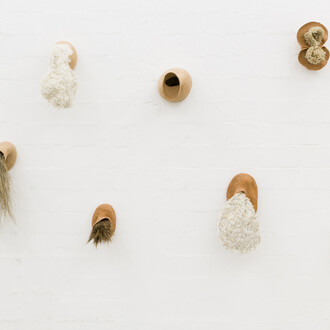
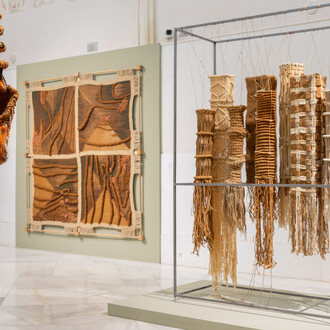
The exhibition presents a body of work by Alexandra Karakashian, centred on a long-term engagement with a single material: oil. More precisely, engine oil – black oil, greasy oil, and slippery oil. Across installation, textile, and works on paper, her practice unfolds as an inquiry in which oil becomes her primary medium and feeds geopolitical questions. Oil is a material inhabited by deep time, it is an ecosystem originating from prehistoric marine life, transformed by human intervention into a substance that fuels contemporary life while bearing the trace of environmental violence. It is a matter that exceeds us, in its scale, and imperial symbolism.
By working with one of the most powerful resources on earth, Karakashian’s practice exposes the contradictions embedded in oil’s omnipresence. While it structures everyday consumption, it also underlies systems of extraction, environmental injustice, and power. This material engagement resonates with broader histories of displacement and loss that inform Karakashian’s ongoing research. Drawing from her family history with an Armenian heritage, her work reflects on what it means to be un-homed, historically and geographically. The artist’s relationship to this material is tense, shaped by its malleability in spite of allowing so little control. Oil holds a life on its own, moving across surfaces and operating on temporalities that resist immediate visibility.
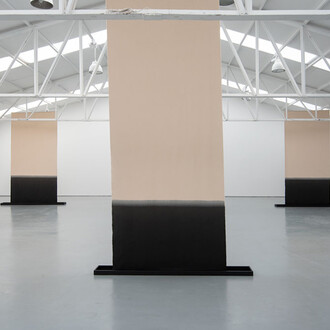
Her process is grounded in an attentive resonance to the material’s behaviour. She is loyal to its texture, she allows oil to dictate rhythm and pace. The slow movement of oil demands that she pauses and these moments of stillness require observation. The oil becomes alive beyond her and she acts with it. Each encounter is a corps à corps with the material – it is absorbent, resistant, and often blended with pigments and oil paint. What emerges is often a dense black surface shaped by movement, where her gestures recall dance – she becomes one with the material across paper, textile and installation.
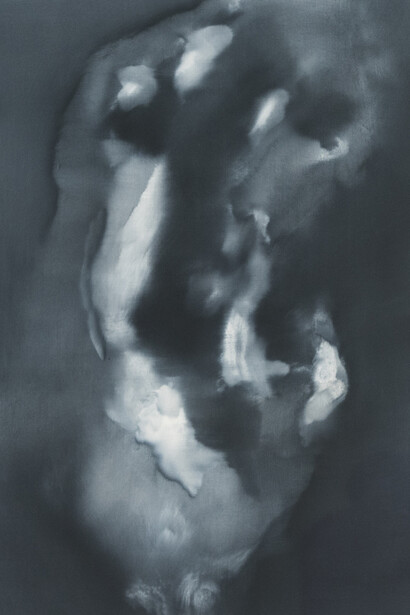
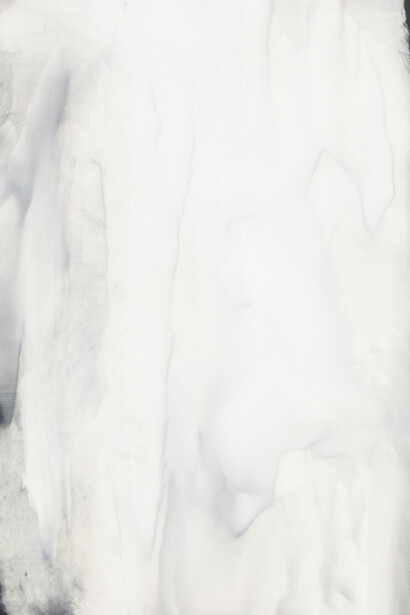
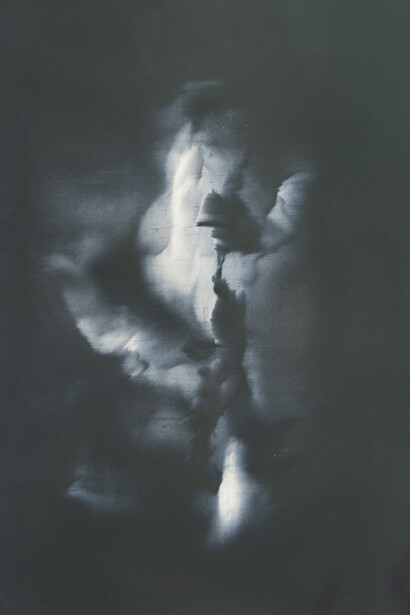
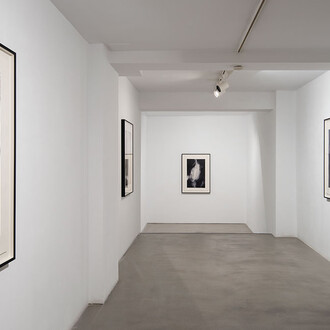
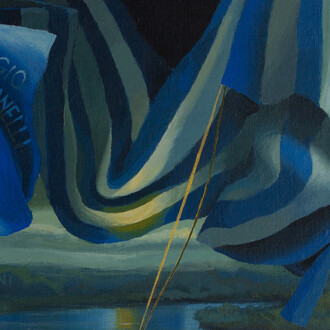
Close to hand I to VIII (2025) comprises a series of small-scale works on paper that introduce softness. Here, the paper acts as an extension of the material itself. Drawing from in-depth photographic research, Karakashian translates images into abstraction. Oil becomes momentarily static, followed by movements from enhanced wiping, erasure, and the removal of the black paint. Abstraction operates as a space of refuge, allowing intuition to shape forms. Materiality takes center stage quietly against the overwhelming flux of daily images that numbs our perception.
Moving between monumentality and silence, softness and movements, Karakashian’s practice holds space for violence and sensitivity. By committing to a single, contested material, that is alive, unstable and largely unknown in its physicality, she invites the audience back into sensory engagement and critical awareness about its symbolism. It is a form of resistance that counteracts and complicates our relationships to power. It offers a way to sit with it through attention, through not knowing and through the act of holding onto something as we gaze into it.
(Text by Cindy Sissokho)