English
 Español
 Français
 Deutsch
 Italiano
 Português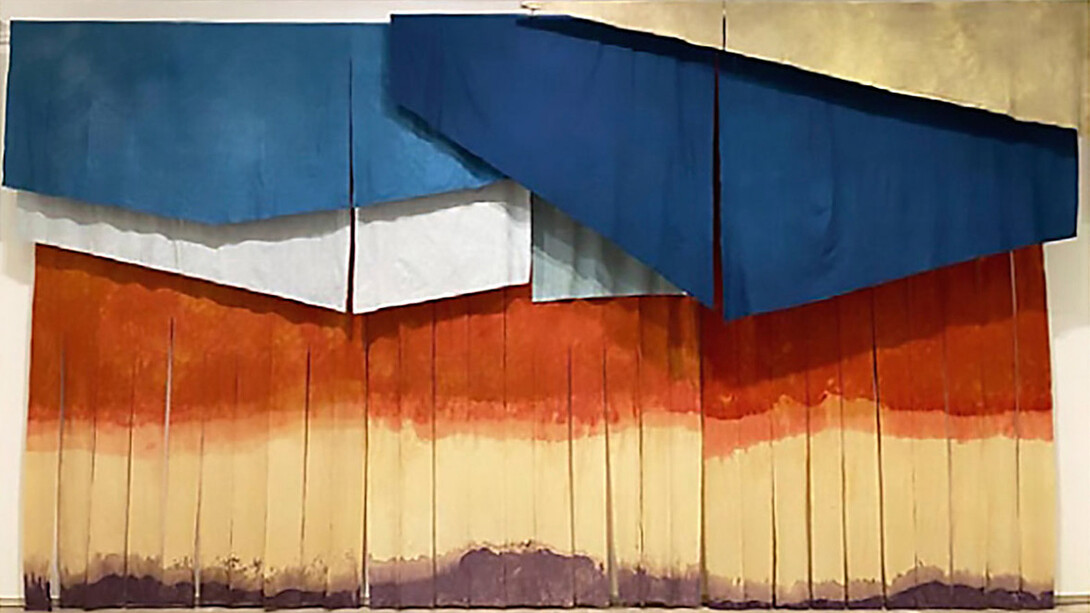
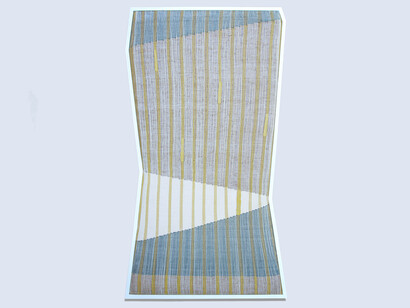
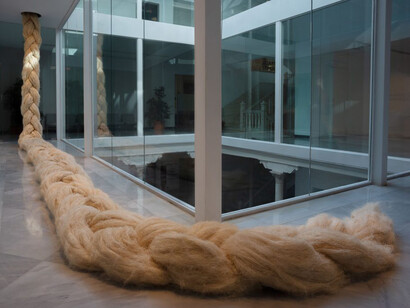
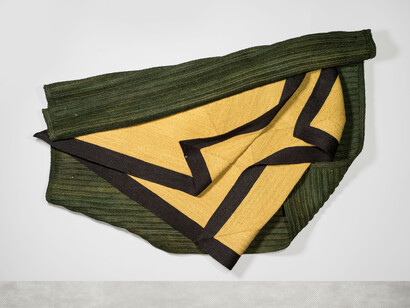
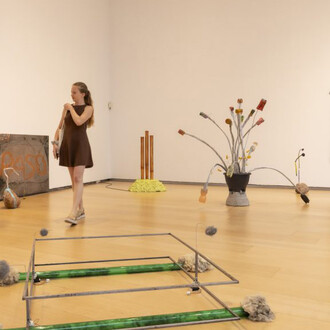
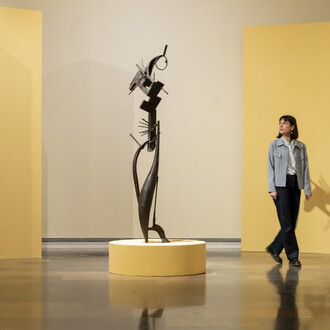
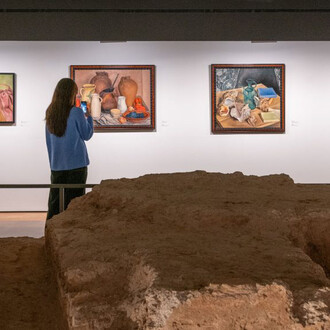
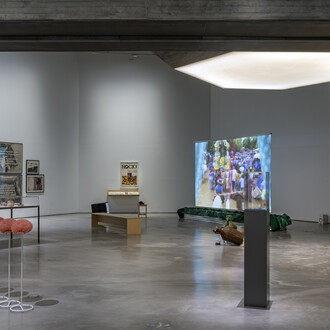
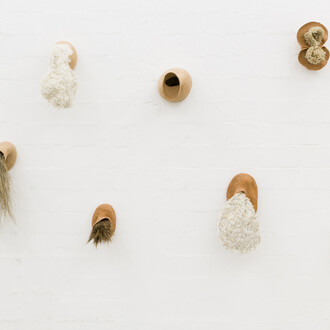
A media lumbre (Gently under the flame) brings together a group of works that strike up in dialogue with materials and forms of vernacular knowledge conventionally looked down on as “minor arts,” such as ceramics, clay, wool, textiles, embroidery and natural fibres. And these materials are often coupled with sounds and silences. The voice emerges as a means of transmission, reclaiming oral tradition as a vehicle for memory, bringing to mind filandones, those old night-time gatherings around the hearth when stories were told as people went about their manual work.
The exhibition unfolds as a celebration of living well and of the sovereignty of time, as an invitation to stop and reflect, to breathe deeply and to listen to the quiet murmur of matter. The works are grounded in a common premise: integrating these materialities entails the preservation of ancestral know-how, the recovery of overlooked narratives and the activation of other forms of knowledge. In this liminal space, tangible and intangible heritage are intertwined, as are technique and affect, gesture and narrative. The exhibition remains suspended in half-light as it follows the slow rhythm of manual processes and shared inheritances.
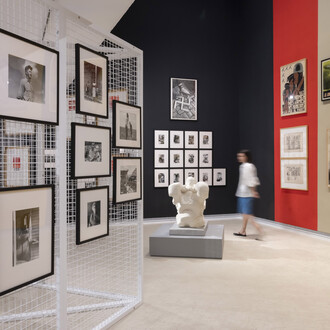
A media lumbre unfolds across different regions – Valencia, Mallorca, Aragón and Catalonia – in four free-standing exhibitions within the same conceptual framework. It opens in a major urban museum, the IVAM, and then expands between the urban and the rural in Mallorca, at Casal Solleric and Es Baluard Museu. Later, it re-engages with the territory and the landscape in the CDAN (Huesca) and Terra (L’Espluga de Francolí) museums. This itinerary outlines a sensitive cartography that articulates diverse contexts and establishes an ongoing dialogue between the rural and the urban, between tradition and experimentation, and between manual production and critical inquiry. The production has been carried out following principles of sustainability that, among other measures, prioritise natural, non-polluting materials, the reuse of elements and the elimination of the need for international transport.
Each of the various venues activates the project from its own individual context, producing specific resonances while maintaining the coherence of the whole. These works and their materialities allow us to engage with non-hegemonic knowledge systems grounded in the territories: crafts, trades, farm labourer and indigenous practices, and ways of life connected to the land and water. Protecting these forms of knowledge involves much more than simply conserving techniques; it also means sustaining a living heritage made up of memory, oral narratives, vernacular knowledge and collective bonds.
More than an inert resource, here matter is a living archive. Its memory is inextricable from the places it comes from, from the bodies and communities that have worked it. Materials weave relationships: wool speaks of transhumance and care; plant fibres tell of fragile ecosystems and sustainability strategies; ceramics recall their primary function of containing, preserving and accompanying everyday life. Once purely utilitarian materials have yielded to the poetic.
A media lumbre celebrates historically undervalued systems of knowledge and engages with worldviews that propose a life in balance with the territory. From these perspectives, the decentralisation of knowledge is inseparable from the decentralisation of territory, embracing the institutional responsibility to call into question hierarchies of knowledge, to disrupt singular narratives and to rehearse polycentric models.
Here, looking to the past becomes a way of imagining the future. Tangible and intangible heritage are woven together into a single fabric of memories, territories and affects. Accordingly, the exhibition invites us to listen to the voice of matter and to collectively rehearse other slower, more attentive ways of world-making that are crafted in half-light.