
 English
 Español
 Français
 Deutsch
 Italiano
 Português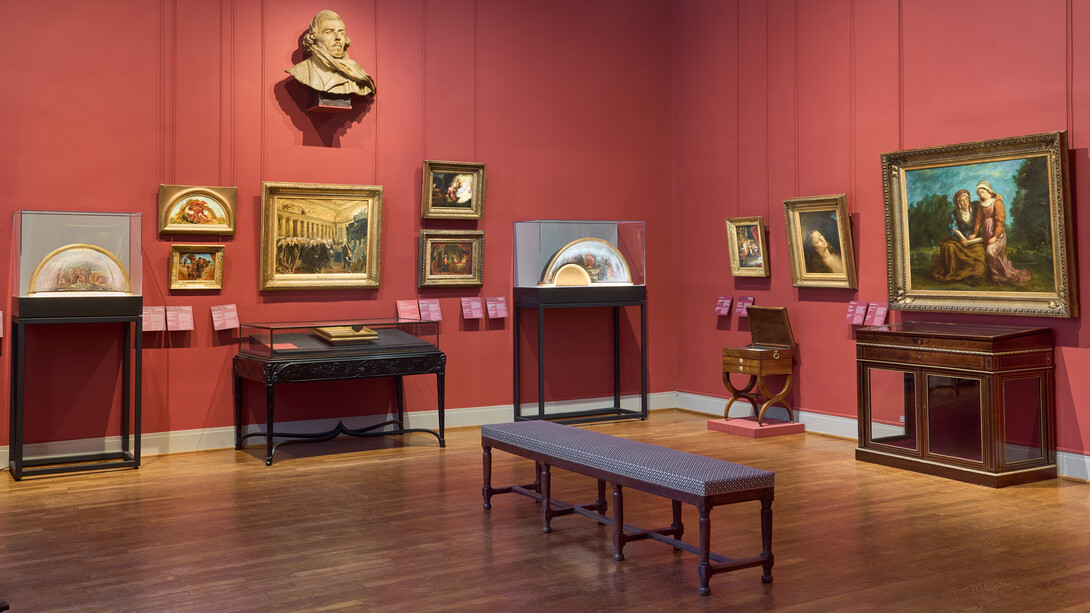
Rare archival documents, sketches, and contemporary posters and photographs offer a glimpse of a more personal Delacroix, far from his large-scale decorative works and intimately linked to his creative process. This exhibition traces the history of the creation of the Musée Delacroix and the saving of the painter’s studio from likely destruction by his admirers. What do his friendships and professional relationships tell us about Delacroix?
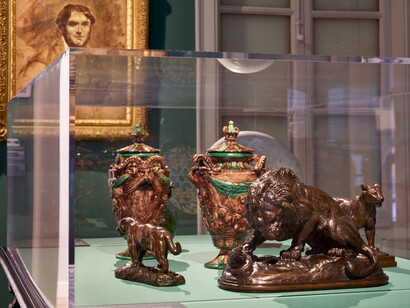
The tour invites visitors to (re)discover the museum’s collection in the artist’s apartment and studio from a fresh perspective through the display of rarely exhibited works.
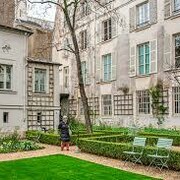
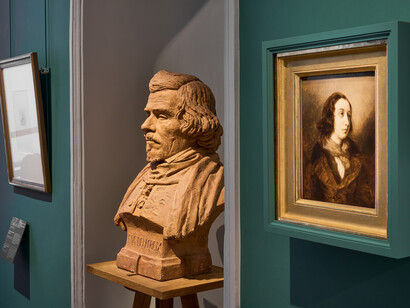
When it opened in 1932, ‘the Delacroix studio’ was conceived by the first president of the Société des Amis, painter Maurice Denis, as ‘an ideal illustration of the Journal’ – a way of penetrating the artist’s thoughts and uncovering the secrets of his studio, much as one does when reading his personal writings. The Delacroix visitors still encounter today in the museum is the Delacroix of sketches and studies he kept in his studio without ever displaying them, the Delacroix shaped by his circle of friends and admirers.
Both during his lifetime and after his death, Eugène Delacroix attracted numerous admirers and the ways of paying tribute to him were manifold: creating copies of his most famous pieces, or producing paintings, sculptures and written works that depict him or evoke his art. These admirers included artists as diverse as William Bouguereau, Henri Fantin-Latour, Hippolyte Poterlet, Odilon Redon and Charles Baudelaire.
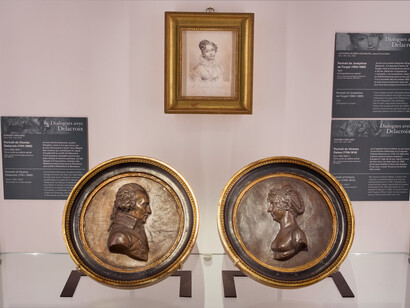
Who were the people close to Delacroix? Family members, friends and acquaintances – men and women alike – introduce themselves and talk about their connection with Eugène Delacroix through the exhibition itinerary.
Although the painter sometimes seemed more absorbed in his own thoughts than in the world around him, he visited family and friends, accepted social invitations, and even travelled to England and Morocco.
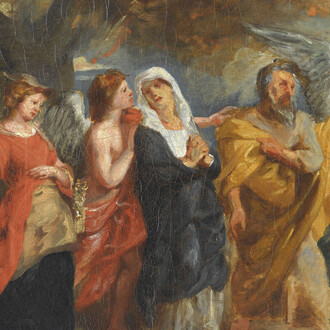
Delacroix worked primarily in his studio. He found inspiration in his own sketches and paintings, in the copies and prints of masters that he kept, and in his memory and imagination.
![Mary Cassatt, Fillette dans un fauteuil bleu [Enfant dans le salon bleu] (detail), 1878. Courtesy of Musée d’Orsay](/attachments/3ddcf3630b2e6b21d055a8488350d949784be8fa/store/fill/330/330/9b97dc5b17cad42577b6453f0968e961b1231ceb2b8b5ceb2c09057b2695/Mary-Cassatt-Fillette-dans-un-fauteuil-bleu-Enfant-dans-le-salon-bleu-detail-1878-Courtesy-of.jpg)