English
 Español
 Français
 Deutsch
 Italiano
 Português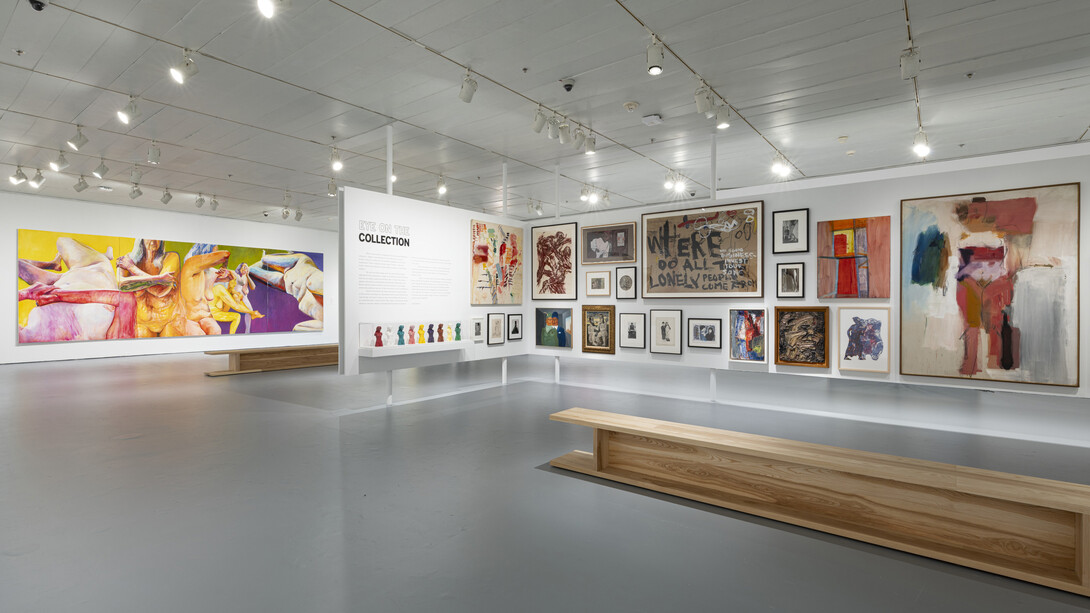
Spotlighting Semmel’s singular perspective, Joan Semmel: in the flesh presents the artist’s iconic paintings and self-images alongside works from the Museum’s collection to explore parallel themes of the body, intimacy, and autonomy.
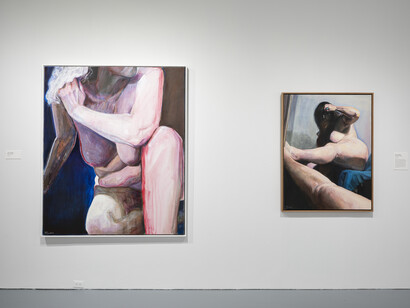
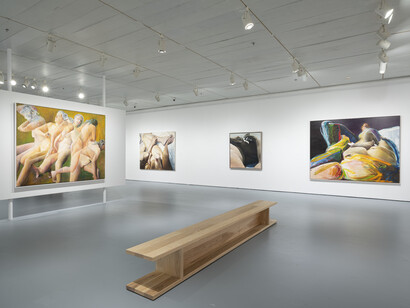
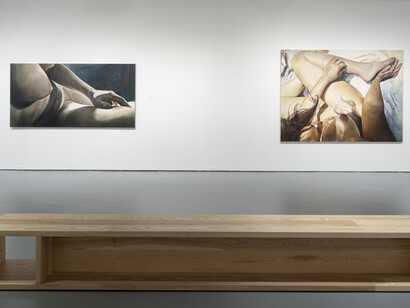
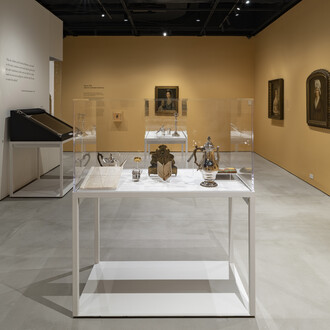
This winter, the Jewish Museum presents a major exhibition of boundary-breaking work by Joan Semmel alongside a selection of artist curated works from the Museum’s collection in Joan Semmel: in the flesh. For over 50 years, Semmel has upended traditional figuration with her boldly declarative nude painting through gestural and hyperreal representation. In the flesh juxtaposes 16 paintings by the artist, drawn from several periods across her career, many monumental in scale, with nearly 50 modern and contemporary artworks from the Museum’s expansive holdings. The works from the collection—encompassing painting, sculpture, photography, and works on paper—were selected by the artist for their engagement with themes present in her work, including her exploration of beauty, agency, and self-perception.
On view from December 12, 2025 through May 31, 2026, In the flesh opens as the Museum renews its commitment to examining its multifaceted holdings, following the unveiling of its reimagined permanent collection galleries and new center for learning. The exhibition is organized by Rebecca Shaykin, Barnett & Annalee Newman Curator of Contemporary Art, and Liz Munsell, Curatorial Consultant, in partnership with Joan Semmel.
“As we consider new possibilities for showcasing the Museum’s robust collection, In the flesh has offered a special opportunity for exploring the range of narratives and stories that radiate from our holdings,” said James S. Snyder, Helen Goldsmith Menschel Director. “Dedicated to and curated in concert with Joan Semmel, In the flesh highlights the work and insights of an artist who continues to be ahead of her time. The exhibition simultaneously reflects the Museum’s legacy of championing artists who fearlessly share their lived histories and challenge the status quo through their creative practice.”
Born in 1932 into a secular Jewish family in the Bronx, Semmel trained as an Abstract Expressionist in New York before moving to Spain in 1963, where she enjoyed early success on an international stage. Upon her return to New York in 1970 as a newly divorced mother of two, she found community within the burgeoning feminist and anti-censorship movements, alongside her peers, including Judith Bernstein, Louise Bourgeois, Joyce Kozloff, Joan Snyder, Anita Steckel, Hannah Wilke, and other trailblazing women artists. During this period, she also curated two of the earliest exhibitions of contemporary feminist art, giving women artists a public platform denied to them by many mainstream institutions. Over the course of the following decades, Semmel forged a distinct painterly language of nude imagery that was a defiant response to the male gaze and spoke to her own bodily experience as a woman, emphasizing female empowerment and sexual agency. At 93, Semmel remains a master of figuration, continuing to challenge views of female aging and respectability.
In the flesh foregrounds the artist’s diligent, life-long investigation of embodied female experience. Spanning over 50 years of the artist’s practice, the exhibition offers new points of entry to some of Semmel’s most pivotal series. Works on view include her 1978 painting Sunlight, one of Semmel’s iconic self-images and a defining work of the feminist movement, together with examples from her bold, high-key Erotic series of the early 1970s, as well as complex multi-figure compositions, including the recent large-scale Skin in the game (2019).
The kaleidoscopic selection of Semmel’s featured works provides context for artworks from the Museum’s collection by artists including Ida Applebroog, Marc Chagall, Nan Goldin, David Levinthal, Alice Neel, Nancy Spero, Man Ray, Larry Rivers, Laurie Simmons, Joan Snyder, and Hannah Wilke, among others.
"When I arrived at the Jewish Museum 15 years ago, Sunlight immediately emerged as one of my favorite works in the collection. It is thrilling to present this painting within a comprehensive view of the artist’s development as a painter of the female form, and especially of her own body over time, and to be doing so in such close dialogue with the artist herself,” noted Rebecca Shaykin. “Joan Semmel’s paintings challenged the male-dominated art world of the 1970s. Her work has inspired generations of artists and shifted the trajectory of contemporary art history. Her selections from the Museum’s collection demonstrate how influential the feminist movement has been in changing the conversation about whose perspectives we value and why.”