English
 Español
 Français
 Deutsch
 Italiano
 Português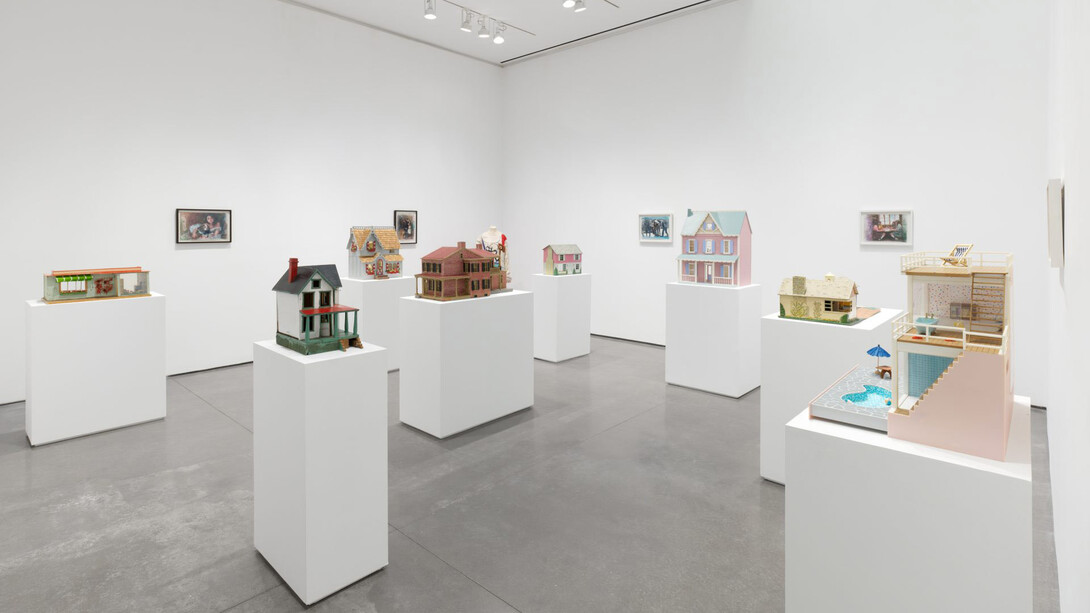
Victoria Colmegna (b. 1986, Argentina) explores artifice, kitsch, fraught psyches, and the materiality of memory through an art practice unbounded by any single medium. Influenced by histories, psychoanalysis, and astrology, she approaches artmaking as a process of classification and analysis—examining how traits, behaviors, and roles are constructed and repeated. Colmegna weaves together watercolors, readymades, textiles, and tools of intervention, both clinical and chemical, which act like miniature psychoanalytic chambers, exposing unconscious urges.
Central to Colmegna’s practice is her ongoing fascination with the therapeutic approaches of psychoanalyst Melanie Klein. Set against the turbulent backdrop of 1940s Britain, Klein developed her “play technique,” from which the exhibition takes its name, as a way to access children’s subconscious thoughts and fantasies. Klein believed that through the symbolic language of play, children could most successfully communicate their internal conflicts, fears, and desires. Colmegna draws upon such concepts through her work, and, like Klein’s young patients, structures the mind visually.
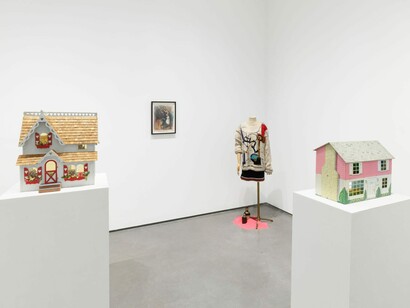
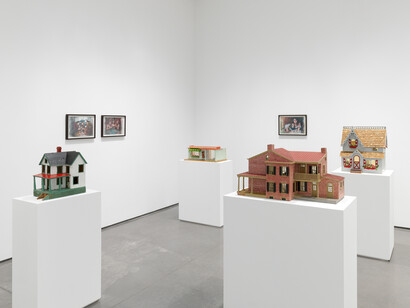
Colmegna’s exhibition navigates the intermediary space between childlike, psychic recesses and the structures of adult reality, maintaining a dreamlike ambivalence that never resolves into either realm. Once-used dollhouses echo children’s play, and with it, the complexity of the young mind. Their miniature interiors teem with decorative decisions and uncanny traces of anonymous touch.
Hallucinatory watercolors of women in closed systems, like cliques or sects, hang behind each house, as if projections from within the confines of their walls. The iconography of innocence fractures with the intrusion of medical devices and personal effects, and a mound of fuchsia powder, evocative of a powdered synthetic psychedelic drug. Placed in dialogue, each object hovers on the edge of clear classification.
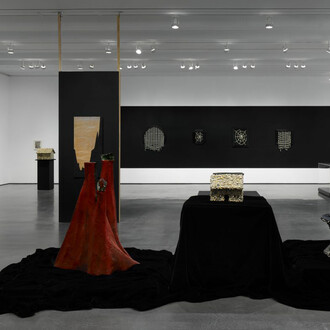
At once nostalgic and unsettling, Colmegna’s work wields a beguiling power driven by its position on the threshold between waking and dreaming. The objects she presents operate like actors within a theater she directs, filled with movement, each performing within a fluid psychological scene. In this restless choreography, Colmegna ensures that play and analysis coexist, and that transformation replaces resolution.