English
 Español
 Français
 Deutsch
 Italiano
 Português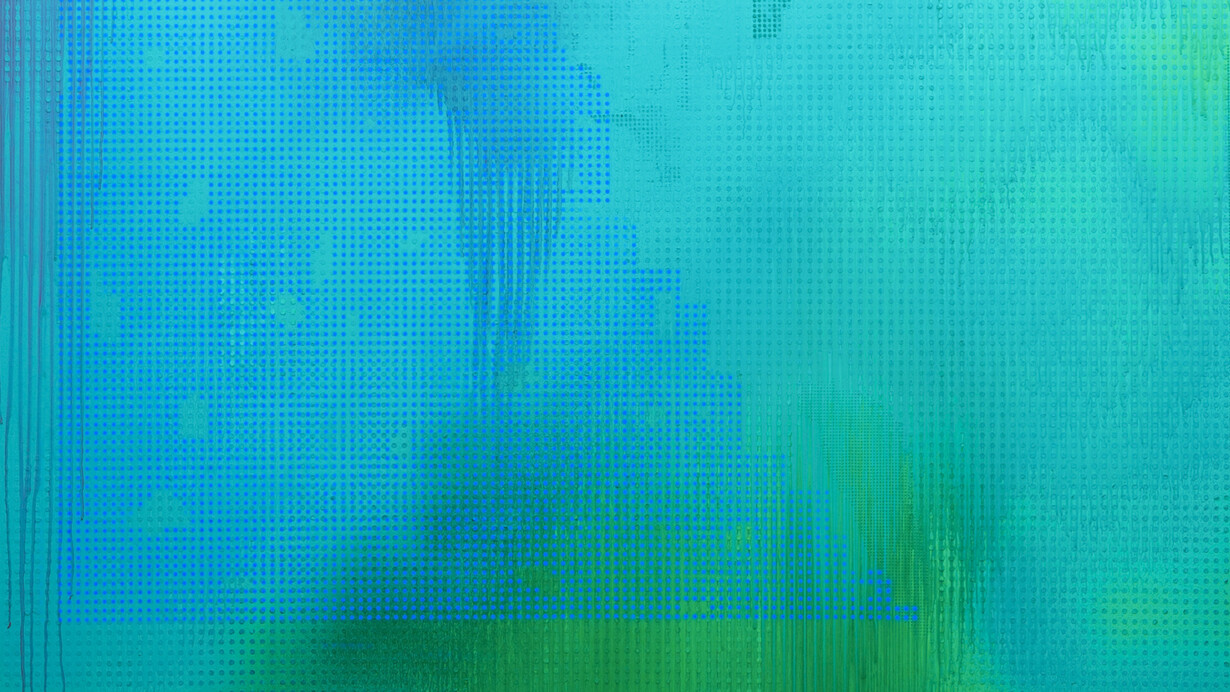
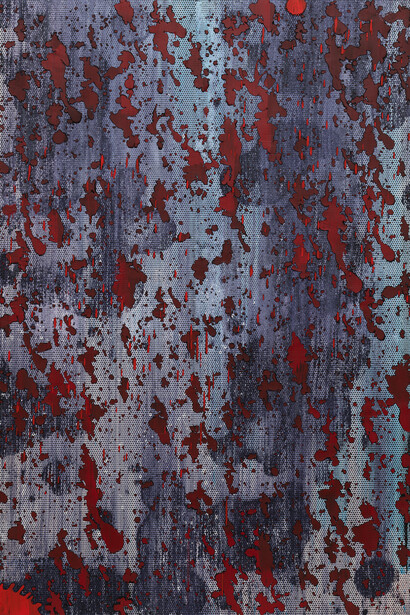
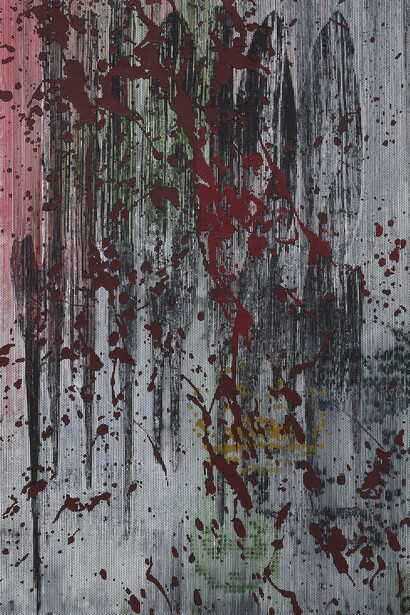
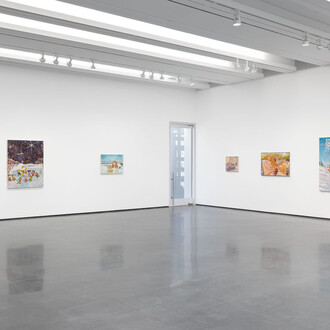
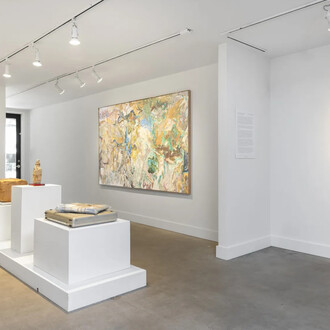
The paintings of Jacqueline Humphries (b. 1960, New Orleans) integrate modes of expression and communication. In dense, layered compositions that often conceal the process of their making, symbols, logos, emojis, and code mingle with brush marks, paint splatters, and drips, forging links between traditions of abstract painting and life cycles of technology. In her largest presentation of new and unseen work to date, Humphries aligns paintings with machines and emphasizes their unyielding capacity to reflect the drives and doubts of humans. Humphries started painting in New York in the 1980s, a time in which attitudes around the medium were often dismissive, noting its associations with a bygone era of artmaking. Negotiating painting’s viability and purpose thus became central to the artist’s practice, which incorporates techniques of repetition, mimicry, and camouflage to generate potent, yet withholding, images. In their precise constructions, Humphries’s paintings enact sensory glitches and misunderstandings for the viewer: splatters are rendered with stencils, signatures are 3-D printed, shading is derived from a tight grid of emoticons.
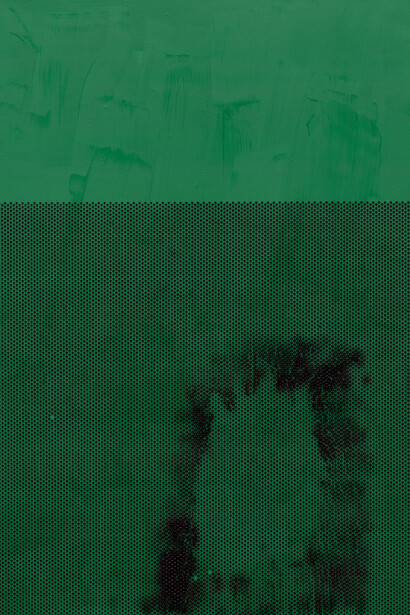
This unknowability is present in an expansive, five-panel painting that bisects the ground-floor gallery of Aspen Art Museum, installed on a skeletal wall of studs. Black markings—magnified depictions of scratches on film strips—scar the canvases, while washy gradients of color shift across the surface. Mirrors reflect and reveal another work of the same scale on the verso, in which drips and sprays of red paint, evocative of the artist’s early series of Horror paintings, conjure the sensational gore of slasher films. Across both front and back, the logo of the multinational automotive company Tesla is distorted and suspended within the painting, visible only from certain angles. In an adjacent gallery, painted green, Humphries abstracts the palette of a summer alpine landscape into a series of drip paintings generated in part by artificial intelligence, drawing upon and reinterpreting data sets of Humphries’s existing artworks.
Across the Museum’s lower level spans an installation of paintings and cast objects illuminated by black lights. Humphries first presented this series at New York’s Nyehaus gallery in 2005, a time of both disillusionment and experimentation for the artist in the years following 9/11. Cast in neon shades of pinks, purples, blues, and oranges, the paintings evoke the aesthetics of ’90s rave culture and amusement park haunted houses, while pointing toward the cold luminosity of computer screens. They synthesize traces of pre-digital counterculture, concocted fears, and technological advancement; in short, they are products of the turn of the twenty-first century. Viewers encounter this work in darkness, themselves made strange by the black light’s distinct wavelength. Pigmented resin sculptures made to mimic piles of chopped logs rest on the gallery floor. They are campfires with no flames, emitting an acidic glow in lieu of warmth.