English
 Español
 Français
 Deutsch
 Italiano
 Português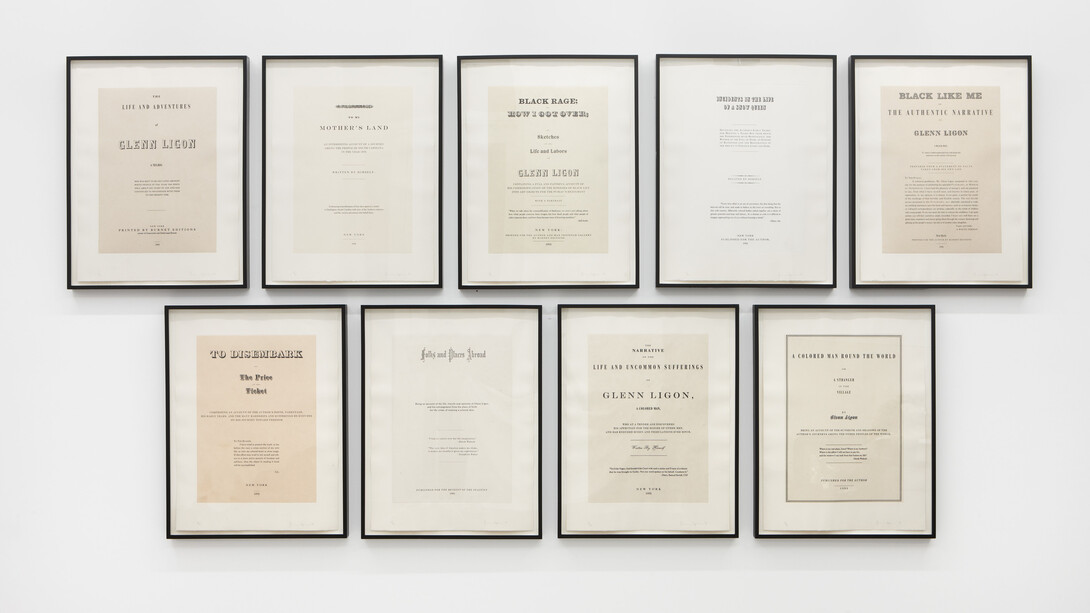
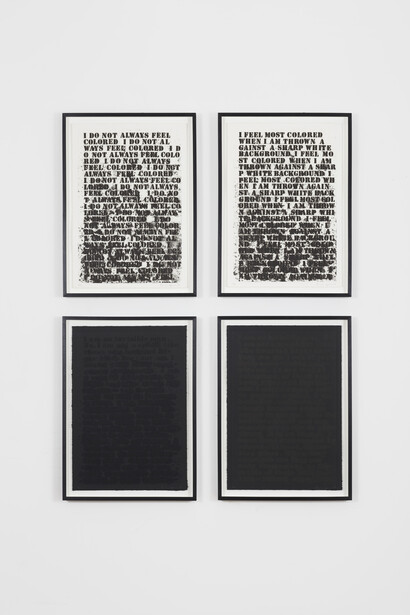
Break it down is a solo exhibition of works by Glenn Ligon that brings together prints, multiples, and works on paper made since the early 1990s. A preeminent voice in American art, Ligon (b. 1960, New York) often incorporates language into his work to examine the ways in which identity and culture are constructed against the backdrop of the nation’s complex and insidious past. Ligon appropriates a diverse range of writing, including literary passages from authors such as James Baldwin, Jean Genet, Gertrude Stein, and Zora Neale Hurston, as well as disclosures from confidants and strangers. Ligon often lays the ground for his work using stencils or templates, clinical tools that belie the intimate, vulnerable, and expressive quality of the chosen text. In discussing his early ventures in printmaking, Ligon remarked, “I am interested in the border between what is mechanical, repetitive, impersonal, and what is autobiographical.” This exhibition inhabits and troubles that border to reveal a chimeric self-portrait of the artist, one comprising photographs, reports, annotations, and stories that resist understanding.
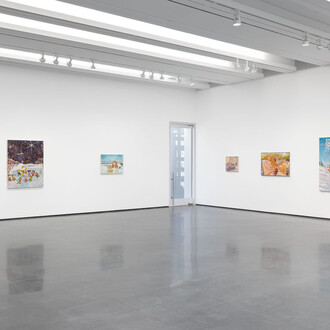
The gallery at Aspen Art Museum is divided into three passages, the first of which is anchored by Figure (2001), a sprawling collection of fifty unique screenprints featuring grainy passport-style photos of Ligon’s front and back on colored paper. These face two influential early sets of prints, Runaways and Narratives (both 1993), which first appeared in Ligon’s landmark exhibition To Disembark at the Hirshhorn Museum in Washington, DC. Runaways consists of ten anonymous characterizations of “Glenn,” a runaway enslaved person. The descriptions, accented with a dark and knowing humor, are in fact written by friends whom Ligon enlisted to characterize him in the style of a missing persons report. Narratives molds Ligon’s experiences into nine stylized preambles that mimic the title pages of propagandistic tales of formerly enslaved individuals. With precision and self-awareness, these works provide camouflaged insights into the ironies and transgressions faced by Ligon as a Black artist moving within networks of culture.
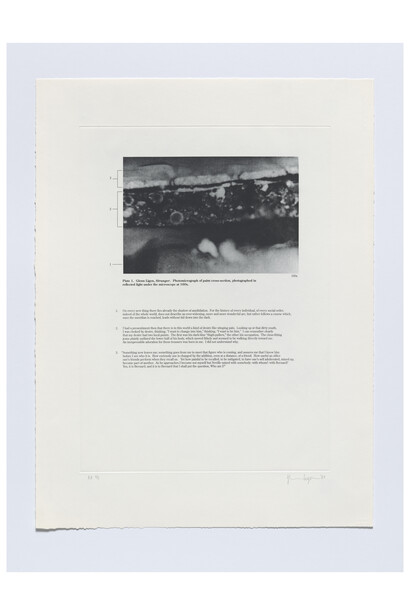
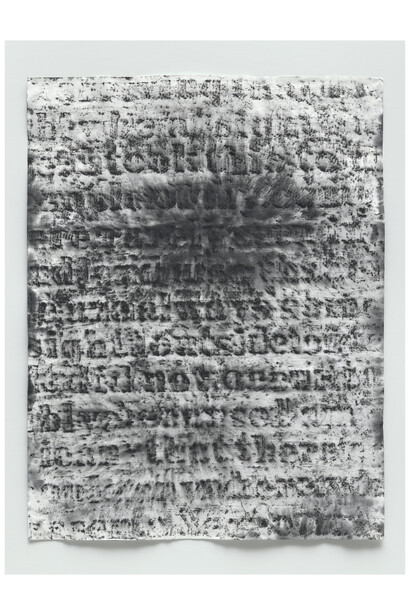
Much of Ligon’s printmaking references his own existing artworks, accumulating in an introspective archive. Depictions of condition reports on the artist’s paintings and possessions recur, suspending these artifacts in clinical analyses of their own decomposition. As such, Ligon raises questions around artistic legacies and their ability to be contained within material objects. Language remains an elusive shapeshifter that transforms across time but never disappears. Since the early 1990s, Ligon has made paintings using passages from James Baldwin’s 1953 short essay “Stranger in the Village.” The text details Baldwin’s unnerving experiences in the remote Swiss village of Leukerbad, many of whose citizens, according to Baldwin, had never seen a Black man before. In 2023, Ligon began using one of his paintings bearing the opening passage of this text as a rudimentary printing template, in which soft, dampened kozo paper would be impressed upon the surface of the painting, and rubbed with carbon and graphite. In their largest installation to date, these warped reflections of Baldwin’s words surge and recede with varied degrees of legibility. The ghostly testimonials consider the ways in which the self inhabits what we make and what we say, the ways in which it dissolves and lingers across time.