English
 Español
 Français
 Deutsch
 Italiano
 Português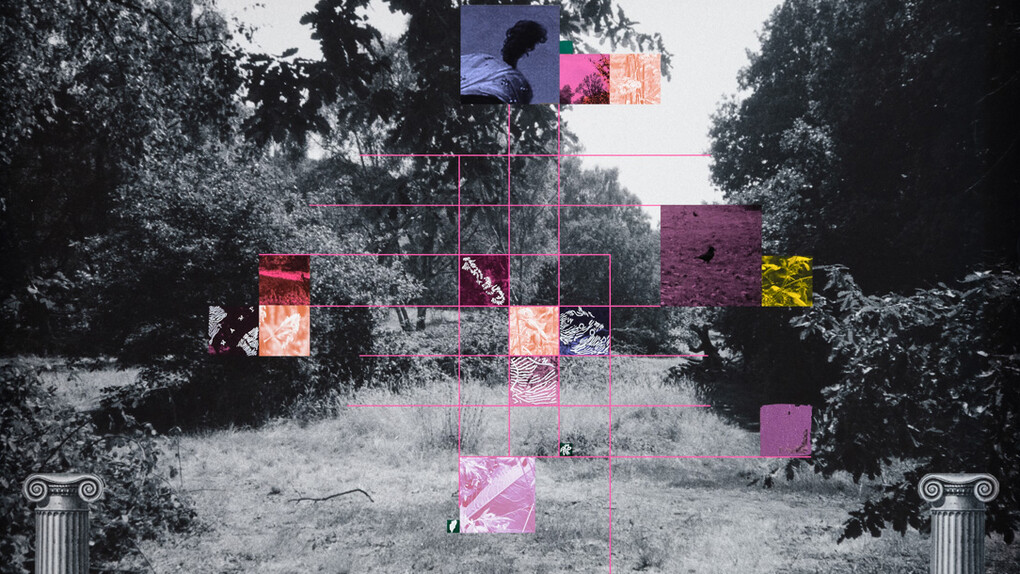
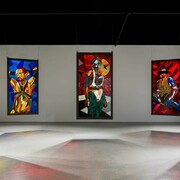
Whattiftheworld is proud to present The powers surge, Keeping the Ghost Inside, a solo exhibition by Bindi Vora.
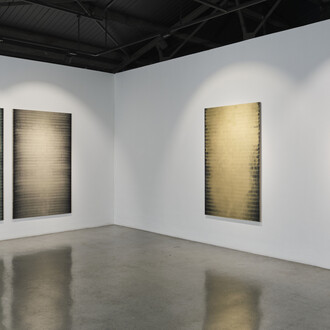
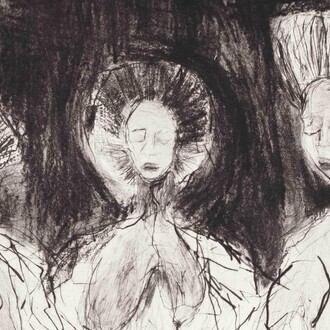
In The powers surge, keeping the ghost inside, Bindi Vora presents a body of work that examines how histories of migration, displacement and belonging are carried across time through images, objects and inherited memory. Working across collage, drawing, painting and archival material, Vora approaches memory not as a stable record but as a shifting and lived process, shaped by loss, transmission and repetition.
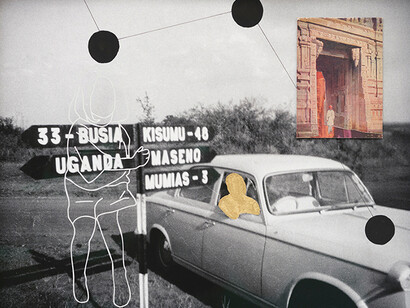
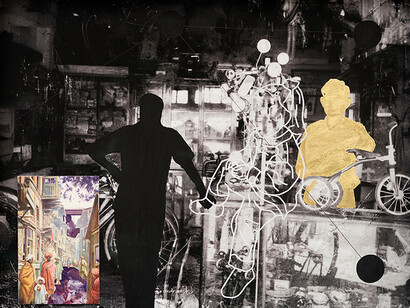
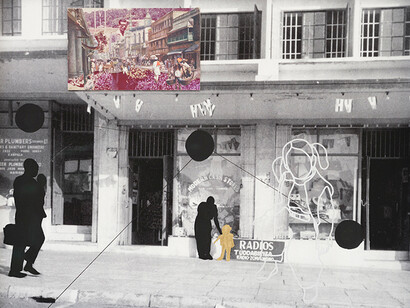
The exhibition brings together three related series of works that follow the movement of people and stories across continents and generations. Central to this presentation is I dreamt of lost vocabularies, which draws on Vora’s family history across four generations, beginning with her great-grandfather’s migration from India to Kenya in 1908 during the construction of the East African railway. The narrative extends through Uganda in the 1960s and culminates in the expulsion of Asians in 1972. Rather than presenting these events as a complete account, the works assemble them as fragments that continue to shape identity and belonging today.
Vora works extensively with archival material, including family photographs, nineteenth-century souvenir postcards and newspaper imagery. She cuts, transfers, overpaints and layers these materials with gouache and gold leaf, disrupting their status as straightforward documents. The archive becomes something handled and reworked – a site where memory, omission and interpretation sit side by side. These interventions foreground the gaps within historical documentation and point to the emotional and political labour involved in remembering.
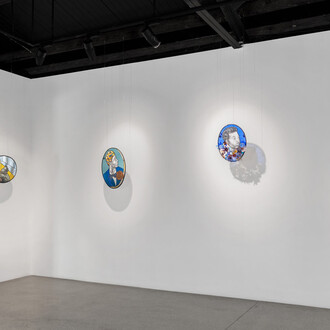
The series સફર (or journey) draws from the 1972 East African Standard newspaper archives, alongside mixed media and objects that reference the possessions concealed during moments of forced migration. Circular forms recur throughout, suggesting cycles of movement, return and endurance. These visual motifs link the intimate scale of personal belongings to the broader mechanisms of historical displacement.
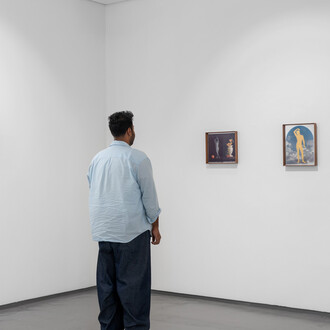
Commissioned by the Financial Times, Trying to touch the trees (2023), is a series of interconnected collages that reflect on the life and legacy of Dido Elizabeth Belle. Born in 1761 in the West Indies to Maria Belle, an enslaved African woman, and a British naval officer, her life unfolded within the contradictions of Britain’s slave-owning empire. At the age of five, her father brought her to London, where she was raised at Kenwood House by his uncle, Lord Mansfield – later Lord Chief Justice. Dido lived there for more than 30 years and was treated as part of the aristocratic family – an unusual and complex position for a mixed-race woman at the time. Mansfield later issued legal rulings that helped pave the way for the abolition of slavery in England. Some historians suggest that Dido’s presence in his household may have influenced these decisions. Through collage, the work revisits her story to consider how Black lives have shaped histories that are often overlooked or excluded from official records.
Using a partial reproduction of the only known portrait of Dido, Vora considers how certain figures persist within history only through fragments, and how presence is often registered through absence. The works raise questions about visibility, power and the uneven ways in which lives are recorded and remembered within institutional archives.
Across The powers surge, keeping the ghost inside, Vora’s practice positions memory as an active and ongoing process rather than a static record. The works offer a nuanced contribution to contemporary debates around diaspora, archival absence and postcolonial histories, exploring transnational narratives and the ethics of historical representation.