English
 Español
 Français
 Deutsch
 Italiano
 Português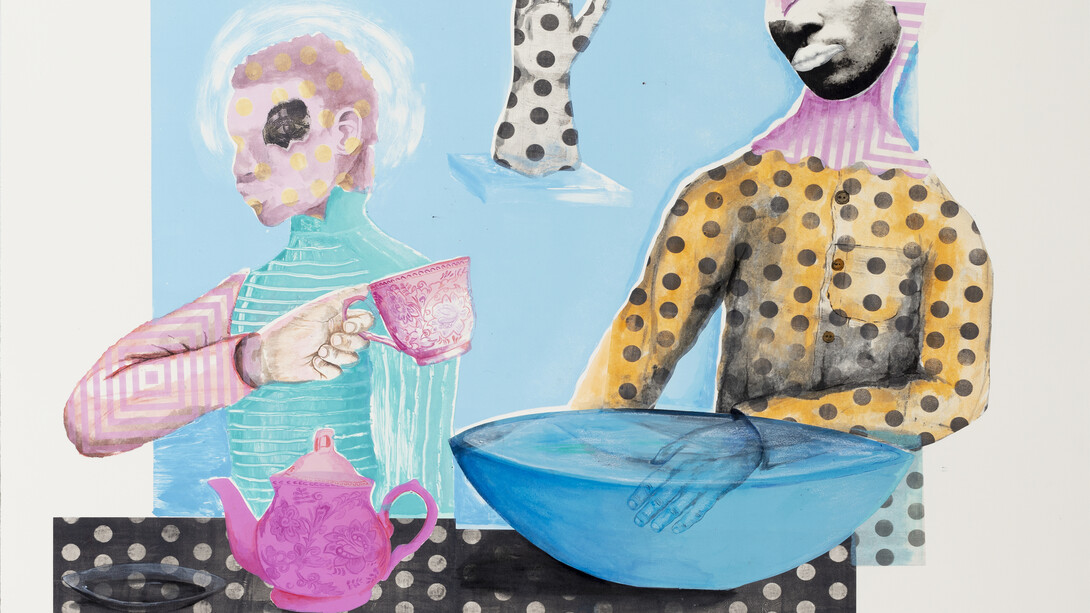
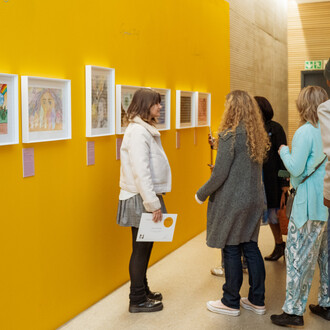
David Krut Projects is pleased to present Wish list, a solo presentation of new unique works on paper created in collaboration with the David Krut Workshop.
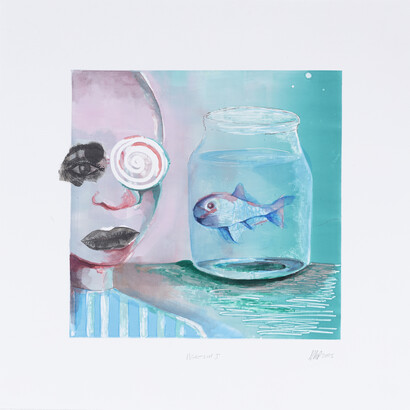
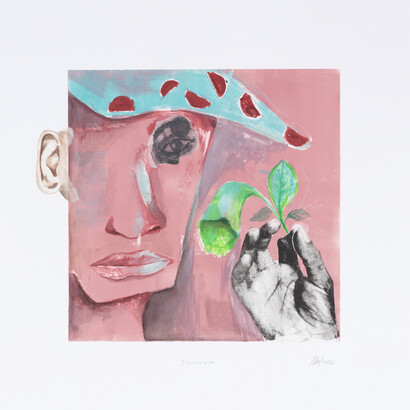
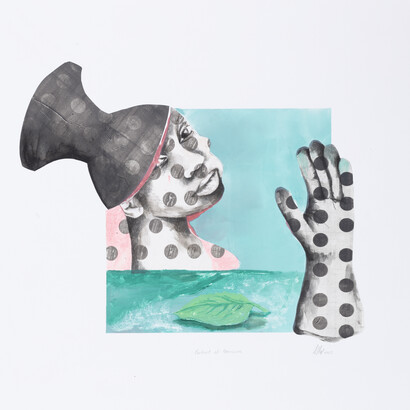
The exhibition presents a new series of mixed media works which explore the intersections of desire, aspiration, and consumer culture. Ntuli describes each piece as functioning simultaneously as an archive and a reflection — collecting fragments of visual and material culture to reveal how personal longing is shaped by digital economies and social expectations. In this sense, the works resonate with the concerns of American Surrealist and post-Surrealist artists of the 1960s and 70s, who similarly sought to make sense of a world that felt increasingly irrational, mediated, and disjointed. Like those artists, Ntuli uses juxtaposition and fragmentation as tools to reflect the psychological and social conditions of this moment in time, acknowledging a reality that often appears more surreal than real.
The works are intimate in scale, pared down in colour, and relatively simple in composition. Limiting his palette to two or three tones and introducing only minimal chine-collé elements, Ntuli focuses on clarity and restraint rather than the densely layered approach seen in his larger works. They are assembled using fragments of pronto-lithography, painting, chine-collé, and collage, including elements of found imagery, handwritten notes, and online advertisements. By collaging these disparate elements, the series maps the tension between need and fantasy, utility and ornament, self and society. For the artist, each work acts as a speculative inventory — a personal and collective record of what is longed for, bought, saved, or imagined.
The artist is interested in the notion of Wish list as accumulated records, and their existence in the digital space. Materials such as wrapping paper, receipts, printed screenshots, and ephemeral packaging are repeated, layered, and reconfigured into compositions that blur distinctions between the tangible and the virtual. In these accumulated portraits of desire for consumer goods, Ntuli interrogates the complicated relationships we as consumers have with our belongings, our financial situations, and what types of access these provide.