English
 Español
 Français
 Deutsch
 Italiano
 Português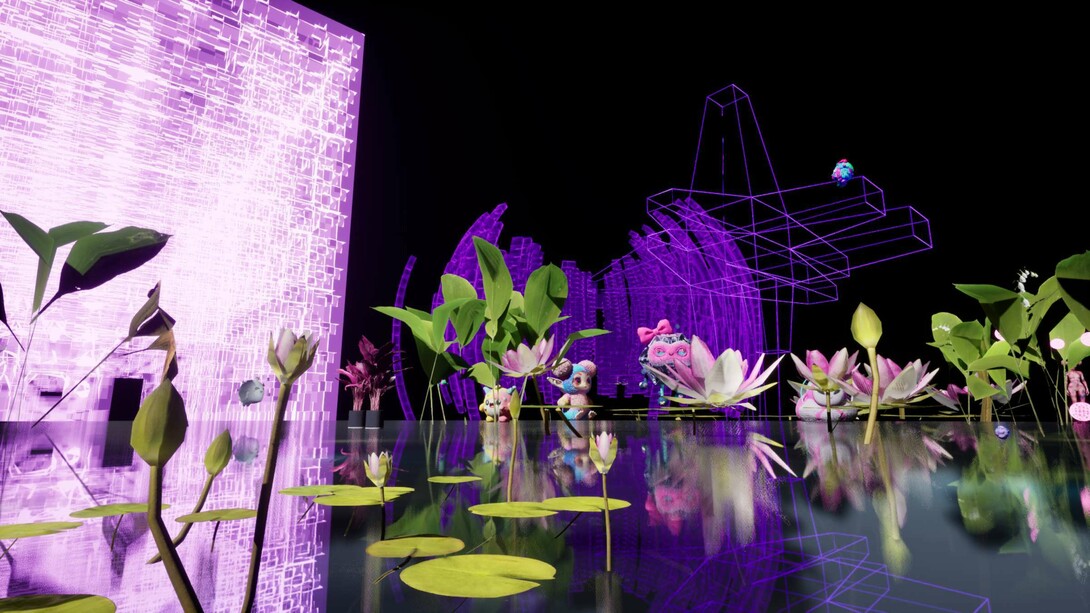
Designed as a series of gaming ecosystems, the Avantgarden cycle, initiated and created in 2018 by multimedia artist Tanja Vujinović, is an interactive Gesamtkunstwerk. It is made up of virtual synthetic worlds in which architecture, sounds, videos, and sculptural compositions create environments of gardens, nightclubs, concert venues, fashion studios, playgrounds, galleries and protolaboratories, frequented by avatars on social VR platforms embedded in cultural events and games.
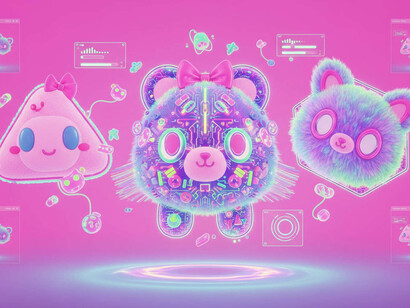
Returning to themes explored in previous works such as Supermono (2009–2010), Vujinović considers toys and dolls to be among the earliest forms of human interaction — objects of empathy, care and projection that facilitate the practice of forming relationships with the world. This approach echoes the philosophy of Vilém Flusser, particularly his notion that play and games are a response to human 'thrownness' into the world. In this understanding, people, limited by geography and life circumstances, can develop their imagination and explore alternative realities through play. In Avantgarden cycle, play is not merely entertainment; it is a means of finding one's way — an active strategy for navigating technological, ecological and social complexity.
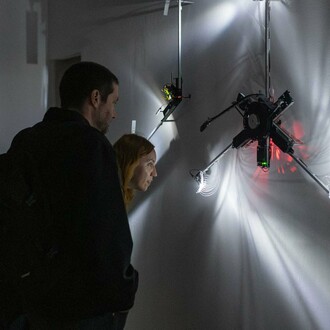
Rather than treating the physical gallery as a substitute for virtual space, Avantgarden considers it to be a physical interface, a conduit and a portal to complex digital environments. The gallery becomes an entry point for an embodied experience, where visitors encounter fragments, projections, surfaces and interfaces of worlds that would otherwise unfold on networked and virtual platforms.
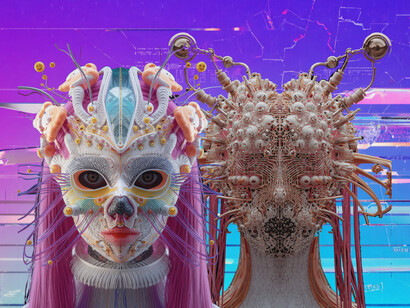
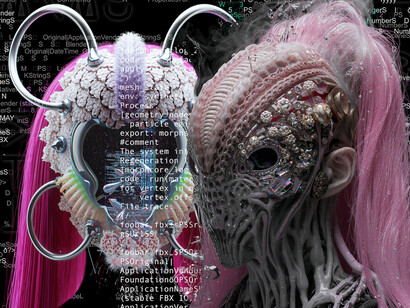
Avantgarden 3.0 is the latest version of an operating environment designed with the logic of games, digital environments and speculative ecologies. In this exhibition, the focus is on its inhabitants, the Biomes. These beings are characters defined by their virtual habitat, which is also created by the artist. Biomes are puppets, toys. They are contemporary companions and affective actors that function as emotional and social interfaces, they are psychological aides that, like humans, provide a habitat for other organisms to live on. These are emphasised on the surface of Biomes, giving them their distinctive features. A series of avatars called Hypermask explores these textures and the invisible inhabitants living inside the 'skin'. These surfaces act as interfaces between the internal logic of virtual environments and their sensory appearance, revealing Bioms as living, transient bodies.
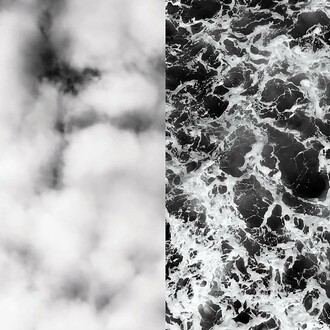
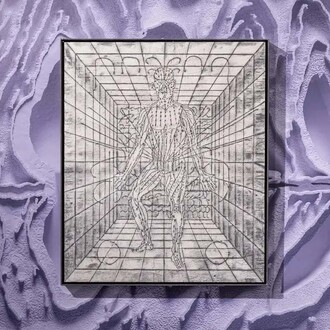
Additional aspects of these worlds are revealed in the subchapters Oneness, Avantguardians and eye, which present a variety of characters within the physical gallery space through video projections and screens. The Delta project completes the translation of moving digital imagery into a static image, where synthetic beings materialise as frozen transitional moments between the virtual and the tangible, according to the principle of expanded reality. This bridges the gap between the immaterial creative process and tactile presence.
Reality increasingly exists in digital form before it materialises, creating a multilayered augmented reality. Its simulacra not only fill and shape our primary living environment at the level of objects and infrastructure, but also influence social relationships and identities, sometimes providing a conceptual blueprint for unbridled creativity in the virtual realm and at other times offering an escape from everyday life.
Tanja Vujinović is an academic painter and researcher of cybernetic culture who has been incorporating VR and AR interfaces into her artistic practice since 1997. She can be considered one of the pioneers and promoters of digital pop aesthetics.