English
 Español
 Français
 Deutsch
 Italiano
 Português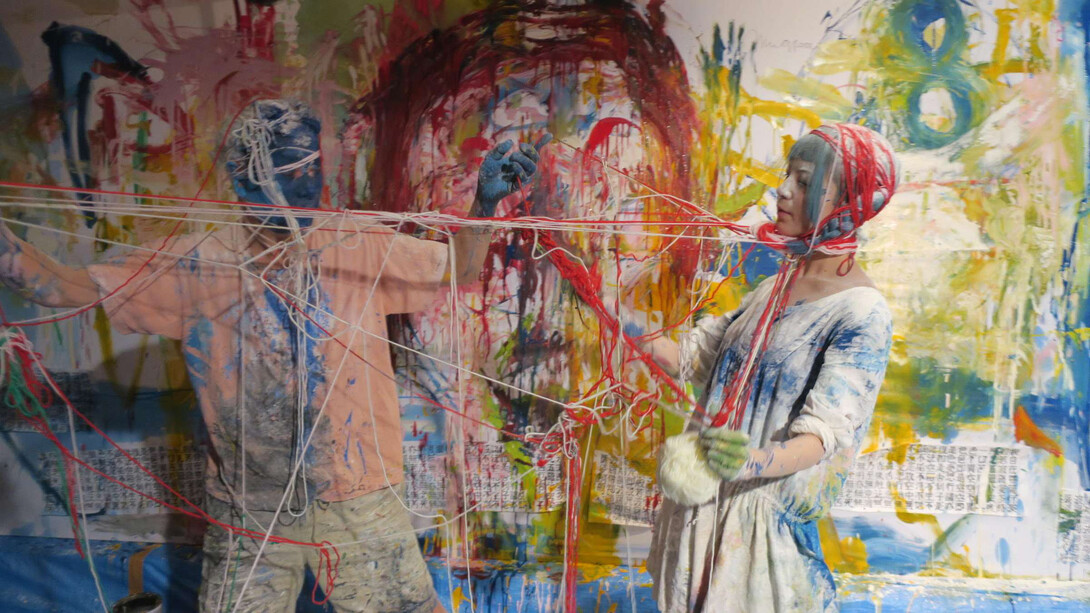
The retrospective Art is always the next possibility presents seven decades of artistic oeuvre of the renowned artist Yoshio Nakajima. He was one of the first working in the field of performance and happenings from the legendary Tokyo avant-garde scene of the 1960s and was strongly influenced by the Fluxus movement. Nakajima's oeuvre expresses faith in the individual and in humanity.
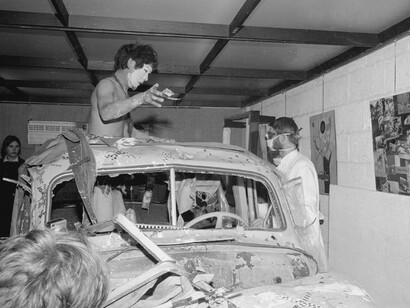
Yoshio Nakajima was born in 1940 and ran away from home at the age of fourteen to fulfil his dream of becoming an artist in Tokyo. He attended art classes and open lectures, including ones given by John Cage. During this period, he became acquainted with representatives of the Fluxus movement and the Gutai group. He began his performance career in 1957 and had become increasingly involved in Tokyo’s legendaryart community.
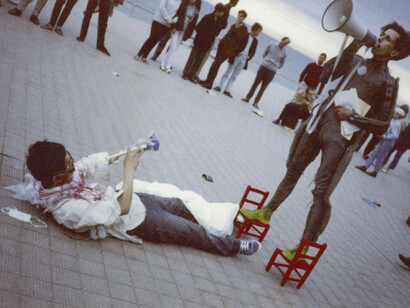
In 1964, he travelled to Europe to study at the Rotterdam Art Academy. His previous experience of performance art in Tokyo quickly earned him a reputation in Holland's underground cultural scene. He collaborated with the founders of the Provo movementin Amsterdam, whose legacy was hugely influential. In 1965, he moved to Antwerp, where he introduced the concept of happenings alongside Hugo Heyrman, Panamarenko, and Wout Vercammen.
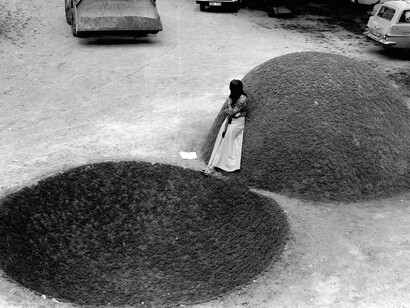
In 1966, Nakajima found himself stranded in Gothenburg, Sweden. However, he quickly became part of the Scandinavian underground art community. In 1972, he was one of the founding members of the Ubbeboda Art Centre in a small village in southern Sweden. The centre had no organisation, director or funding. Instead, it was more of an artistic concept, communicating through mail art, posters, ideas and artistic networks. Between 1972 and 1977, hundreds of artists from around the world visited the village to collaborate with Nakajima on site-specific land art projects, exhibitions and performances.
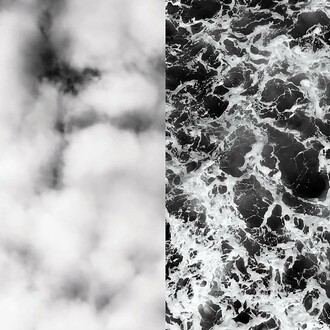
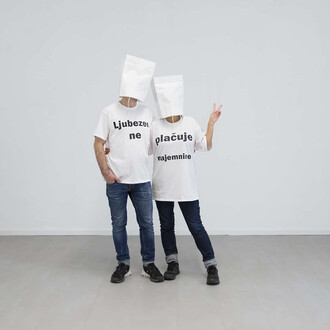
The exhibition at Match Gallery combines Nakajima's earlier works with his current artistic practice. In his later works, which include several media, his paintings and performances have merged into a similar process, with no clear distinction between life and art.
However, compared to his earlier performances, his later ones also suggest a change of perspective. Initially, he highlighted threats to the Earth, such as impending catastrophe, pollution and the stresses of consumerism. In his later and current performances, however, he stresses the need to protect the Earth and human life through the belief in art, like a missionary or a shaman.
Ultimately, the exhibition aims to introduce Nakajima's artistic universe, which has been evolving for seven decades. It is a universe that he persistently invites visitors to experience for themselves. The exhibition's title – Art is always the next possibility – comes from his belief, as an art missionary, that art can help individuals to change, and that these changes can lead to a better future.
(Text by Martin Schibli)