English
 Español
 Français
 Deutsch
 Italiano
 Português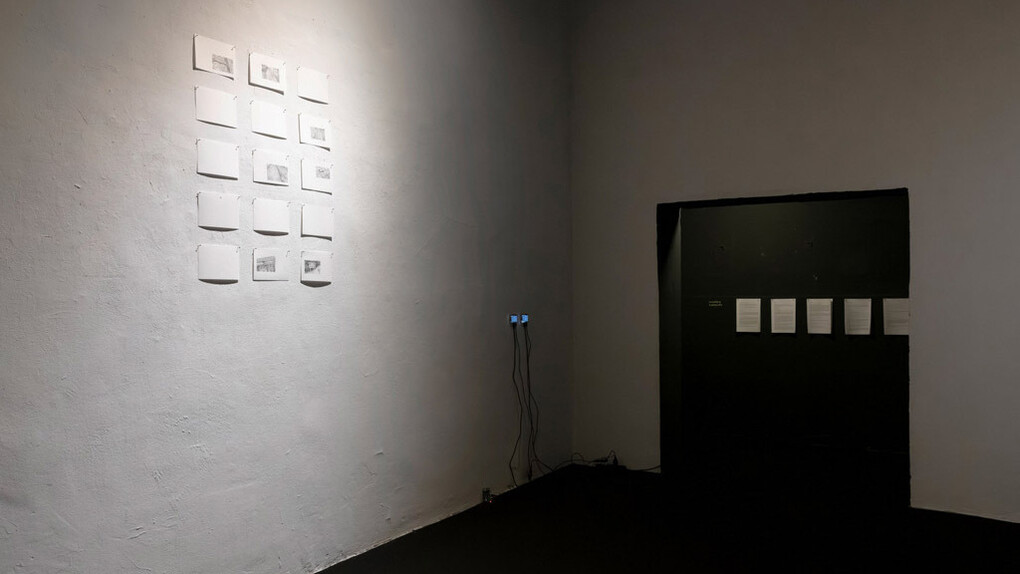
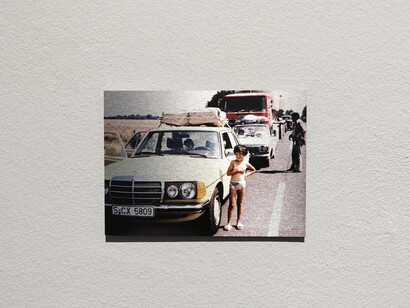
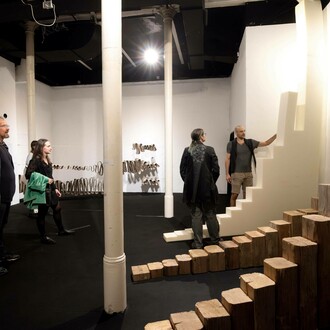
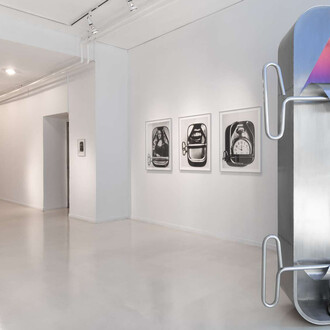
This exhibition explores memories of the so-called guestworker route in the memories of my family and family’s friends. The guestworker route refers to the holiday route that would be used by Turkish, Greek, and Yugoslavian migrant workers from Western Europe, to drive to their home countries during the summer. From the 1960s onwards up until the start of the Yugoslavian war in 1991, the route, going through Germany, Austria, and what is now Slovenia, Croatia, Serbia, and Bulgaria to Turkey or Greece, would be used heavily by hundreds of thousands of families who were travelling home over summer. Maribor was one of the cities along the route that would be passed through by the travellers every year.
Weiter examines the guestworker route through the lens of absence; the missing and fading of that which cannot be recorded. Rather than using absence as a symbol of forgetting, absence functions as a reminder that memories fade with those who hold them. In her essay Regarding the pain of others, Susan Sontag argues “What is called collective memory is not a remembering but a stipulating: that this is important, and this is the story about how it happened, with the pictures that lock the stories in our minds.” 1
In Weiter the guestworker route functions as a replaceable example of one of the details in history that are not just relevant enough to make it into collective memory, a forgotten detail. While newspaper articles, exhibitions, and data about the guestworker route might be archived and remain accessible, our understanding of, or even interest in it depends on those who remember the route. The exploration of the guestworker route through absence thus becomes an examination of how our understanding of history and collective memory changes with the fading of those who hold memories of forgotten details.
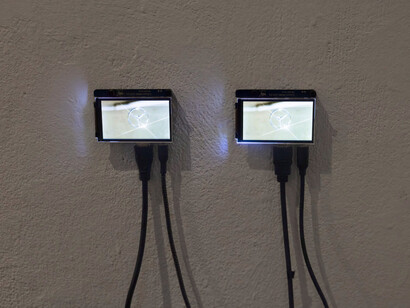
In an attempt to gather what is left, I conducted interviews with six women who used to drive from Germany to Turkey every summer. What they told me were the stories I had heard many times, stories about long traffic jams, bad roads, long detours, and long holidays. But, as these stories were no longer told in the familiar context of the home but were being recorded and at risk of being made public to an unknown audience, the narratives shifted slightly, details were left out, some others emphasized (both during the interviews and during the editing afterwards). What I was left with was a somewhat distorted collection of stories that I had already heard. While those route and Turkish life in Germany, they fail to convey the same sense of anecdotal truth when told to an intimate audience only.
Weiter can both be thought as a continuation, a recurring cycle, a maintaining of the current state and as the opposite, Weiter as a more, further, as a going beyond.
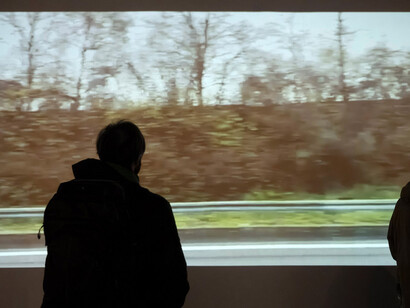
In the context of this exhibition, Weiter both refers to the act of physically travelling through a place and to the transience of memory.
Notes
1 1 p. 86, Sontag, S. (2003) Regarding the pain of others. New York: Picador.