English
 Español
 Français
 Deutsch
 Italiano
 Português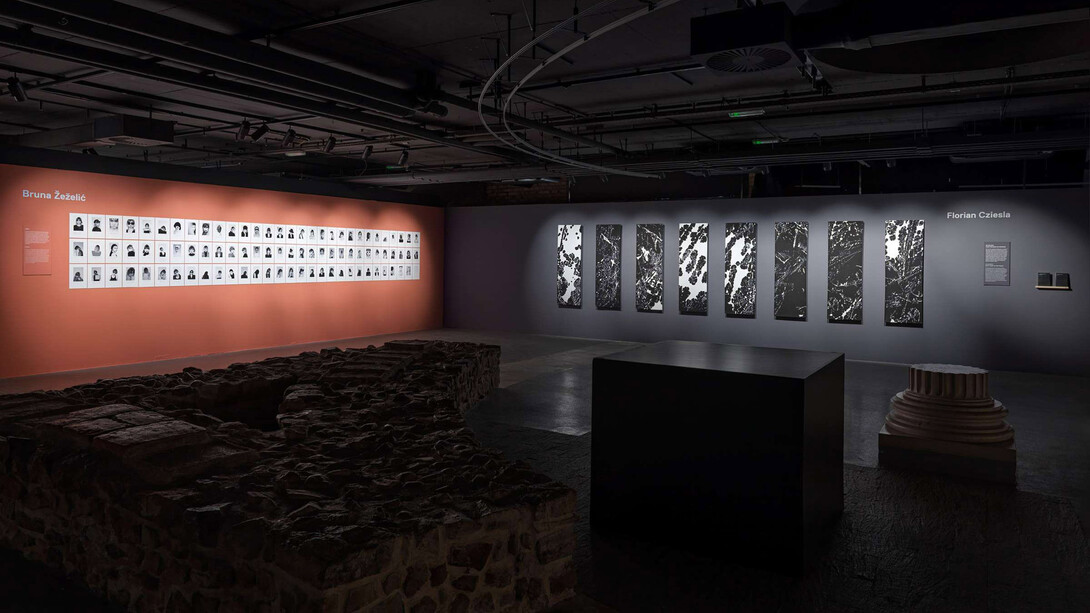
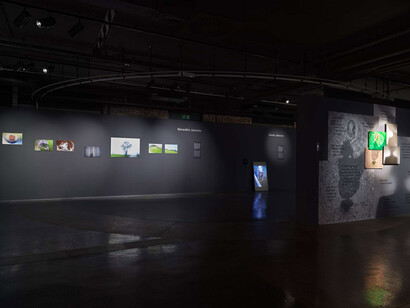
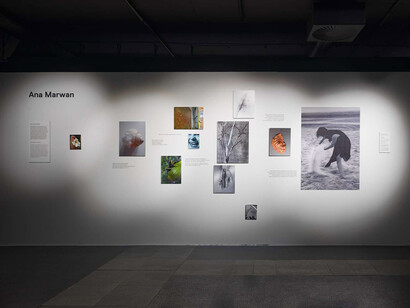
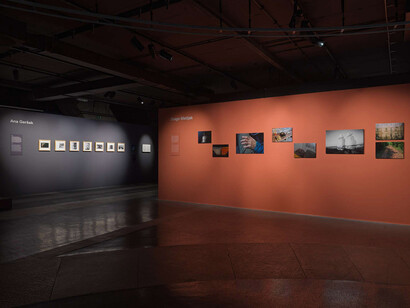
In the exhibition Temporary address, we present 17 authors selected through the participants of the Up close: photography as a way of seeing study group. Their projects are imbued with feelings of closeness and familiarity, vulnerability and change, as well as an awareness of their own transience. They recreate ambients and question the meaning of the various spaces we inhabit.
The year-round educational programme for adults Up close: photography as a way of seeing, first introduced at the Jakopič Gallery in 2017, highlights approaches to photography and to expanding the expressive potential it holds, which depend less on technical perfection or equipment skills and more on training the eye and shaping the photographer’s character. Within this framework, the aim of the non-formal education programme is not simply to refine participants’ photographic technique but above all to encourage their critical thinking and personal development.
The mentors, Dr Marija Skočir, Matevž Paternoster, Metod Blejec, Saša Kralj and Janja Rebolj, designed the programme, conceived as a study group, on an educational model in which we teach by learning and learn by teaching. The process is not based on the vertical transmission of advice or instructions, but on the exchange of experience, the gradual unfolding of content, and mutual growth. The group brings together individuals with diverse backgrounds, interests and visual practices, and it is precisely this diversity that allows the meetings to become an open space for exploring and experimenting. It is one of our most successful programmes, especially since we have recognised some exceptional talents among past participants, while their creative work has also brought inspiring shifts to already established approaches to photography.
Among the nearly 90 alumni, many have reached the level of maturity required to prepare photographic projects meeting the exhibition standards of our gallery. In the exhibition Temporary address, accompanied by a catalogue, we present 17 authors selected through an open call aimed at former participants of the Up Close study group. The selected creators then entered a months-long mentoring process which, unlike the more relaxed, open format of individual workshops, largely focused on realising their authorial projects for gallery presentation – from the initial proposal, development of the concept and visual solutions, to the core exhibition elements such as writing the accompanying text, placing photographs in context, and designing the final layout in collaboration with the curator Julija Hoda.
The Up Close alumni exhibition is an important step in connecting the visions of our educational programmes with the production of exhibitions by Slovenian photographers. It sheds light on the diverse authorial perspectives influenced by a continuous process of work, exploration and reflection on photography as a way of seeing and understanding the world. It is thus no surprise that the projects presented are characterised by intimacy and personal expressiveness. The authors turn their gaze inward, addressing existential themes, inner worlds, and interpersonal relationships. Their works are imbued with feelings of closeness and familiarity, vulnerability and change, as well as an awareness of one’s own transience.
The photographs recreate ambients and question the meaning of the various spaces we inhabit, whether or not we call them ‘home’: the Sunday bustle of a grandmother’s kitchen, the quiet rhythm of a student room, a first-owned flat in need of renovation, or a holiday house that gradually sees ever fewer visitors with each passing summer. They speak of spaces that remain with us, perhaps only as memories. From the places we grew up in to the final rooms we occupy before we say farewell. Between these lie all the other in-between spaces and voids that can act as catalysts for transformation and remind us that, at any given moment, wherever we are living is merely a temporary address.