English
 Español
 Français
 Deutsch
 Italiano
 Português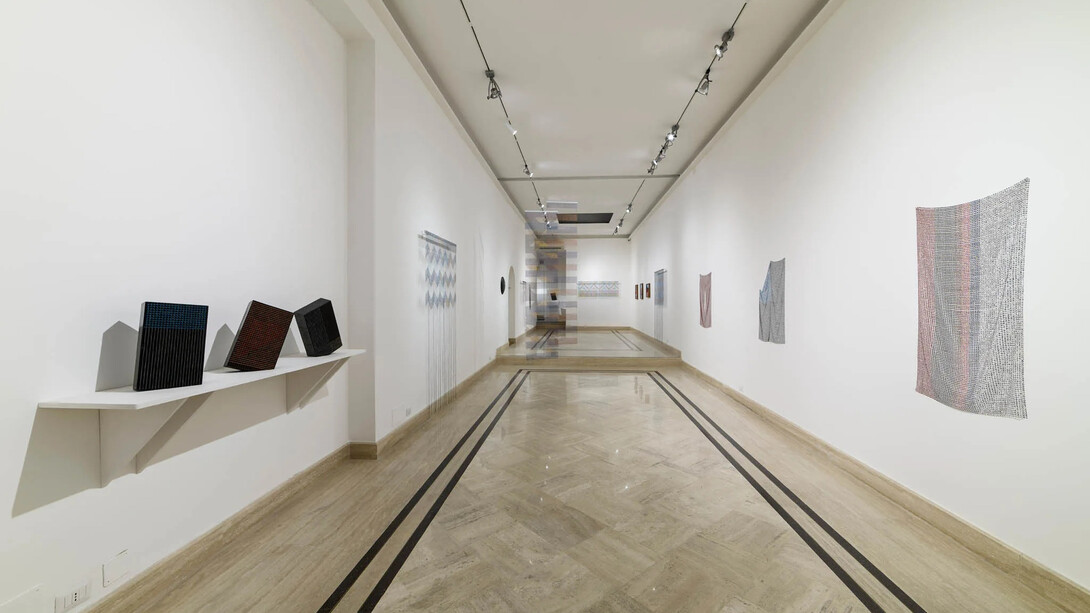
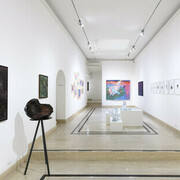
Richard Saltoun Gallery Rome is pleased to present Kopano ya moya (Sacred gathering), a solo exhibition by South African artist Bonolo Kavula (b.1992), marking her first solo exhibition in Italy.
The title Kopano ya moya comes from Setswana, the artist’s mother tongue, and translates as “sacred gathering” or “gathering of ancestors.” Kavula has recently begun to describe her artistic practice as “ancestral work,” mapping her family history and titling works in Setswana. The exhibition brings together ideas of lineage, ritual and material devotion and acts as a spiritual and conceptual precursor to Mphoyabadimo, a thanksgiving ceremony dedicated to honouring one’s ancestors, who in turn are believed to guide, redirect and reshape the course of one’s life through blessing and protection.
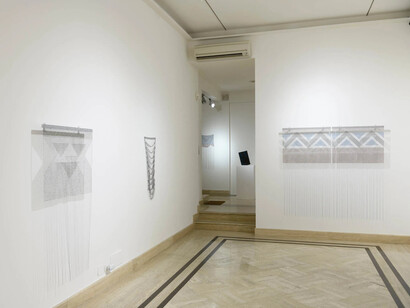
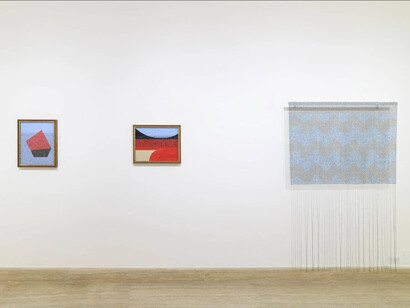
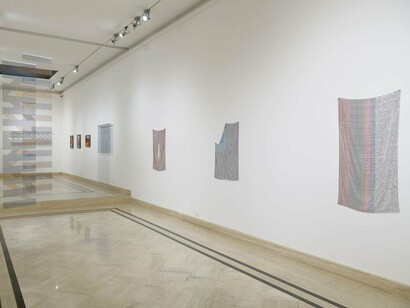
Central to Kavula’s practice is her reimagining of printmaking beyond its traditional confines. Historically, printmaking has served as an accessible and democratic means of sharing ideas, knowledge and belief systems - from religious imagery to scientific and aesthetic thought. Kavula extends this legacy through thread and punched textile, treating fabric as both surface and matrix. Her works combine print, design and painting through laborious processes of cutting, punching and stitching shweshwe fabric into dense, suspended compositions.
Shweshwe fabric holds deep social and cultural significance in southern Africa. Traditionally worn for ceremonies, weddings and celebrations, it signifies heritage, continuity and pride. Introduced through colonial trade, it has since become deeply woven into the region’s cultural identity. Today, shweshwe transcends geographic boundaries, celebrated globally as a contemporary fashion material and incorporated into collections ranging from haute couture to everyday dress. Kavula draws on this layered history, using shweshwe as both a personal reminder and a carrier of collective memory.
While her works are formally restrained and abstract, they are embedded with narratives of labour, colonial histories, familial inheritance and shared experience. The act of repetition becomes meditative, foregrounding time, care and the embodied nature of making. Fragility and structure coexist, producing surfaces that oscillate between discipline and permeability.
Displayed for the first time is a new body of wooden sculptural works that echo the hanging textile compositions. Inscribed into their surfaces are motifs derived from drawings created in 2020 - initially conceived as sketches for her Consequences sculptures made from cardboard strip cut-outs. The sculptures are conceived as headstones: markers that signify a loved one’s burial place, suggesting both presence and passage. Traditionally, headstones made of granite or marble and engraved with names, dates, and symbols function as memorials and sites of remembrance. Kavula abstracts these forms, transforming them into a spiritual conduit rather than a literal grave marker.