English
 Español
 Français
 Deutsch
 Italiano
 Português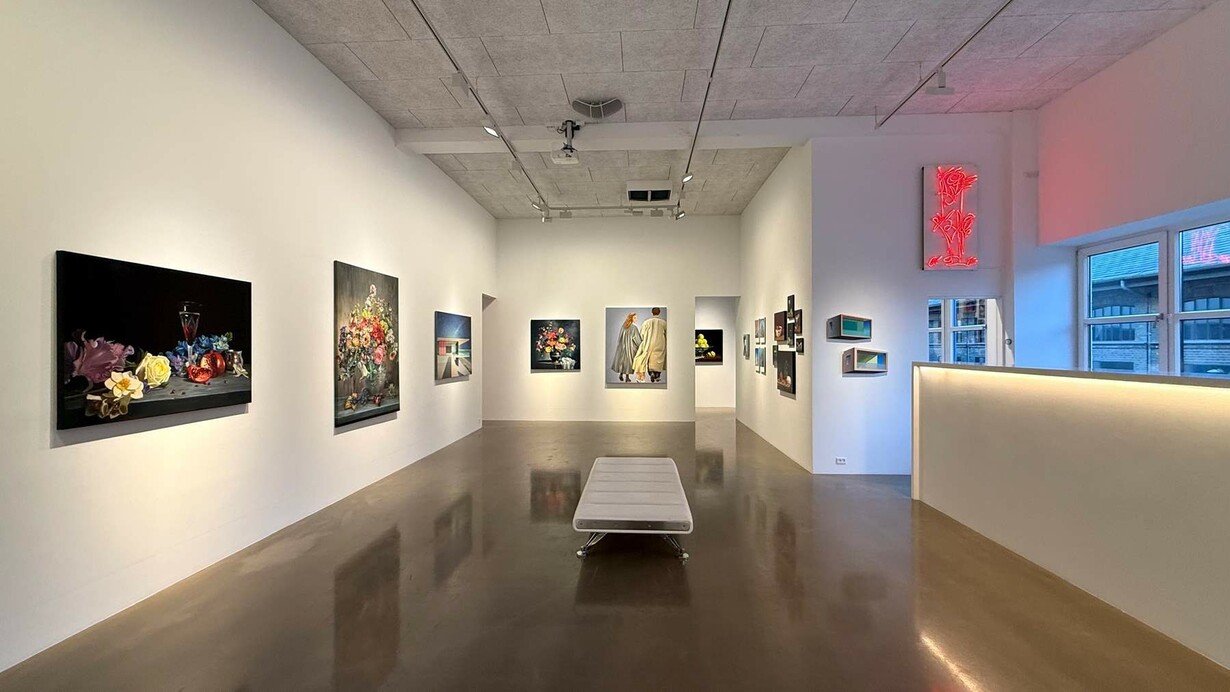
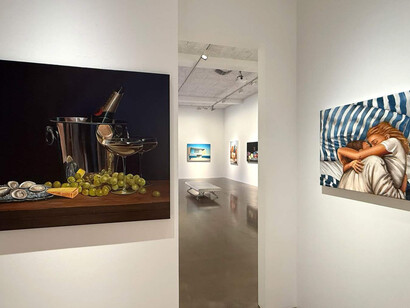
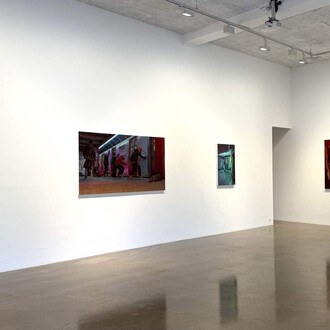
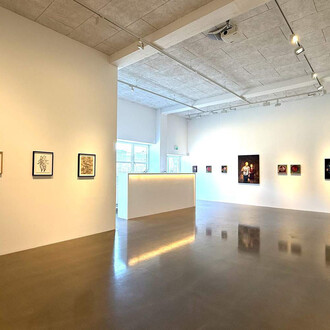
The first exhibition of the year at Gallery Poulsen is titled Vorsprung durch technik. Many recognize it as the slogan of the car manufacturer Audi, which can be translated as “technological advantage” in English. It refers to superior technological skill—a position historically associated with Germany in many fields. In an artistic context, the title pays tribute to painterly craftsmanship and the artists who master it with exceptional skill.
The exhibition turns its focus toward Europe, and particularly Germany, and the European art-historical tradition. We live in unpredictable times, where the future may feel uncertain. We do not know what lies ahead, but we do know what we have, and what our culture and artistic traditions are built upon. The European art tradition is a living treasure, constantly reinterpreted in new ways. For centuries, artists have created works that reflect periods of crisis, conflict, prosperity, and poverty — a legacy that continues to inspire contemporary artists today.
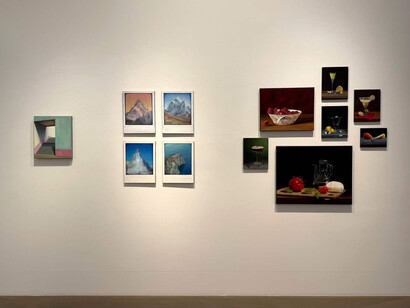
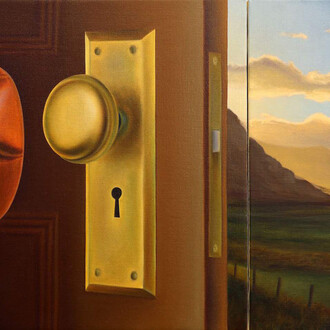
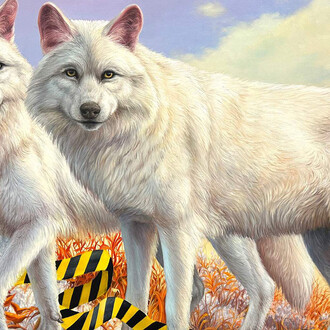
The four German painters featured in the exhibition work with modern expressions while remaining firmly rooted in tradition and technical mastery. The artists are all highly talented, drawing on diverse sources from the old Dutch still life painters, through 20th-century modernist architecture and functionalist design, to the organic and surrealist lines that became hallmarks of figurative painting in the early and mid-20th century.
As the world-renowned art historian E. H. Gombrich writes in The story of art, art often reflects both the artist’s mind and the time in which it was created—an artwork is therefore always more than its subject.The European painting tradition has evolved over centuries, where technique, symbolism, and ideas developing from craft to concept. Artists have long used their work to mirror societal values and transformations—from realistic depictions to modernist experiments with form, color, and abstraction. This rich heritage—from technical skill and symbolism to innovation and conceptual freedom—forms the foundation for Vorsprung durch technik.
Julia Hochbaum, who lives and works in Leipzig, draws directly on the Dutch still life tradition, especially inspired by masters such as Pieter Claesz, Rachel Ruysch, and Clara Peeters. These still lifes went far beyond beautiful motifs, serving as experiments in color, light, and symbolism, where the subject became a medium for both the artist’s personal expression and the values of the time. Using layered techniques, Julia incorporates everyday objects such as tennis balls and fruit into classical compositions, exploring the relationship between illusion and reality as well as themes of decay and decadence. Her meticulously detailed paintings invite viewers to new discoveries with every glance. Julia’s signature cocktail still lifes represent a modern form of alchemy, where glass, ingredients, and composition create subtle narratives of life, moments, and symbolism.
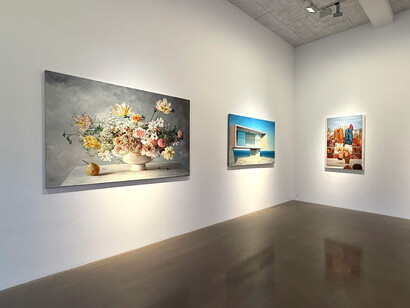
Katharina Husslein, based in Munich, draws inspiration from both Dutch still life and her upbringing amidst the natural surroundings of the Black Forest. She paints hyperrealistic floral still lifes, where color, light, texture, and botanical details depict vibrant bouquets and lush landscapes. Husslein’s work conveys symbolism relating to love, femininity, and the beauty of nature, continuing the experiments of the old masters with a contemporary perspective and personal poetic touch. As she describes it: "I create paintings that capture the joy of the moment, where everything seems still and perfect, and the flowers are in full bloom—a timeless metaphor for seizing the moment and enjoying it fully." A closer look reveals arrangements of plants that rarely bloom at the same time, emphasizing the artistic freedom of her work and her deep engagement with nature’s diversity.