English
 Español
 Français
 Deutsch
 Italiano
 Português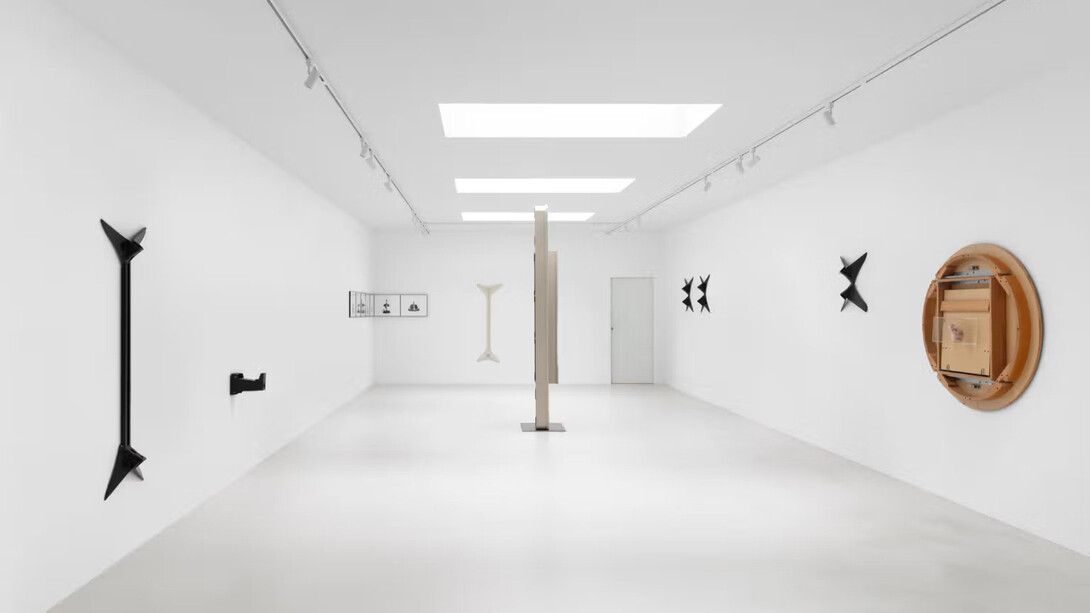
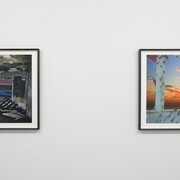
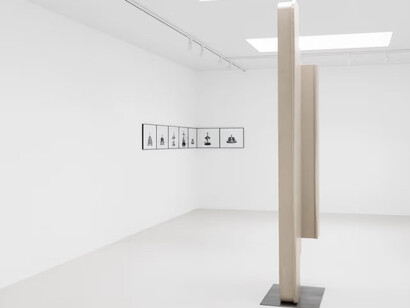
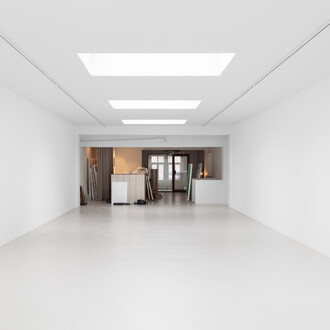
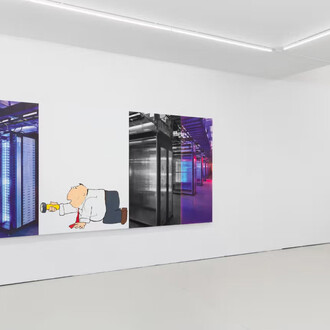
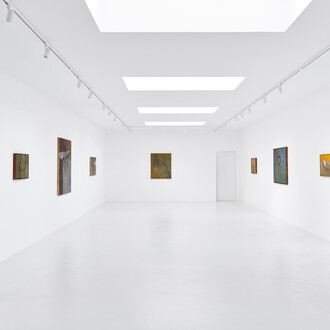
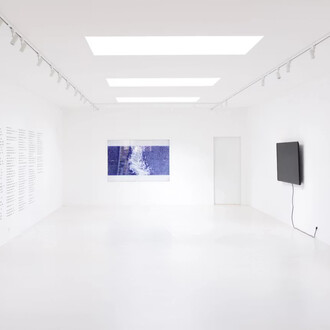
Minor enclosures considers the mechanics of appearance as a succession of enclaves: mute deposits of authority, opaque pockets where the real becomes infected with the unavowed, while chimeras lie in wait, plump and motionless, beneath the family tables. Freud reminded us that “good manners” are not an added layer of civility, but a technique of concealment: they oblige us to keep certain places — and certain truths — in reserve. The uncanny, or Unheimlich, begins when this regime falters and what is hidden obtains the right to appear. It is in this slender fissure, where propriety loses its grip, that Minor enclosures takes shape.
The exhibition approaches the visible as a regime of thresholds. Here, appearance belongs neither to self-evidence nor revelation, but to an authorization — sometimes granted, often extorted — and to a series of constraints that precede the form, frame it, and assign it. Power operates quietly, in the policing of access, in the arrangement of distances, in the very manner by which an object consents to being seen.
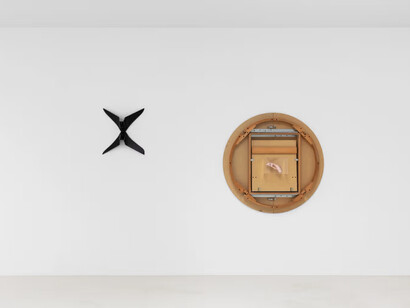
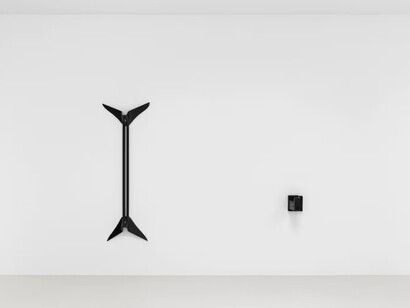
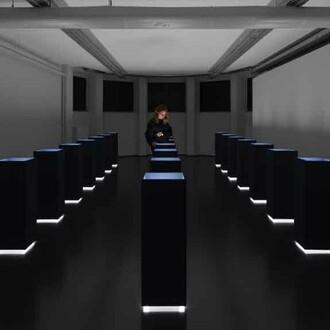
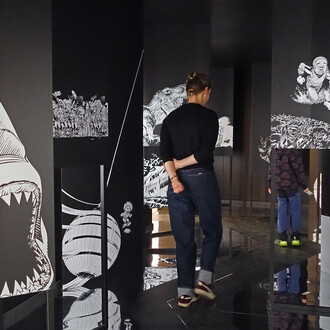
In the manner of a taxidermist, François Durel strips domesticity of its utilitarian comfort, not to sanctify it, but to expose its disciplinary core. Sutures, standardizations, detourings, upturnings — these operations function not as effects, but as a method of extraction. Durel confronts us with an apparatus of devices: portable micro-institutions, machines of obedience that organize availability and regulate postures and gestures. Each work functions as a reduced unit of coercion — a micro-architecture endowed with its own rules, blind spots, and conditions of approach. The viewer is caught in a syntax of impediments, evasions, and detours, where perception becomes a situated, frictional experience. Like a nesting doll confined within the evidence of its own body, they discover that space does not welcome: it orients, slows, forbids, prescribes. Here, constraint operates as an operative form, a mode of producing the visible. The unsaid acts as a technique, a pressure. Imperfect, non-optimized surfaces — full of snags, folds, reprises, and abysses — refuse contemporary smoothing; their beauty arises from this very negativity, from the scar as a point of truth.
Above our habits sit the sharp tools of labor, instruments of a choreography leading to the infinite repetition of the gesture. Displaced, duplicated, welded, rendered unusable, they become contemporary relics — dry vestiges of an order sustained through routine, through exercise, through the act carried out to a point of fatigue. Desire itself circulates at the heart of the dispositif, at the tipping point where attraction converts into injunction, where availability becomes norm. And it is here that memory opens — personal and collective — not as continuous narrative, but as fragmentary archive. The objects record procedures, ways of holding, arranging, distancing, preserving, controlling. An industrial as well as carnal memory, unraveled, composed of buried fragments and transmitted gestures, exceeding the individual even as it inscribes itself within them.
The exhibition thus operates as a recording device. It imprints a trace not of the event, but of its conditions — of what renders possible, authorizes, or captures. The gaze is at times distracted, deflected, shielded from frontal contact; this distance does not neutralize intensity, it condenses it, allowing the erotic potential of forms to emerge precisely where authority claims to extinguish it.
Minor enclosures functions neither as denunciation nor representation. It is a dimmed illumination of the domination embedded in the everyday — an anatomical reading of discreet power, a sensitive cartography of the coercive forces that traverse us. The exhibition remains suspended between what stays contained and what struggles to surface. The objects, elusive in their entirety, persist in opacity; what remains, imprinted on the retina, is the experience of a conditional visibility, an appearance already seized, already regulated, already contaminated.
(Text by François Durel)