English
 Español
 Français
 Deutsch
 Italiano
 Português
Participating artists: Pacita Abad, Igshaan Adams, Bettina, Lee Bontecou, Joe Brainard, Diana Cepleanu, Marsha Cottrell, Willem de Kooning, Kenichiro Fukumoto, Hardy Hill, Miranda Lichtenstein, Jacob Littlejohn, Brandon Morris, Dona Nelson, Yu Nishimura, Kent O’Connor, Joe Overstreet, Laura Owens, Karol Palczak, Jessi Reaves, Julia Rommel, Machteld Rullens, Mira Schendel, Sylvia Sleigh, Mary Stephenson, Kianja Strobert, Atsuko Tanaka, Salman Toor, Jack Whitten.
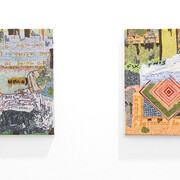
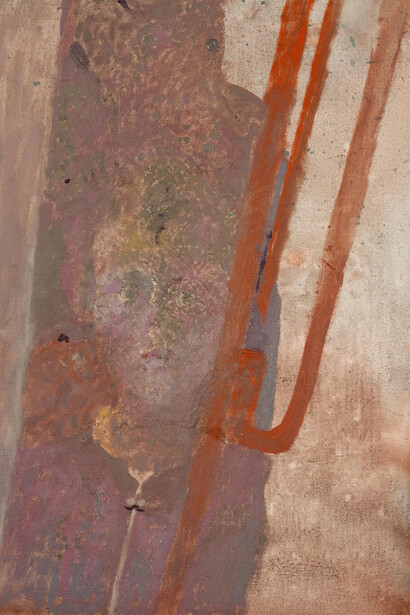
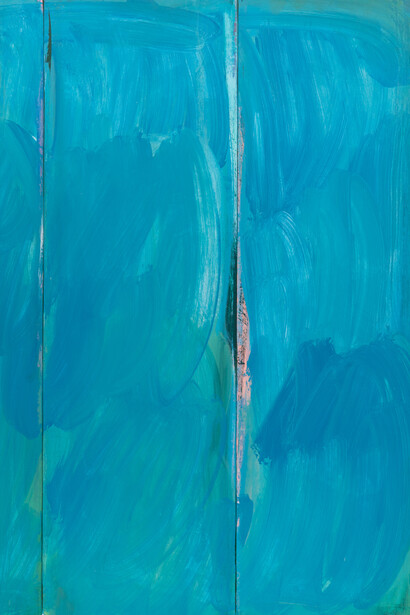
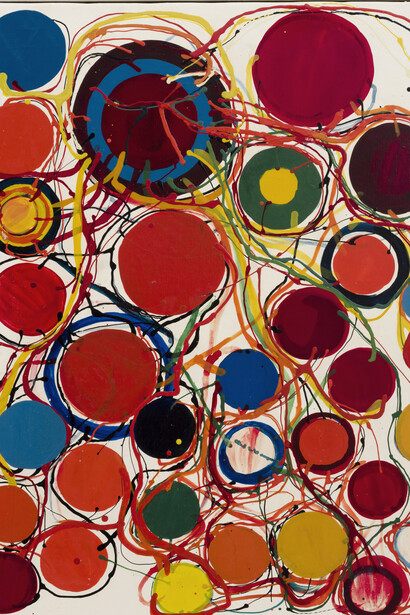
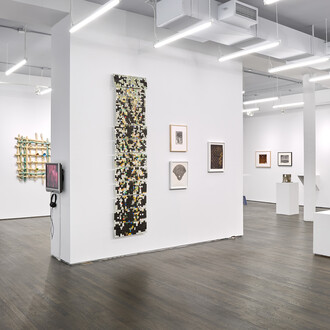
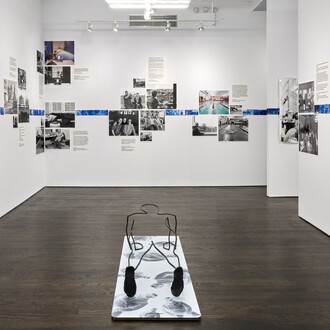
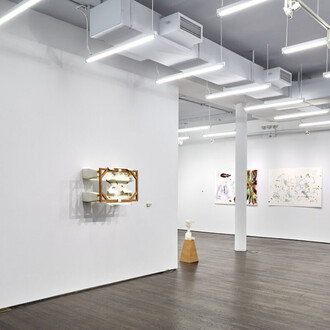
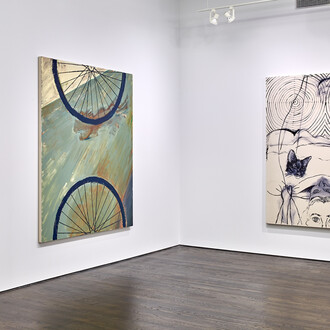
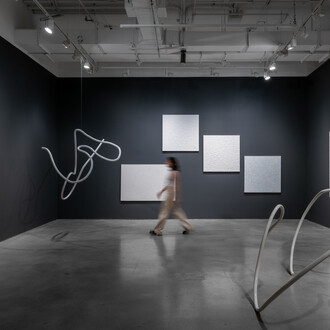
White Columns is pleased to announce the 16th edition of its Annual exhibition Looking back, which has been selected by the New York-based curator and advisor Augusto Arbizo. The exhibition will be presented throughout all of White Columns’ galleries.
About this year’s edition Arbizo has said,
“New York art-viewing in 2025 felt unusually generous, shaped for me by a series of charged encounters across galleries, museums, artist studios, and art fairs. The works gathered here share an ethos of obsession and relentlessness—artists pressing their ideas and processes to the edge, testing what inherited forms can still hold. What lingers are moments of recognition and surprise: sustained encounters with artists such as Pacita Abad, Sylvia Sleigh, Atsuko Tanaka, and Jack Whitten, alongside quieter breakthroughs by younger artists including Hardy Hill, Brandon Morris, and Yu Nishimura. Looking back offers only a partial glimpse of a year rich with work often experienced quickly— absorbed in brief moments, and sometimes repeated viewings, yet holding attention and staying present.”
As with previous ‘Annuals’ an individual or a collaborative team (e.g. an artist, a curator, a writer, etc.) is invited to organize an exhibition based on their personal experiences and interactions with art in New York City during the previous year. In a very straightforward way, the ‘Annual’ exhibitions hope to reveal something of the complexities involved in trying to negotiate – and engage with – New York’s constantly shifting cultural landscapes. The format of the exhibition inevitably encourages highly subjective and personal responses to the realities of viewing art in New York City. The ‘Annual’ exhibition series hopes to illuminate aspects of the specific, yet highly idiosyncratic networks – historical, social, aesthetic, etc. – that individuals follow in an increasingly expansive and fragmented cultural environment.
Through the recontextualization of artworks encountered in other circumstances, the exhibition hopes to establish – albeit temporarily – a new ‘narrative,’ a conversation of sorts, amongst both artists and artworks that seeks to illuminate and/or explore certain underlying tendencies or connections that might otherwise have remained elusive or obscured. In rethinking aspects of the (fairly) recent past the exhibition hopes to provoke something akin to a sense of déjà vu, establishing a scenario that is at once both reflective and forward-thinking.
There are no restrictions as to what type of work can be included. The ‘Annual’ exhibitions seek to eliminate any categorical or hierarchical distinctions we might place upon artworks (e.g. based upon the circumstances in which they were originally seen, or the seniority of an individual artist, etc.). The works included in the exhibition might have originally been encountered in a variety of contexts such as exhibitions at galleries, not-for-profit spaces, art fairs, or during visits to artists’ studios, etc.
Writing in The New York times in 2024 about the 14th Annual exhibition selected by writer and curator Randy Kennedy, critic Travis Diehl wrote:
“(...) since its inauguration in 2006, the nonprofit gallery’s Looking back series has made an old-school proposition: to curate a group show around one person’s (or collective’s) taste, shorn of commercial or institutional impulses to either move product or capture a zeitgeist.
The Annual has one constraint. The curator must have seen the included work in New York City in the previous year. In this grass-roots way, the show offers a (very subjective, and therefore narrow) group portrait of an increasingly unwieldy scene. Those who see a lot of art might recognize a few pieces. But not everything.”