English
 Español
 Français
 Deutsch
 Italiano
 Português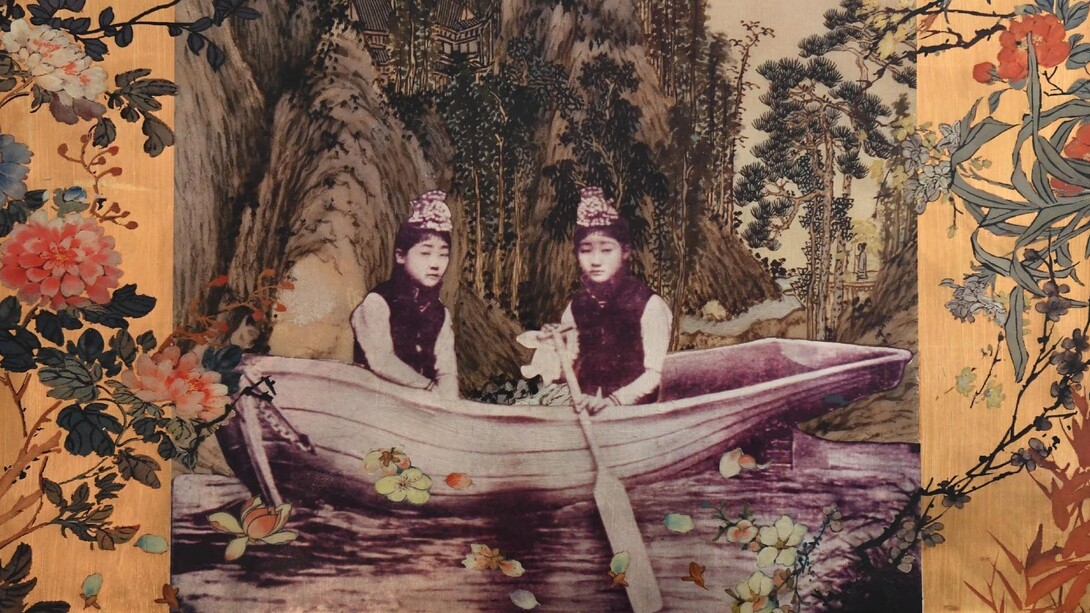
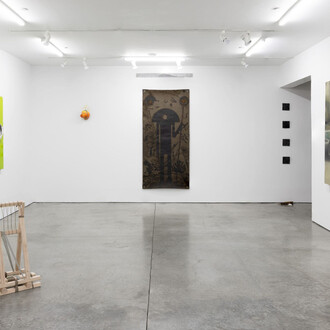
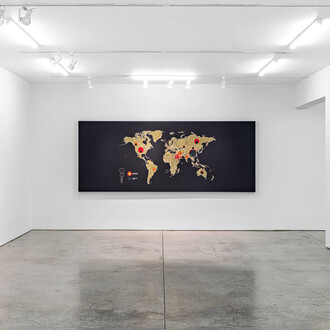
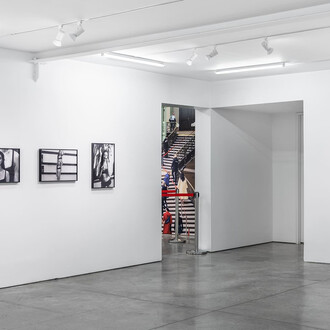
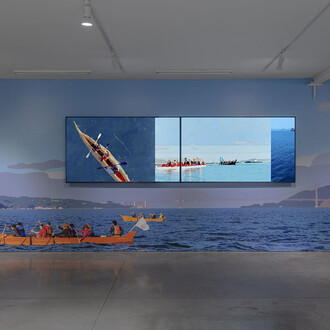
Ryan Lee is pleased to announce Shaping, pouring, layering, an exhibition of paintings, mixed media resin works, and works on paper by Hung Liu (b. Changchun, China, 1948 - d. Oakland, California, 2021). This show explores the inventive processes that Liu employed to outmaneuver the limitations of media, merging painting and sculpture as she brought histor- ical images to life. “I create and destroy an image concurrently by working freely – being both careful and careless at the same time,” Liu said.
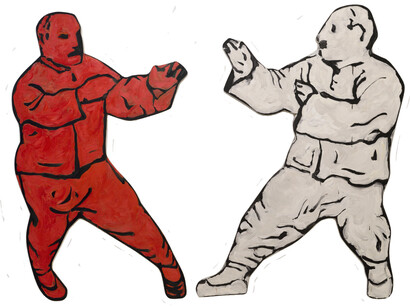
Inspired by the Chinese folk art tradition of cutting out figures from photographs to make them into objects, Liu used a laborious and distinctive process to form shaped canvases – previously mostly associated with abstract artists. Donald Kuspit wrote in a 1993 catalog essay, “The shaped canvas has been used in abstract art to create cohesiveness between imminent and external form – indeed, to make external shape formally relevant to and inseparable from the work – but Liu uses it in a ceremonial, theatrical way to emphasize the personal importance of her content.”
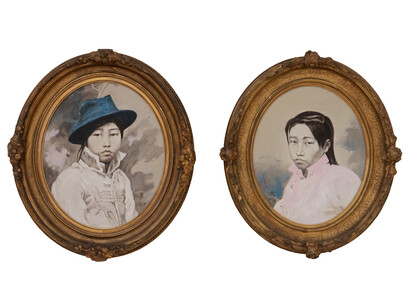
Basing her paintings on archival Chinese photographs, Liu manipulated her canvases to con- form with the eccentric curves and odd angles hugging the outlines of her subjects. “Breaking the boundaries frees me and my subjects,” Liu said of her shaped canvases. “Even rectangular canvases look irregular to me now.” The images in the photographs – for example, a posing Chinese sex worker or a self portrait – are brought forth as protruding objects while the wall recedes into the background.
In Strange rocks (1995), the canvas edge hugs both the shapes of the rocks and the outlines of the figures, each of whom is painted in a different color. The figures, sourced from photographs that the artist found in 1991 in the Beijing Film Archive, have the hazy, low-resolution quality of old photographs as they perch amongst the stones. Liu’s signature linseed drips call attention to the surface of the canvas, as she undermines the authority of the historical imagery she uses as inspiration. In Chinese culture, strange rocks (guai shi) are traditionally prized for their unique beauty, supernatural powers, and their ability to connect heaven and earth.
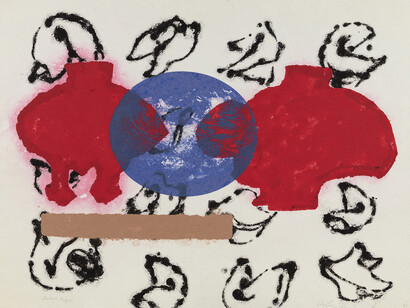
In the 1990s, Liu experimented with paper pulp to create unique works on paper, pouring and shaping imagery. Created from pigmented liquid paper pulp squeezed onto a wet paper pulp support and then run through the press, the resulting works are rich in color and remarkably calligraphic.
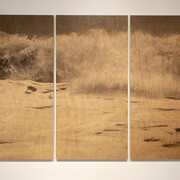
In 2003, Liu developed an elaborate process to create mixed media works combining aspects of painting, printmaking, and photography that allowed her to repurpose elements from her paintings and embed them in layers of translucent resin. The result was a prize-winning new kind of shimmering hybrid art.
In these works, Liu experimented with light in a way that oil paint wouldn’t allow, because the resin and metal leaf are reflective in a much different way. This process resonates with lenticular filmmaking techniques used to create animation cels and back painting on glass, creating layers of imagery that are coated in resin in playful dialogue with Chinese decorative lacquerware. The resin is cast on top of the paint or ink, enhancing its colors and providing a translucent source of light. The paint and resin can be layered as many as six times or as few as two.
When describing her practice, Liu often cited a poem by Stanley Kunitz titled The layers. Kunitz writes about the journey of life and the aging process, embracing the complications inherent in humanity. Kunitz advises, “Live in the layers, not on the litter.” Liu wholeheartedly adopted this idea, embracing the power of layers to create transcendent artworks that as critic John Yao recently said, “position the viewer in a space of ambiguity.” In the process of shaping, layering, and pouring, Liu surfaces erased histories and confronts the contemporary moment with distinct innovation and experimentation.