English
 Español
 Français
 Deutsch
 Italiano
 Português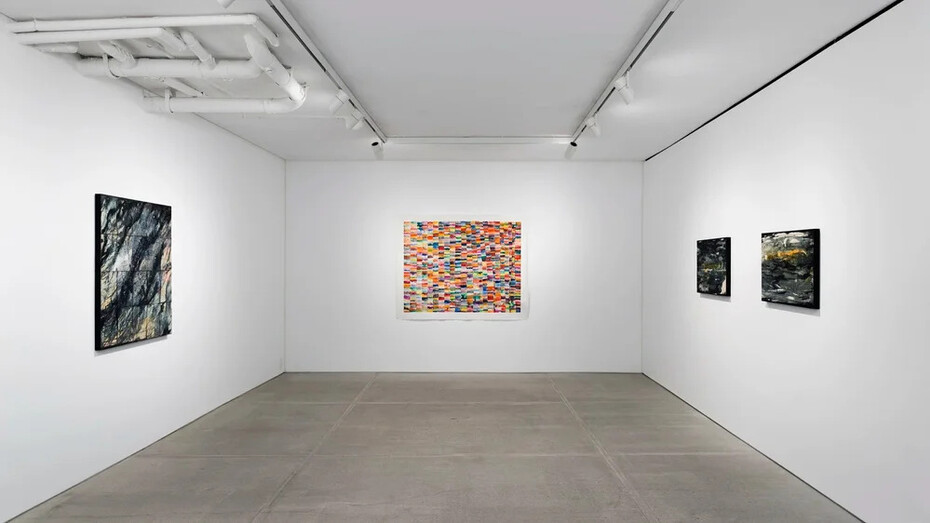
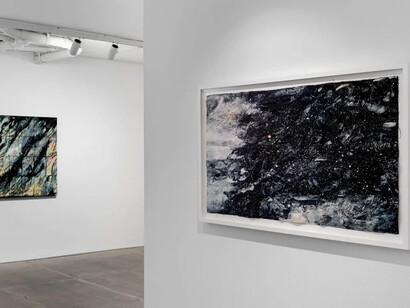
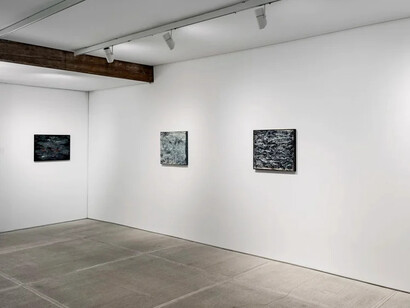
TOTAH presents Ripple, an exhibition of recent works by Melissa McGill. Ripple opens on Wednesday, November 12th, 2025. This is McGill’s third solo exhibition with the gallery.
Taking water in its most elemental sense—as both an acculturated symbol and an ecological fact shaping the collective experience of life on earth—McGill’s current body of work engages with cartography to reveal how modern systems of measurement contain fluid geographies prefigured by the expansiveness of water. Easy dichotomies like figuration and abstraction fall away in the face of McGill’s enlarged conception of water, which quite literally reshapes the relationship between map and territory— both materially and contextually, in form as well as in content.
McGill states that she is “exploring the re-mapping of watersheds to celebrate water’s own expression while deepening our collective attunement to its language. This project grows from a longstanding exploration of water as both living material and metaphor, and from my conviction that we, as human beings, are not separate from water but are ourselves bodies of water; one body resonating with another. These maps function as sensorial records of water’s movements and voices.”
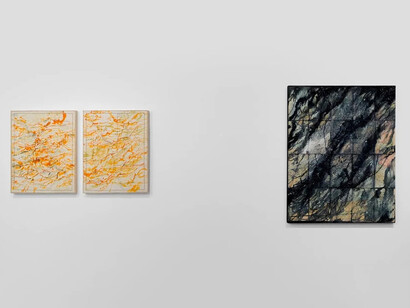
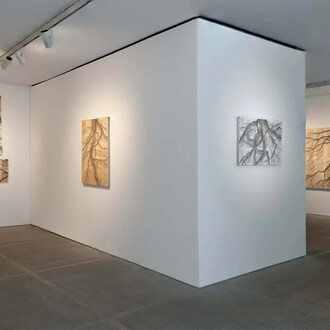
Using materials and colors from natural sources—chlorophyllin, kaolin clay, indigo, salt, vinegar, copper oxide, homemade soy milk—McGill develops her own pigments. She integrates these colors into paintings that invite water’s active participation in the creative process. A work like Septentrio (2025) recontextualizes a historical found map into a microcosmic ecosystem, with salt crystal formations threading through the picture’s surface. Many of McGill’s works operate by analogy. Her materials are sourced near specific bodies of water and often transformed by water’s influence. For McGill, the tracings that water leaves—the stains and rivulets that emerge—add a sense of numinosity to mark-making. Maps cease to be representations in the conventional sense and instead indicate domains of potential experience. As the folds of McGill’s maps become flooded, they reveal new centers and peripheries, reconfiguring the language in terms equally ontological and cartographic.
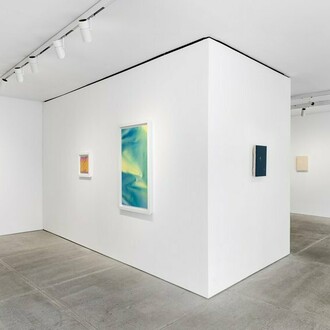
Two large-scale watercolors, Ebb and flow (7th dimension), employ a grid as framework, inviting water to mediate the pigments, creating an ebb and flow of color that reveals their shifting relationships. These works reflect on her recent project A lake story, which took the form of a 400 person canoe procession writing Lake Ontario’s story through color across the sky and water in Toronto. The celebration mapped Toronto’s harbor and waterfront biosphere with the lake’s own vocabulary expressed through its natural palette.