English
 Español
 Français
 Deutsch
 Italiano
 Português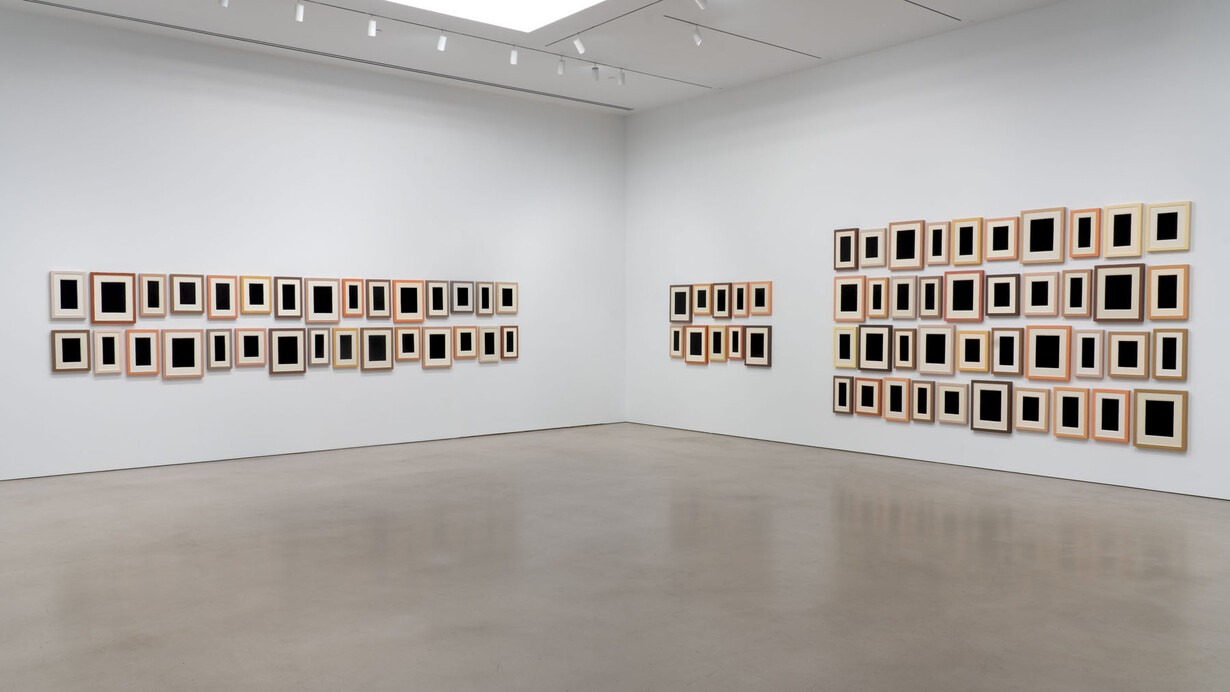
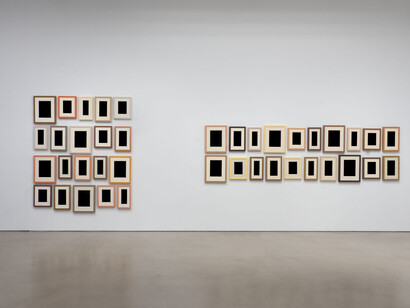
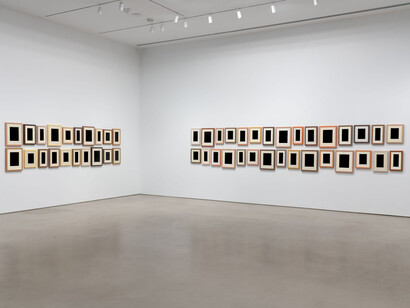
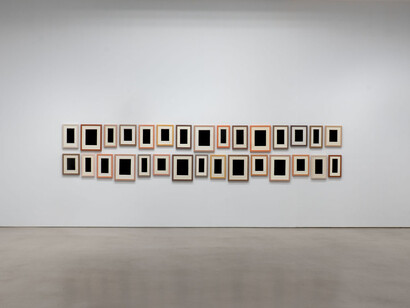
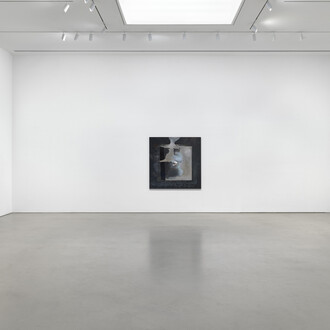
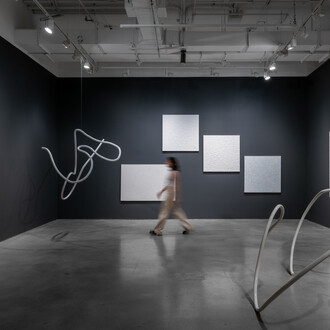
Petzel is pleased to present A moment in time: plaster surrogates, 1991–1993, an exhibition of historical works by American artist Allan McCollum opening Thursday, January 15, 2026. The show marks McCollum’s twelfth solo exhibition with the gallery and will be on view through February 28, 2026 at Petzel, 520 West 25th Street. This is the gallery’s first-ever presentation of the artist’s Plaster surrogates series, bringing together seven works ranging from collections of five to forty. In an age of ever-increasing proliferation of reproductions, McCollum’s meticulously crafted, unique Plaster surrogates, which destabilize the traditional hierarchies between originals and copies, remain more relevant than ever.
Over the past fifty-five years, McCollum has developed a rigorously sustained practice through distinct yet interrelated series, including the Constructed paintings, Surrogate paintings, Lost objects, Perfect vehicles, Natural copies, and Shapes project, to name a few, each examining how artworks circulate, signify, and accrue value within cultural systems. Working serially, he has consistently explored the tension between uniqueness and mass production across media and scale.
The Plaster surrogates mark a decisive turn in McCollum’s investigation into how an artwork can serve as a sign for itself. Cast from molds yet unmistakably shaped by the artist’s hand, each object is carefully painted, center and frame alike, in enamel, allowing subtle shifts in brushwork, surface, and tone to register across the works. What might initially appear as a mechanically generated array reveals, upon closer examination, a distinctly spatial presence through edges, depths, and painted planes that bear the physical trace of McCollum’s labor. No combination of size, frame color, or mat hue is ever repeated, and each Surrogate asserts its own material specificity, even as it participates in the logic of seriality.
This approach grew out of McCollum’s earlier Surrogate paintings from 1978, constructed from wood, museum board, and many coats of paint, which reduced painting to its most conventional outer markers—frame, mat, and a central void—thereby proposing an object that functions as a signifier of a painting and setting the stage for the cast forms that would follow.
With the first Plaster surrogates created from molds in 1982, McCollum began producing the works in larger quantities with black centers. By stripping the objects of any representational context, he subtly shifts attention to the frameworks that typically go unnoticed: the conventions of display and, ultimately, the systems through which culture assigns value to objects.