English
 Español
 Français
 Deutsch
 Italiano
 Português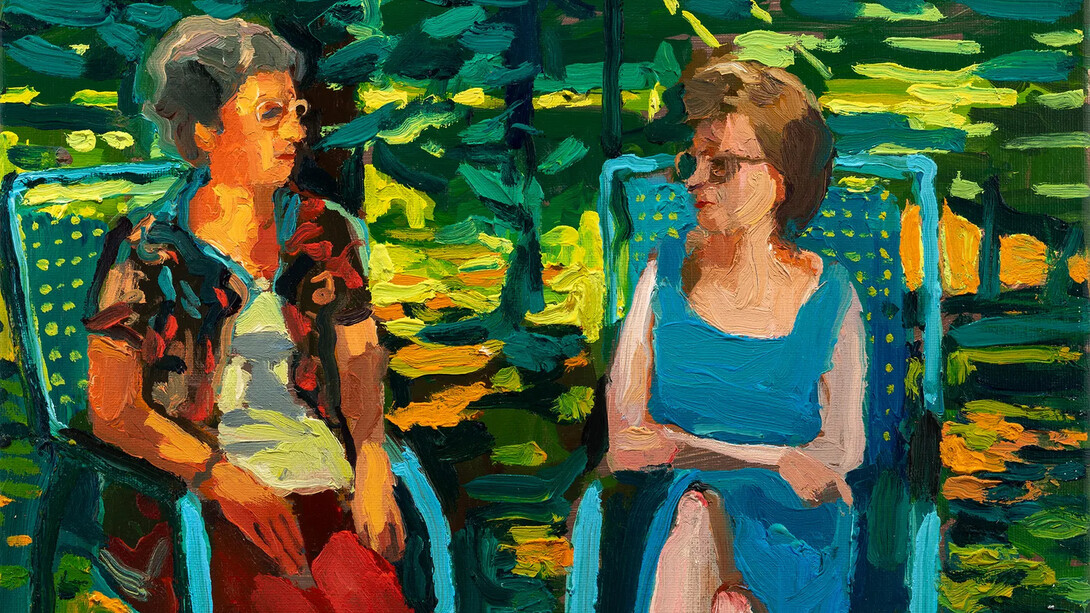
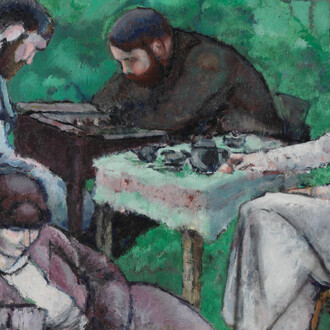
Ethan Cohen Gallery is pleased to present Frank Hyder: then and now, 1970s and today, the gallery’s first solo exhibition of Frank Hyder in New York City, and the first-ever exhibition devoted to Hyder’s paintings from the 1970s.
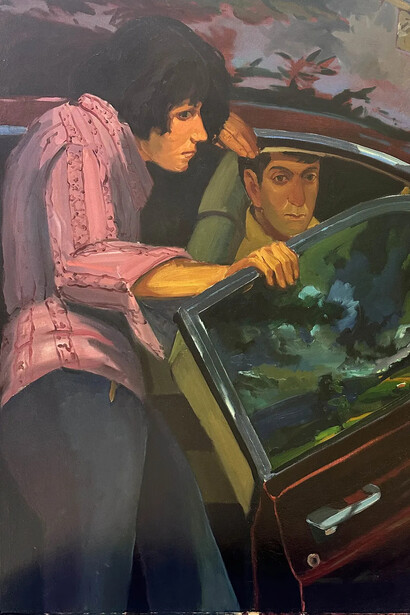
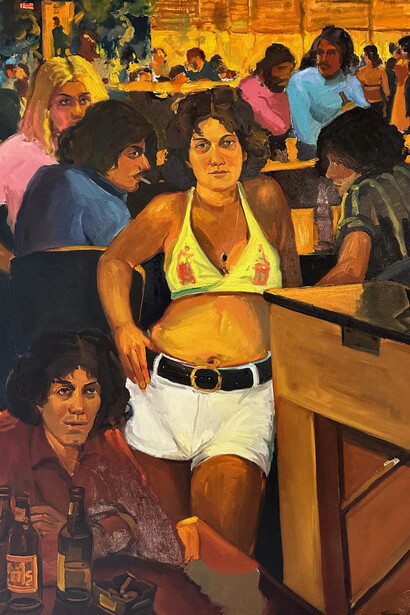
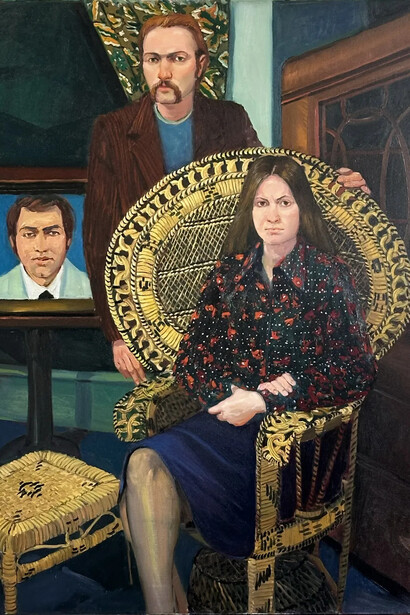
While the gallery has presented Hyder’s sculptures and woodcuts in previous group exhibitions and solo highlights at the KuBe Art Center in Beacon, New York, this exhibition centers on a remarkable and long-hidden body of work. A serendipitous encounter several years ago led to the discovery of nearly 200 paintings created in the early 1970s and stored in the back of Hyder’s studio for over five decades. These works reveal a fully realized painterly vision at a formative moment in the artist’s life and offer new insight into the origins of a practice more widely known for its sculptural ambition.
The paintings Frank Hyder produced in the early 1970s reveal an artist arriving at painterly maturity with striking confidence and clarity. Created at a moment of intense intellectual exchange, these works reflect Hyder’s deep engagement with color, structure, and observation, while resisting stylistic allegiance to any single school or mentor. The paintings balance immediacy and restraint: figures, interiors, and everyday scenes are rendered with a sensitivity to light and surface that feels intuitive and rigorously considered. Far from preliminary or exploratory, these works assert a fully formed artistic voice, one grounded in attention to the quotidian and a quiet insistence on painting as a site of sustained looking. Long unseen, the 1970s paintings stand as a rare and compelling record of an artist’s origins, offering fresh insight into the foundations of Hyder’s art practice.
Hyder is an American artist whose work explores color, light, and cultural symbolism across painting, sculpture, woodcut, and installation. He earned a BFA from the Maryland Institute College of Art and attended the Skowhegan School of Painting and Sculpture. Recognized early as an exceptionally gifted painter, Hyder was invited, while still a junior at MICA, to study with artists central to the New York art world at the University of Pennsylvania, including Alex Katz, Fairfield Porter, Elaine de Kooning, Neil Welliver, Alfred Leslie, Janet Fish, William Bailey, Paul Resika, Yvonne Jacquette, James Hennessey, and Paul Georges. He later received his MFA from the University of Pennsylvania. These artists, many shaped by direct connections to Bauhaus émigrés, represented a broad and vital range of approaches that challenged Hyder to sharpen his own voice. Rather than emulate their methods, Hyder sought to deepen his understanding of painting itself. While traces of these influences are visible, the works assert a confident and singular artistic identity from the outset.
Shortly after completing his studies, Hyder shifted his focus away from painting toward drawing and wood carving, ultimately devoting himself to sculpture, a medium that he became known for. He is today widely known for his large-scale sculptural works and public commissions.
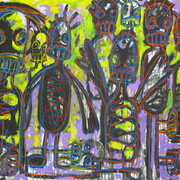
The rediscovery of Hyder’s early paintings prompted a return to the medium that first anchored his practice. Over the past year, he has produced nearly one hundred new works, including paintings on canvas and dimensional painted constructions cut from plywood, effectively merging painting with the sculptural language that has defined much of his career. The works are figurative and largely observational, depicting people he knows, intimate domestic scenes, swimmers, animals, and moments drawn from everyday life. Across both historical and recent works, Hyder’s handling of color is vibrant, expressive, and assured. What unifies the exhibition is a profound attentiveness to the rhythms of the artist’s daily experience, rendered with clarity, warmth, and conviction.