English
 Español
 Français
 Deutsch
 Italiano
 Português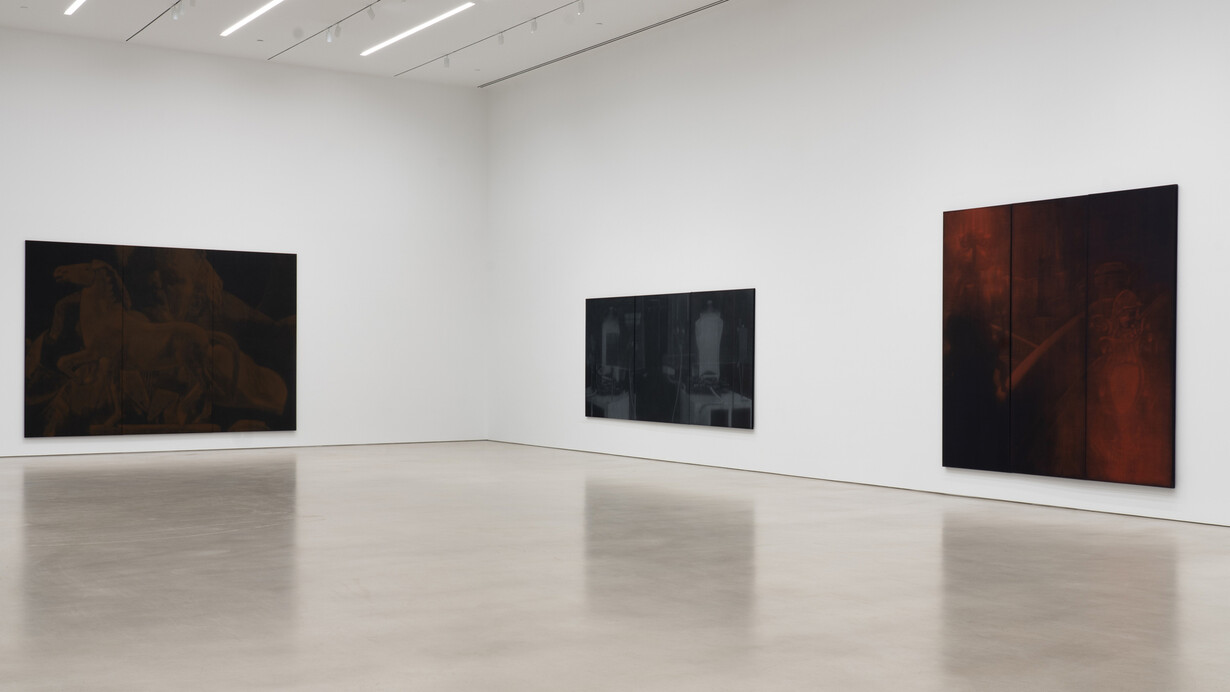
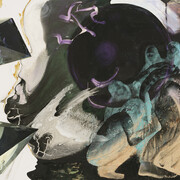
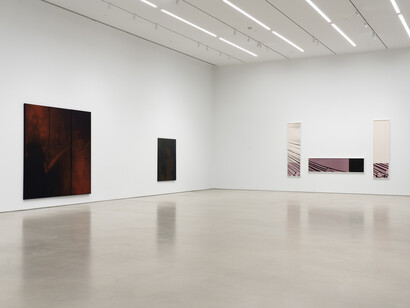
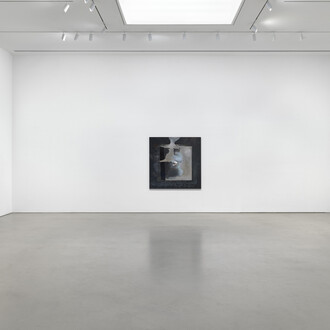
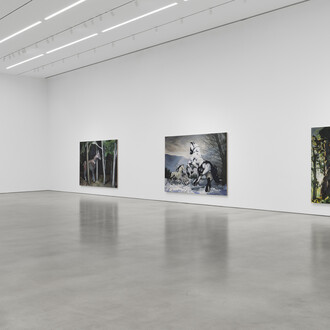
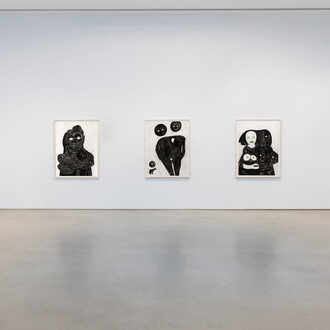
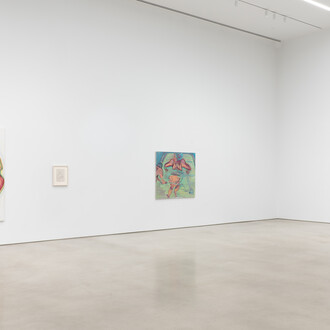
Over the last few years Brauntuch has transitioned his studio practice to the use of oil paint, a medium that permits the seamless blending of forms, the attainment of a refined somberness, and an extended working time conducive to precise adjustments. This new body of work will be presented alongside early experiments with photographic processes together with several large-format canvases that demonstrate his celebrated use of ink, pastel, conté stick, and raw pigment to create ghostly images that teeter between legibility and abstract gesture. Spanning almost fifty years of his career, the exhibition aims to underline a central tenet of Brauntuch’s deconstructive approach to art-making. In various ways, these works challenge the belief that images can provide a stable, direct, or unproblematic link to reality, objective meaning, or a fixed historical event.
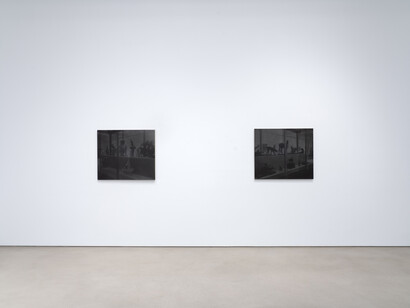
Museums and the vitrines of art they house have become a topic of intense art historical scrutiny, moving beyond their functional role for protection and security to their ability to construct meaning, knowledge, and value. In his Untitled (Display case) paintings, Brauntuch utilizes photographs taken by Heinrich Hoffmann of a series of exhibitions the Große deutsche kunstausstellung (Great german art exhibition - GDK) held at the House of German Art (Haus der Kunst) in Munich between 1937 and 1944. Brauntuch’s interest in these highly constructed images stems from a belief that the vitrine itself is an agent, crucial to museological processes as a vital interlocutor between object and viewer. They are devices that define objects and establish both sensorial and ideological boundaries. Translated into paintings, Brauntuch appropriates Hoffmann’s images to reflect critically on the specific social, political, and cultural context in which they were originally conceived. These “display case” works feel especially timely, echoing concerns around current government oversight of federal museums and calls for art and architecture to cultivate patriotic sentiment.
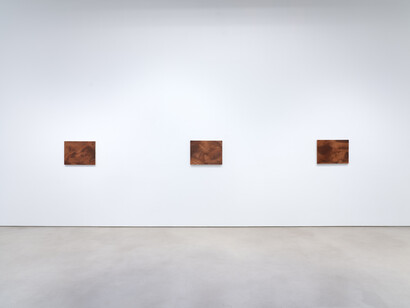
Brauntuch’s Untitled (Rodeo) paintings act as something of a foil to the types of historically loaded imagery that he has carefully studied and decoded for decades. Taken from a private archive of thousands of photographs of his dog, they are deeply personal, poetic, and tender. While the idealized animals displayed in vitrines at the House of German Art were meant to provoke national pride and strength, Rodeo is often captured in vulnerable positions, such as casually sleeping enveloped in a warm blanket or nuzzling a soft toy. The sculptural animals of the vitrines are cast in bronze, while Rodeo is living and breathing, highlighting the close, entwined relationship between companion species.
Brauntuch has said “A painting is not a stable thing; it comes about as a result of a multitude of processes.” Combining both old and new works, the exhibition intentionally breaks down existing meanings and conventions to reveal inherent contradictions, challenge assumptions, and posit new, often unstable, interpretations. Using techniques like fragmentation, juxtaposition, and subversion Brauntuch continues to question fixed truths in favor of a fluidity of representation.