English
 Español
 Français
 Deutsch
 Italiano
 Português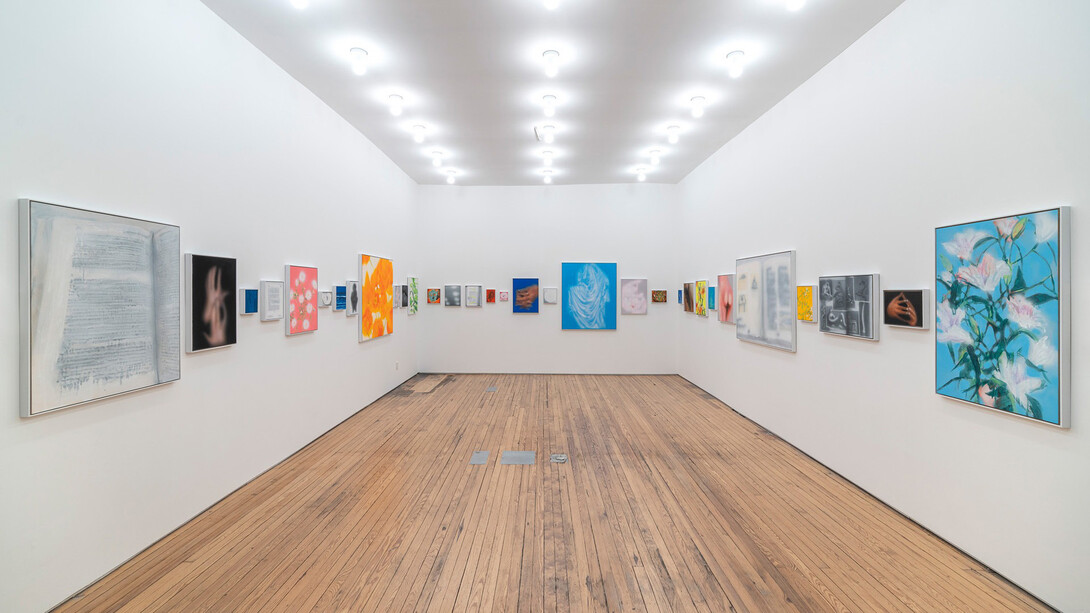
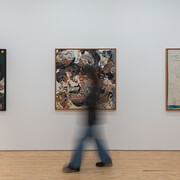
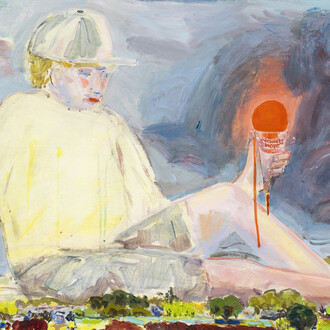
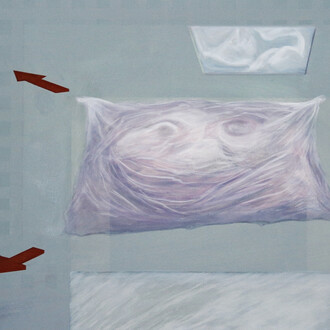
MARCH is delighted to announce Kevin Ford’s first solo exhibition with the gallery, presenting a suite of recent paintings, entitled: More.
Kevin Ford’s practice centers around his accumulation of sensory experiences, placing the ordinary and specific within a wider library of context. Informed by technological and social evolution, these paintings illustrate the gulf between what a thing may look like and how it is ultimately perceived. Art historians chuckle at the once-dismissal of Claude Monet’s work as a product of his imperfect sight, for such experiential renderings have continued on in the ambiguous forms of Philip Guston and later the softened and brushstroke-less paintings of contemporaries like Léa Belooussovitch and Elizabeth Glaessner. Without glasses, Ford’s vision is quite literally a blur, a phenomenon considered in his work alongside digital issues of quality and focus.
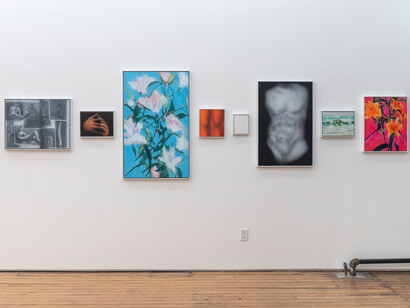
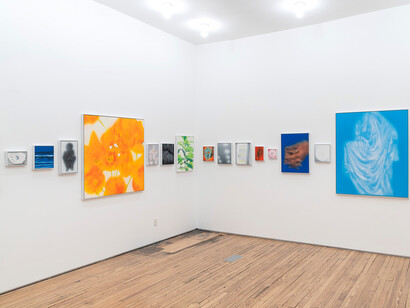
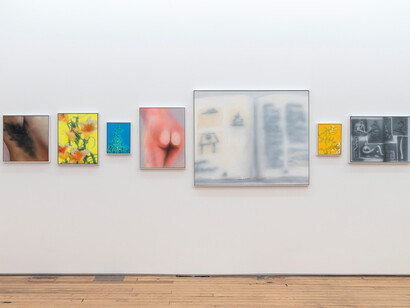
From sanded boards, a few swaths of color, and the opaque and immediate mist of an airbrush, objects are carved out of empty planes. They emerge from disparate origins; an ancient mask recollects a museum visit or a past life, and in the carpeted and salty armpit one can sense a stretching limb beyond the frame. Gazing upon the humble lightswitch invokes the raising of one’s hand, the surface of white plastic on pointer finger, the urge to dim or to illuminate. Familiar compositions suggest celebrated paintings or bourgeois fantasies. Nature looms in the shadows of plants and trees stretching long over the Earth.
These miscellaneous likenesses are coaxed from the touchable and seeable things of our world. In their mysterious hierarchy, a large work may be formidable while another is gauche; the smallest and quietest of works––if at first overlooked––may prove precious. Read them like a camera roll, like a magazine, a film reel, a kaleidoscope, like a series of things remembered in the mind’s eye. Folds of robes and skin are illuminated and fine hairs and texts appear just out of focus. The blossoms and leaves and jewels of the natural world are preserved in the immediate neon and haze of Ford’s guiding gestures. Each image allows for deeper recognition of its companions, and there is always more to see.