English
 Español
 Français
 Deutsch
 Italiano
 Português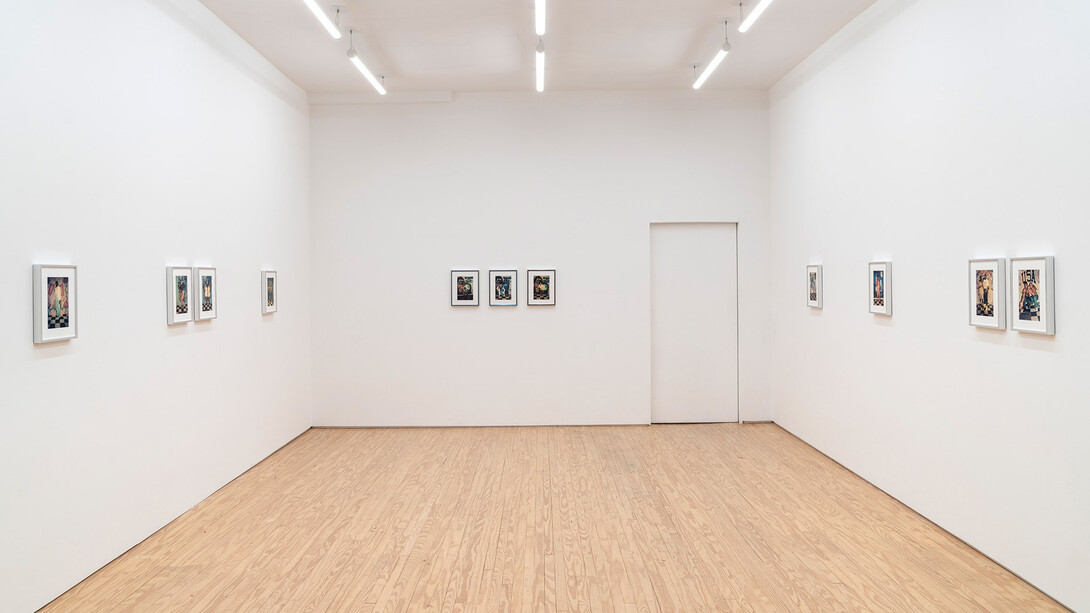
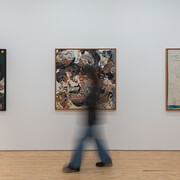
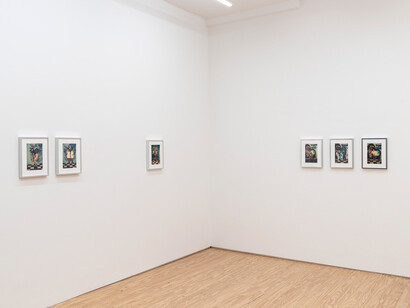
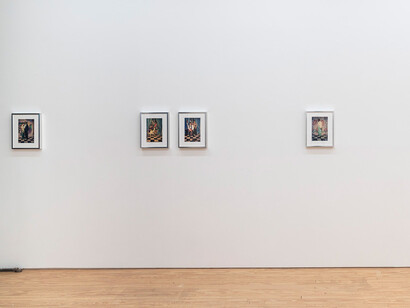
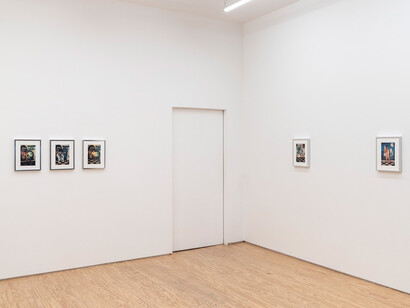
March, in collaboration with Sibyl Gallery, is delighted to announce 2025 MLK club Detour 2, an exhibition of photographs by the New Orleanian photographer Selwhyn Sthaddeus Terrell, aka Polo Silk 3. Spanning a body of photographs made at nightclub Club Detour 2 in the mid-1990s, Polo resurrects the joyous and untethered pulse of early Hip-Hop and Bounce-era New Orleans, a time referred to by the artist and countless others as a “Golden Era.”
Polo’s photography finds its origins in family albums and fashion magazines, two conceptual themes that would remain consistent throughout his evolution as an artist. His subjects span family, friends, and fellow club-goers, modeling the era’s distinct styling trends and brands in vogue. Adidas outfits, Gucci Horsebit loafers, various football jerseys, Polo shirts, and Coogi garments appear with regularity. The artist’s self-portrait portrays a cool and slouching man dressed head-to-toe in Polo Ralph Lauren, complete with earrings that he would later give away (an act compelled by one disapproving look from his mother).
The likeness of club owner Earl Henry Jr. can be found throughout the presentation, embracing his wife at the Zulu Ball afterparty and posing ceremoniously alongside his friends and family on his birthday. Countless dollar bills are pinned in the middle of the celebrant’s shirt, evidence of a local tradition pushed to the extreme. In another frame, club regular Kawanna leans merrily towards the lens, immortalized in many of Polo’s photographs as well as one of “Josephine” Johnny’s songs (“Do Kawanna Wit It,” it goes). In addition to these neighborhood superstars, many of the musicians documented in Polo’s photography would go on to be championed by the local Cash Money Records, launching the careers of artists like Birdman, Juvenile, Lil Wayne, Mannie Fresh, BG, and others.
A gathering space for self-expression and exchange, Club Detour 2 served as a rendez-vous point for people across ages and tastes, decked out in their Sunday best and the streetwear that is today synonymous with Hip-Hop culture. Made by the artist’s cousin, Otis Spears, the airbrushed backdrops reference hit Hip-Hop tracks (“Money + The Power”), then-current events like the 1996 Summer Olympics, and champagne glasses with a crescent moon, among other visions––something for everyone. With a keen eye for the latest trends in fashion, sports, and music, Polo brought multiple backdrops to each shoot, creating conditions for visitors to express their individual style and leave a visual trace.
These photographs serve not only as a rich sociological archive, but as intimate memorabilia for members of the community. Polo’s vast archive survived the destruction of Hurricane Katrina where countless others were lost. For many local families, his photographs exist as the sole documentation of their dearly departed. In light of this fact, Polo began his tradition of “blessing those who have been a blessing to [him],” gifting framed images of lost loved ones, and documenting the act of gifting for social media. This presentation offers testimony to that “Golden Era,” a brief resurrection of nights spent, decades ago, at Club Detour 2.
Polo Silk has been the subject of solo exhibitions at the New Orleans Museum of Art (New Orleans, LA), Sibyl Gallery (New Orleans, LA), the New Orleans Jazz Museum (New Orleans, LA), and Antenna (New Orleans, LA). He has exhibited in group exhibitions including Called to the Camera: Black American Studio Photographers at the New Orleans Museum of Art (New Orleans, LA), Gestures of Refusal: Black Photography and Visual Culture at the Contemporary Arts Center (New Orleans, LA), and Southern Democratic at the Carnegie Museum of Art (Covington, KY) as part of the 2024 FotoFocus Biennial (Cincinnati, OH). Polo’s photographs are held in the permanent collection of the Historic New Orleans Collection (New Orleans, LA).