English
 Español
 Français
 Deutsch
 Italiano
 Português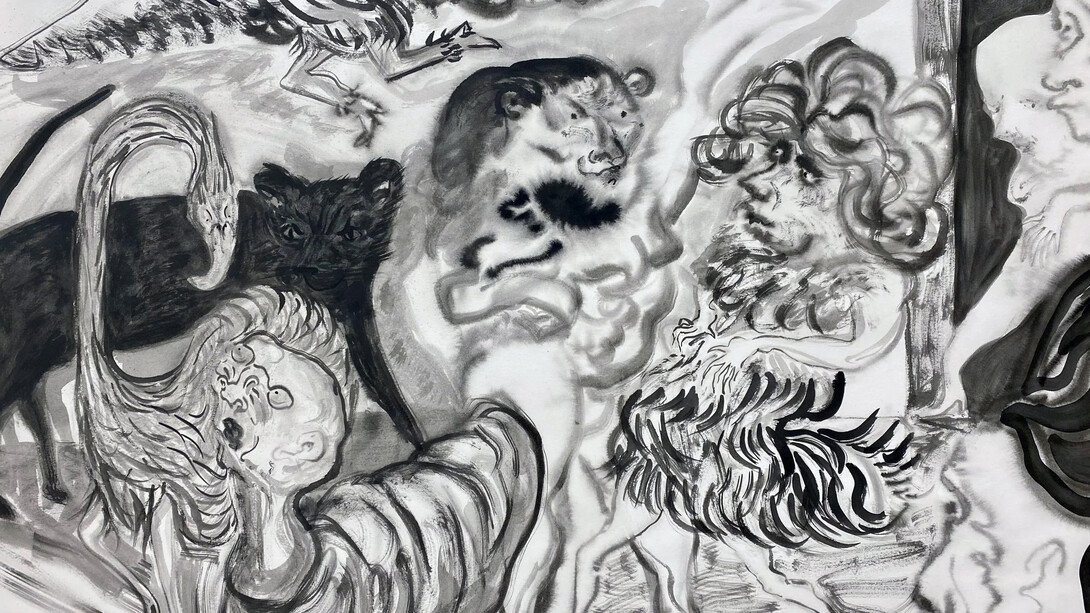
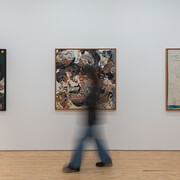
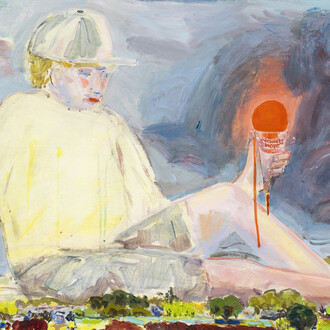
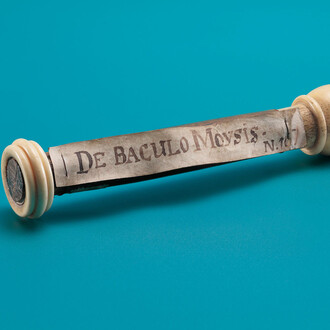
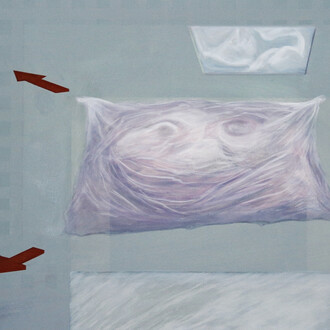
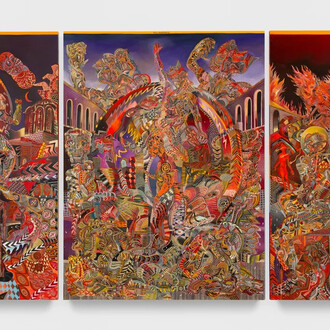
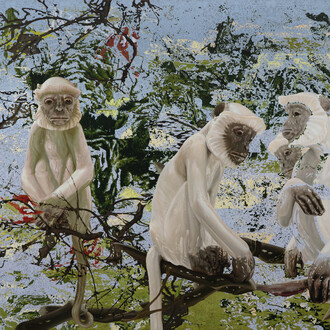
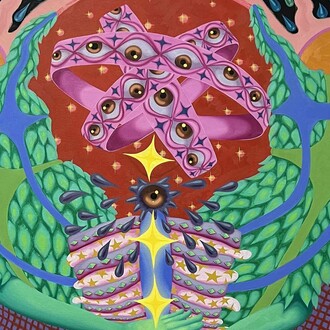
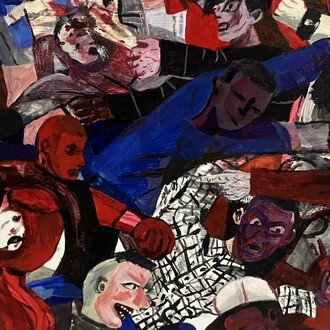
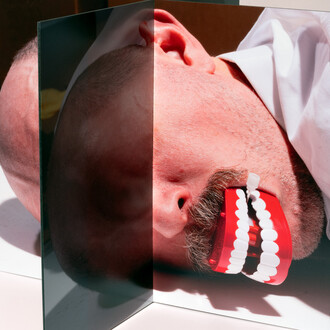
Indigo+Madder and March are pleased to present Keeper, a group presentation of works by John Hee Taek Chae, Kuh Del Rosario, María Korol, Lucía Reissig, Aineki Traverso, and Thiang Uk, curated by Maria Owen. Prompted by Elizabeth Fisher’s Carrier Bag Theory, the exhibition opens at Indigo+Madder in London on January 22, 2026.
In 1979, feminist author and journalist Elizabeth Fisher introduced what is known as Carrier Bag Theory, proposing that “the first cultural device was probably a recipient.” Up until that point, it was commonly accepted in many mainstream Western discourse that the first human-made tools were objects of force: an axe to cut, a hammer to strike. Fisher’s work argued otherwise, identifying these first technologies as vessels for collection: instruments to contain water or berries, or to carry a precious child. The theory was passionately adopted and popularized by science fiction author Ursula Le Guin, whose essay, The carrier bag theory of fiction (1986) applied Fisher’s philosophy to writing, explaining that the novel is commonly overtaken by a hero, for it is much easier to write a story of conflict and finite action than of the flow of energy and ideas. Yet, as Le Guin reminded us, “Whoever said writing a novel was easy?”.
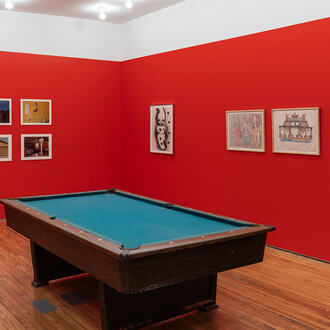
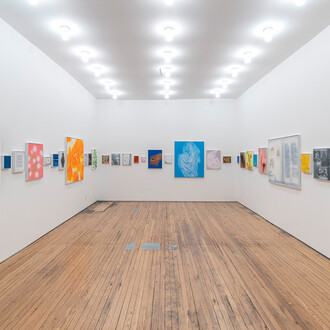
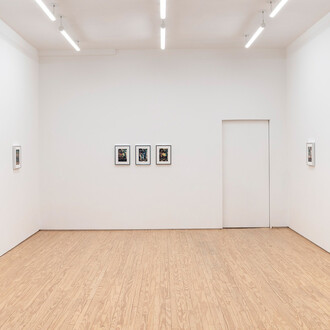
Keeper seeks out these alternative approaches to art-making, presenting works that intentionally engage with multiple realities and acting as recipients for the nourishing thoughts and impulses of their makers. As Le Guin proposed that, “the natural, proper, fitting shape of the novel might be that of a sack, a bag. A book holds words. Words hold things,” this exhibition adopts the view that an artwork may too be a bag, a container holding imagery, strokes and gestures, and thus, meaning.
A long-time student of Carrier Bag Theory, Lucía Reissig’s 2 (dos) emulates a familiar container, alluding to marketplace environments where necessity drives exchange. Private practices of labor and the resulting physical and emotional nourishment accumulate in her vessels. Suspended on the gallery columns, John Hee Taek Chae’s banners gesture to the “Hometown Heroes” signage that lines many small town streets in the United States. Collaging imagery related to veterans and homesteaders, Chae weighs disparate beliefs around service, duty, and ownership.
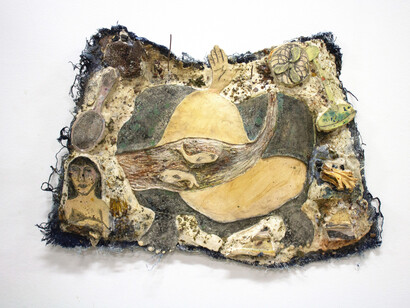
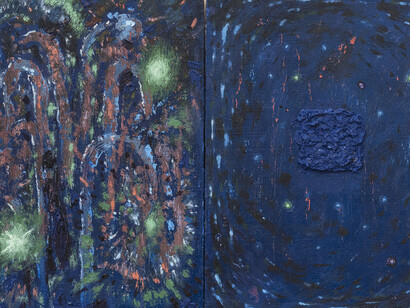
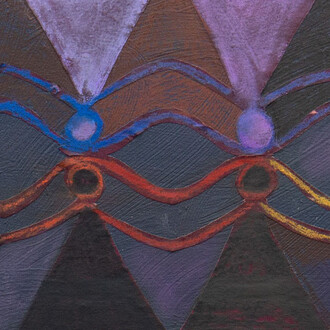
Dug from the banks of the Bow River, Kuh Del Rosario’s clay tablets chronicle ancient Filipino myths alongside the artist’s adaptation from life in Manila to Calgary, contemplating physical barriers as well as those of language, culture, and memory. Similarly drawing from ancestry and movement across time and space, brushstrokes accumulate with intensity in Thiang Uk’s paintings. Motifs of commemoration and constancy signal across continents and philosophies.
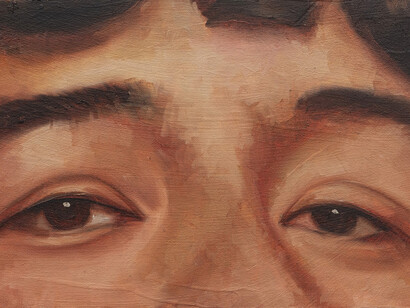
In Horizon, Aineki Traverso strings together fragments of faces and forms in a sensorial echo. Intended to meet the viewer at eye-level, the frames invite movement as one feeds into the next. María Korol’s Tango trap depicts stories from her native Buenos Aires and current home of Atlanta through the fusion of environmental and musical aesthetics, forming an object that is both archive and imaginary. Archetypical narratives play out in her drawings, forming an alternative bestiary.
The works presented do not seek to convince nor claim. Rather, each puts forth a constellation of experiences, beliefs, and aspirations; meaning is created through relative tension. Working across time and continents, the artists of Keeper transcend categorization. They share a reverence for inherited mythology and land-based narratives, citing and questioning histories that warp and expand the status quo. Thus, uniquely positioned to map alternative origins, they make sense of the expansive present by gathering varied elements, each work of art a collection of coexisting cycles and truths.