English
 Español
 Français
 Deutsch
 Italiano
 Português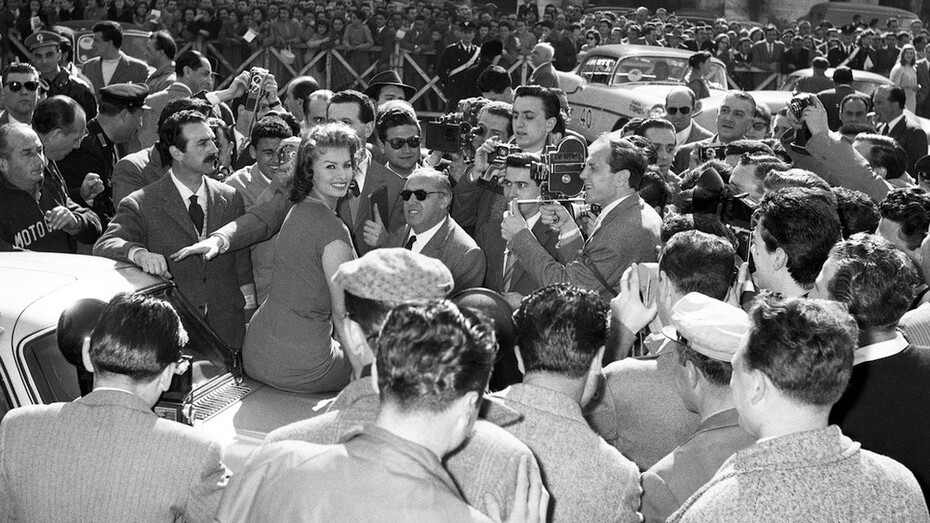
The Municipality of Corato and the Imbriani Library are pleased to announce the exhibition La dolce vita di Pais, a solo show by Rodrigo Pais, the Roman photographer who, during the 1960s, documented from the inside the film sets of the greatest movies of the era, retracing a season marked not only by extraordinary creativity but also by profound social and cultural change.
Curated by Vittoria Mainoldi and Maurizio Guidoni of ONO arte, in collaboration with Navigare s.r.l., the exhibition offers a privileged glimpse into post-war Italy and the golden age of Cinecittà, through the attentive and sensitive eye of Rodrigo Pais, whose archive is now preserved at the Alma Mater Studiorum – University of Bologna, University Library of Bologna.
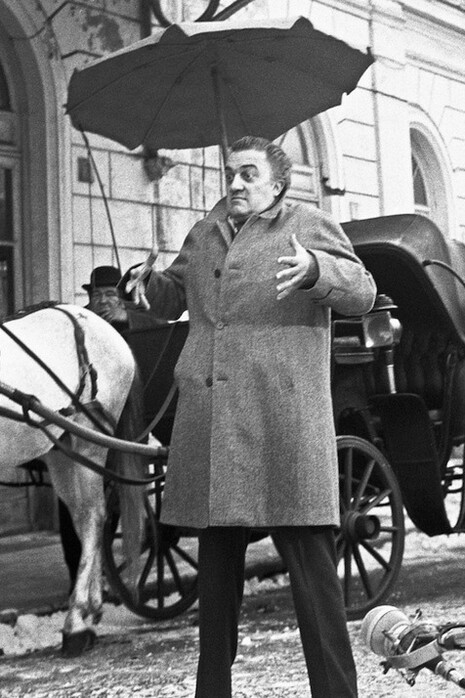
When Federico Fellini won the Palme d’Or at the Cannes Film Festival with La dolce vita and Michelangelo Antonioni received the Jury Prize for L’Avventura, a cinematic season of great significance for Italy began—one that Rodrigo Pais (1930–2007), a photojournalist with numerous prestigious collaborations to his name (Corriere della Sera, Corriere d’Informazione, L’Unità, La Stampa), was able to penetrate and reveal.
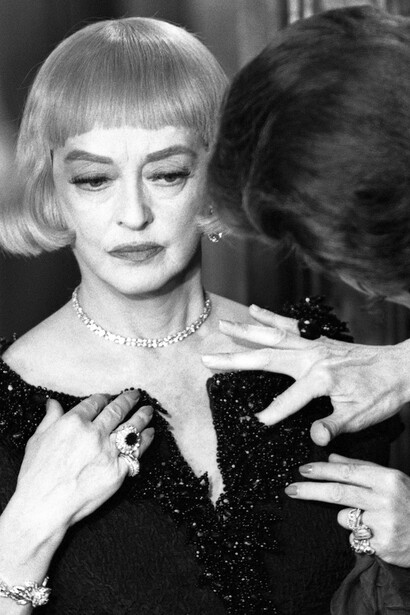
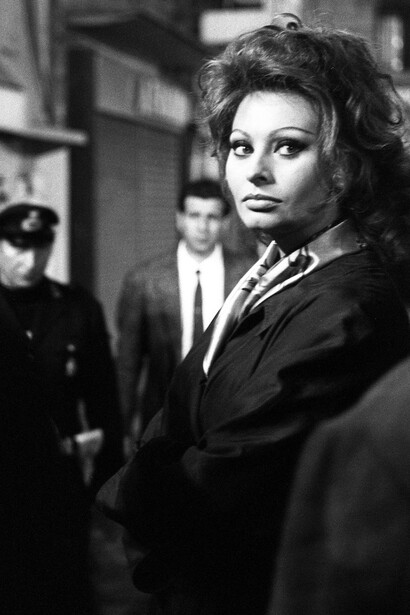
The exhibition presents not only a compendium of the most important films of Italian cinema photographed by Pais, but above all the female protagonists of that extraordinarily fertile period: Sophia Loren, Silvana Mangano, Virna Lisi, Claudia Cardinale, Anita Ekberg and Anna Magnani are just some of the names captured by Pais’s attentive lens. He also photographed international stars such as Brigitte Bardot (Le mépris, 1963) and Bette Davis during the filming of La noia (1963).
From portraits to on-set photographs, Pais offers us a deeply personal view of such an exceptional season as that of Rome’s dolce vita, confirming his status as one of the greatest Italian photojournalists of the post-war period.
La noia (D. Damiani, 1963), L’eclisse (M. Antonioni, 1961), Matrimonio all’Italiana (V. De Sica, 1964) are among the films from which the photographs on display are taken. These images capture moments of pause and backstage scenes, offering an unprecedented view of the behind-the-scenes world of the cinematic works that made Italy internationally renowned.
Black-and-white photographs alternate with color images, more composed and carefully balanced. They are part of an archive of nearly 400,000 photographs, including prints and negatives, which Pais himself catalogued according to a dual chronological and thematic criterion.
For this reason, the exhibition also dedicates a section to Pais’s photojournalistic production, as a privileged witness to a society undergoing profound transformation during the years of the economic boom.