English
 Español
 Français
 Deutsch
 Italiano
 Português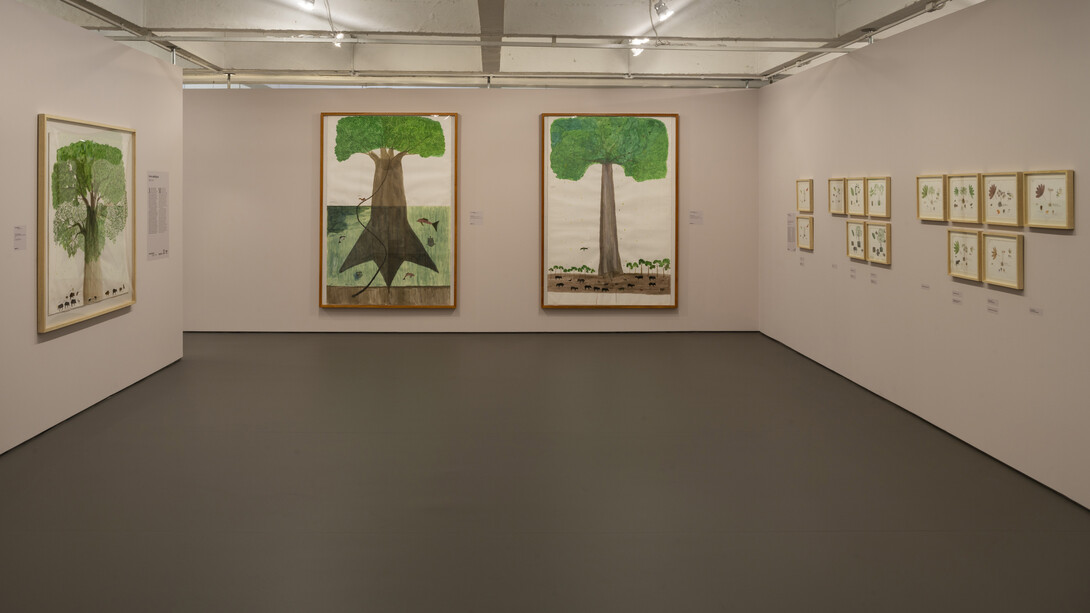
Abel Rodríguez (1941–2025) was born in the Colombian Amazon as a member of the Nonuya and Muinane communities. His Indigenous name, Mogaje Guihu, means “shining hawk feather,” alluding to his belonging to the Gavilán clan. Rodríguez was trained from childhood to be a sabedor, serving as a repository of botanical knowledge. In the 1990s, he fled the armed conflicts in his native region and moved to Bogotá. There, in contact with the Dutch Tropenbos foundation, he was encouraged to draw in order to record and share his knowledge about the forest. From then on, his production was gradually acknowledged. He became one of the most important Latin American artists today, with wide participation in the international art scene.
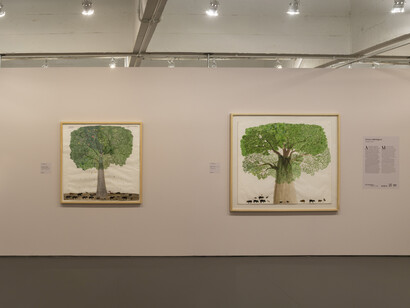
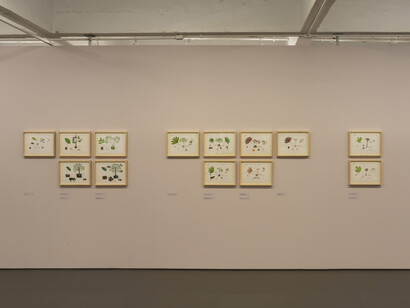
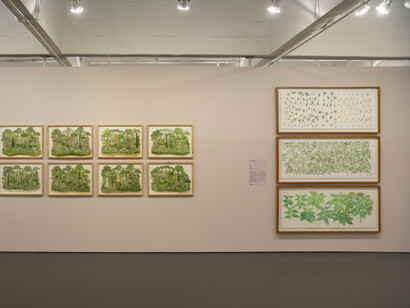
Rodríguez’s outstanding drawings show the interactions of different vegetable and animal species. They also depict cycles and the action of time in the forest. His works contain notes on the practical and symbolic uses of plants. The artist describes in detail the intricate shapes of the leaves and the textures and sizes of the trees. He records his home territory from his memories. The “tree of life and abundance,” which gives the title to this exhibition, is another recurring theme in his work. It refers to the main origin myth of the Nonuya and Muinane peoples. For them, the first tree created in the world is credited as the origin of the forest and all beings. These beings must recognize which fruits are edible, which leads to a series of struggles until harmony is reached between humans and non-humans.
This is Abel Rodríguez’s first posthumous solo exhibition. It brings together 65 drawings produced between 2006 and 2025. The show is organized into four sections that shed light on the central aspects and themes of the artist’s oeuvre: mythological trees, botanical drawings, cycles, and intertwined nature.
Abel Rodríguez—Mogaje Guihu: the tree of life and abundance is curated by Adriano Pedrosa, Artistic Director, and Leandro Muniz, Assistant Curator, MASP. The exhibition is part of the year devoted to Histories of Ecology in the Museum, which includes solo shows by Clarissa Tossin, Claude Monet, Frans Krajcberg, Hulda Guzmán, Minerva Cuevas, André Taniki Yanomami, the collective Movimento dos Atingidos por Barragens (MAB), shows in the Video Room by Emilija Škarnulytė, Inuk Silis Høegh, Janaina Wagner, Maya Watanabe, Tania Ximena, and the project Vídeo nas Aldeias, as well as the group exhibition Histories of ecology.
Since 2019, MASP has had a sustainability workgroup and implemented actions such as decarbonization, the purchase of renewable energy, and a waste management program. In 2025, these initiatives will be added to the Histories of ecology program. The new Pietro Maria Bardi building also incorporates sustainable solutions and has achieved the Leadership in Energy and Environmental Design (LEED) certification.
![Colectivo Acciones de Arte, No+ [Não mais] [No more] (detail), 1983. Courtesy of MASP](/attachments/9b5e15c1c6ff59f1c8272376342c34a6f13efb4a/store/fill/330/330/0fcbe6a1da1016b4e092bd89473b45f8f01cb2d5d8ed180582c9b452d1b0/Colectivo-Acciones-de-Arte-No-plus-Nao-mais-No-more-detail-1983-Courtesy-of-MASP.jpg)
![Various artists, As formas do tempo [The forms of time], exhibition view. Courtesy of Galeria Nara Roesler](/attachments/639f93a1d7d1675cbde1d1d8e301417a4894a896/store/fill/330/330/7b74048c7d672cd72a4a9d09907e69472e7c04b9fc4b572cbe596f6ee39c/Various-artists-As-formas-do-tempo-The-forms-of-time-exhibition-view-Courtesy-of-Galeria-Nara.jpg)