English
 Español
 Français
 Deutsch
 Italiano
 Português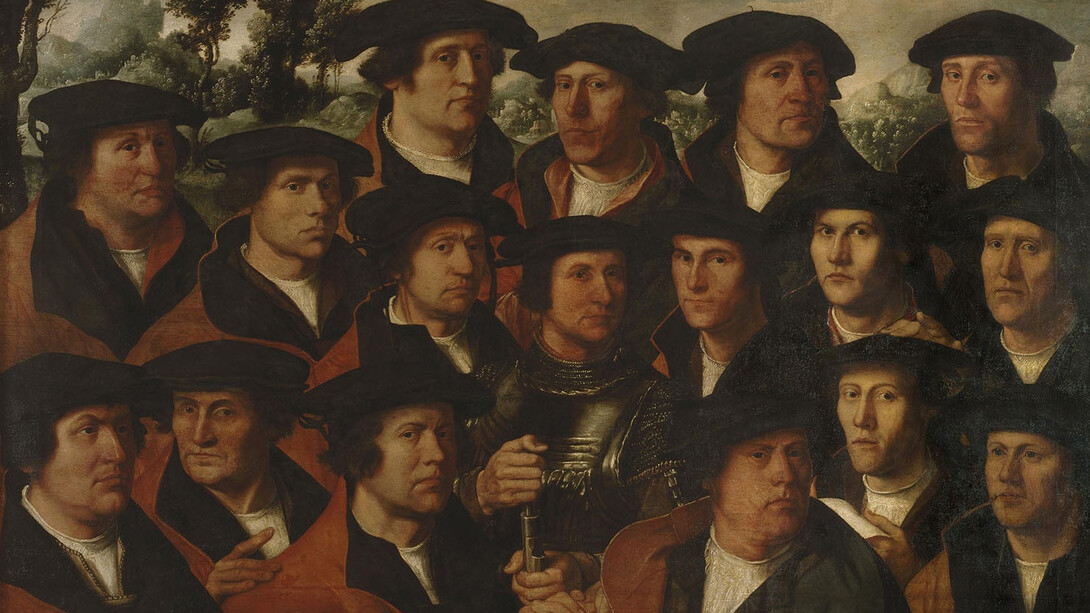
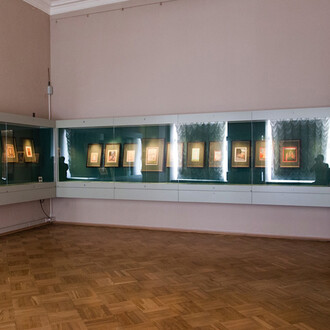
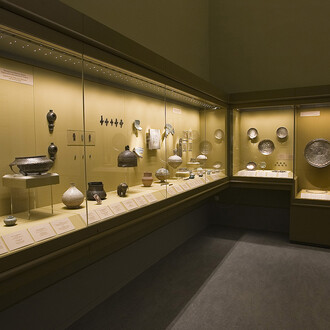
On 9 December 2025, during the Hermitage Days, a major exhibition entitled Portraiture. A Personality and an Era, dedicated to the history of the portrait worldwide, will open in the Nicholas Hall of the Winter Palace (Hall 191).
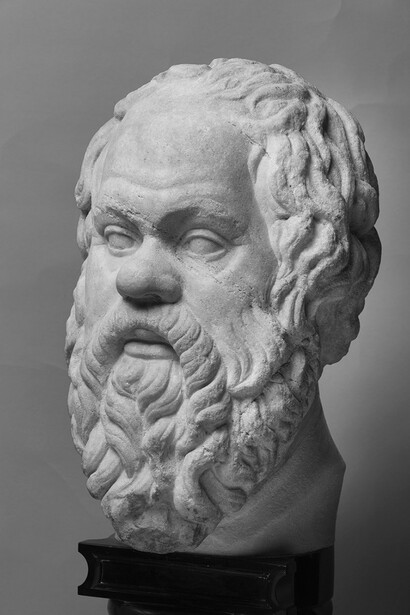
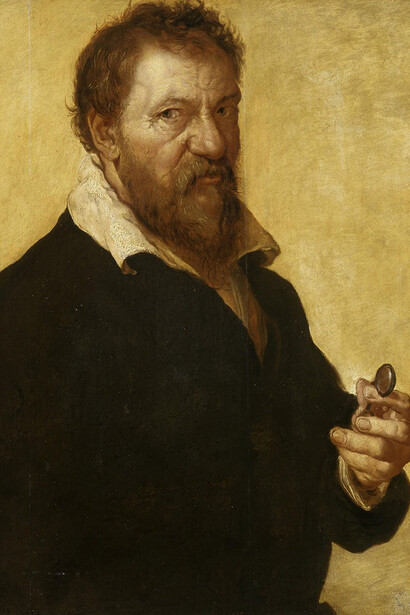
More than 750 works have been brought together in a single narrative spanning four thousand years – from the 20th century BC to the 21st century AD. This is the first time visitors are being offered such a broad view of the development of the portrait genre: from its most ancient forms to the latest creative approaches. It is an opportunity to see the whole of world culture as a realm for dialogue, where every image of a person is at once a document, a symbol and a reflection of its age.
“Only an encyclopaedic museum on the scale of the Hermitage could create such an exhibition, presenting through the portrait all of world art and almost the entire history of humanity. Brilliant masterpieces tell many stories about why and how the inner psychological prohibition on creating a double, reproducing or stealing a person’s image and soul was overcome, and how a portrait differs from a ritual religious image. The exhibition prepares us for the next twist in the plot – how to distinguish a portrait from an avatar and a ‘deepfake’, and whether we should distinguish them. A classical type of exhibition, it is in fact burning with relevance,” states Mikhail Borisovich Piotrovsky, General Director of the State Hermitage.
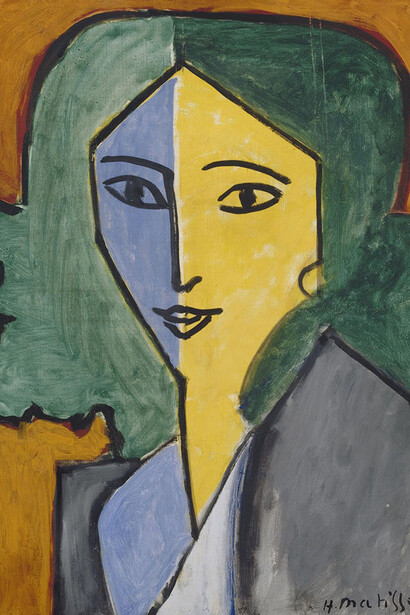
Within a single display space, works that are themselves already symbols of their eras come together: the ancient Egyptian statue of Pharaoh Amenemhat III; the bust of the Roman emperor Philip the Arab; the famous Gonzaga Cameo depicting a royal couple from the Ptolemaic dynasty; the painted depiction of a Chinese official’s wife; a portrait of Fath-Ali Shah; Renaissance medals; paintings by Western European and Russian artists: Pietro Perugino, Lucas Cranach the Elder, Ambrosius Holbein, Anthony van Dyck, Rembrandt Harmensz van Rijn, Diego Velázquez, Pablo Picasso, Henri Matisse, Nikolai Ge, Ivan Kramskoi, Valentin Serov, and sculptures by Jean-Antoine Houdon and Boris Orlovsky. A contemporary view of the genre is reflected in works by renowned figures of the 20th and early 21st centuries – the artists Francis Bacon, Vladislav Mamyshev-Monroe, Andy Warhol, Bill Viola, and the legendary photographers Annie Leibovitz and Steve McCurry.
Visitors are presented with a gallery of vivid portrait images, where Cleopatra VII and Queen Elizabeth II are neighbours, along with icon countenances and Tashtyk death masks, the gold mask of Rhescuporis and a portrait of the missionary Ricci. Products of different eras and cultures, they illustrate the evolution of the genre. For the first time on such a scale, masterpieces of times ancient and modern, West and East, Europe and Asia are being shown together, allowing one to see the similarities and differences in the depiction of people from different civilizations, cultures and ages.
The exhibition provides an unprecedented opportunity to see the world in all its diversity through the lens of human images. It includes the finest examples of portrait art, both well-known to a wide audience and exhibited for the first time.
The display has been prepared by the State Hermitage with the participation of the “MIRA Creative Community” Autonomous Non-Profit Organization, the V-A-C Foundation, and the private collections of Denis Khimilyayne, Sergei Limonov and Anton Kozlov.
The Exhibition Curator is Anna Alexeyevna Trofimova, Candidate of Art History, Head of the Department of Classical Antiquity.
An illustrated scholarly catalogue for the exhibition Iskusstvo portreta. Lichnost’ i epokha [Portraiture. A Personality and an Era] is in preparation. The authors of the texts are Vladimir Abinyakin, Natalia Avetyan, Adel Adamova, Andrei Bolshakov, Yury Gudymenko, Vera Guruleva, Mariam Dandamayeva, Natalia Demina, Yelena Kuvshinova, Andrei Nikolayev, Svetlana Pankova, Kira Samosyuk, Tatiana Slepova, Anna Trofimova, Yelena Khodza, Konstantin Chugunov, Liudmila Shatilova, Marina Shults and Yelena Yarovaya.