English
 Español
 Français
 Deutsch
 Italiano
 Português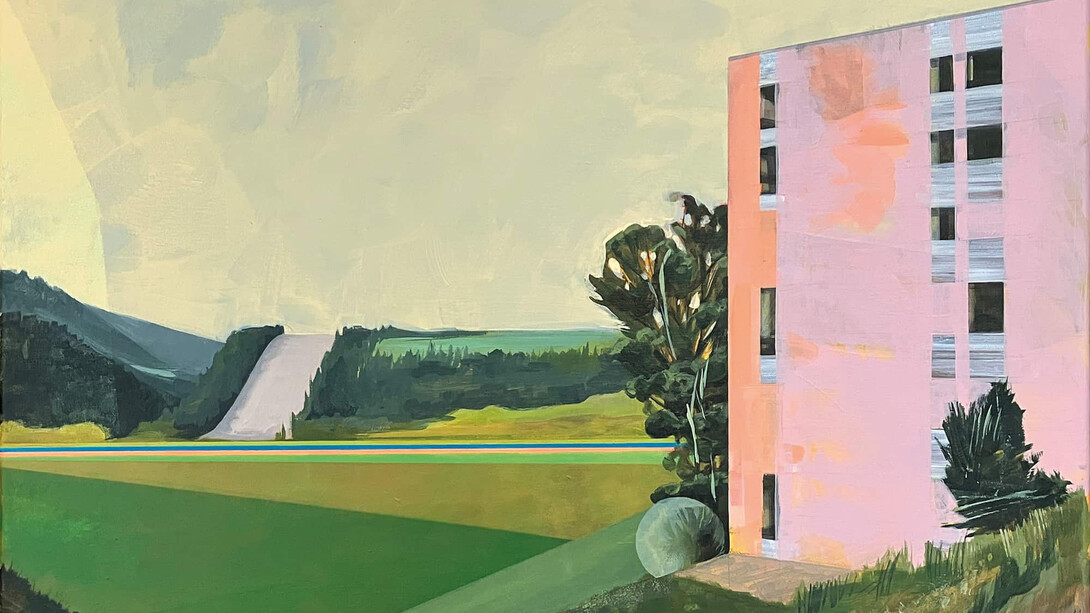
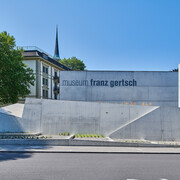
The Franz Gertsch Museum is taking part in Cantonale Berne Jura, the annual exhibition of the cantons of Bern and Jura. The exhibition takes place in the Cabinet, where recent works by fourteen artists enter into dialogue with one another, presenting a wide range of contemporary positions. A variety of techniques and materials are represented, including paintings, photographs, sculptures, objects, and installations.
With works by Sophie Burtscher, Jennifer Elser, Eloi Gigon, Irene Habegger, Gregory Tara Hari, Christian Helmle, Diego Kohli, Sapir Kesem Leary, Linda Meli, Corinne Odermatt, Bruno Sutter, Selina Ursprung, Tony Weiß, and Angela Zwahlen.
Flat roofs, shed roofs, gabled roofs, hipped roofs, pavilion roofs, stepped roofs, barrel roofs—the roofs that cover human dwellings are highly diverse. A roof rests on a load-bearing structure: walls and partitions define its extent and support it. They also function as separators, drawing boundaries between exterior and interior, as well as between rooms.
The house offers shelter and warmth. It provides refuge and protection and allows us to preserve what belongs to us. It defines a place and a sense of belonging, shapes our identity, and carries symbolic meaning. It testifies to the feeling of belonging to a place or reveals a longing for home. The house responds to our need for a roof over our heads, for work, and for togetherness.
Geography, climate, environment, building materials, and technology—as well as society and many other factors—influence the form of our dwellings. Yet these factors do not merely exert influence; they can also become threats to us and our possessions. Houses are exposed to aging, decay, and unpredictable events. Being master of one’s own house—being master in one’s own home—is a precarious concept, both literally and psychologically. What do inhabitants secretly do and think within the walls of their homes? Behind the façade, intimate and mysterious things unfold.
Walls and partitions must contain openings—otherwise access to rooms would be impossible. Doors close these openings; the hinge is the pivot on which the door leaf is hung. Doors with rotting hinges are a bad sign. Roofs that collapse or leak endanger the entire structure. A safe home is defined by durability. And yet, humanity is not master of the world. The world as humans have now shaped it—along with new technologies that threaten its very existence—escapes complete control.
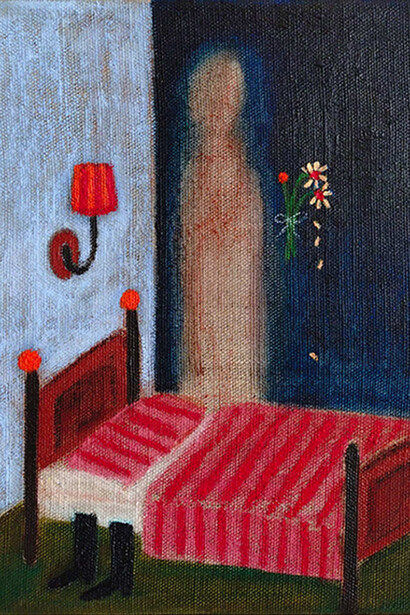
The house is a metaphor: when we say that “the world is collapsing” or that “certainties are faltering,” we evoke a profound sense of insecurity. The constructions shown in the exhibition—house structures of all sizes—represent a loss of psychological security. We interpret this insecurity almost intuitively: a house is never merely a structure; it is also the embodiment of an emotion.
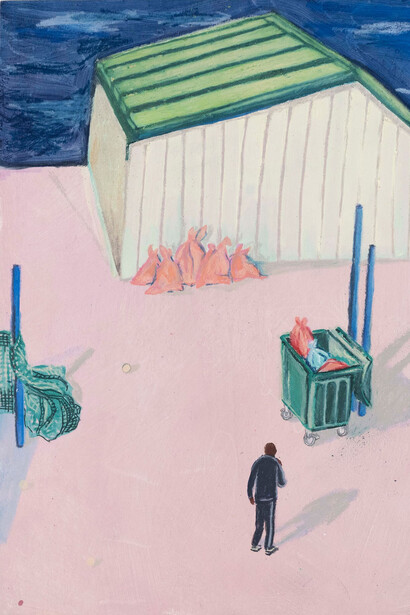
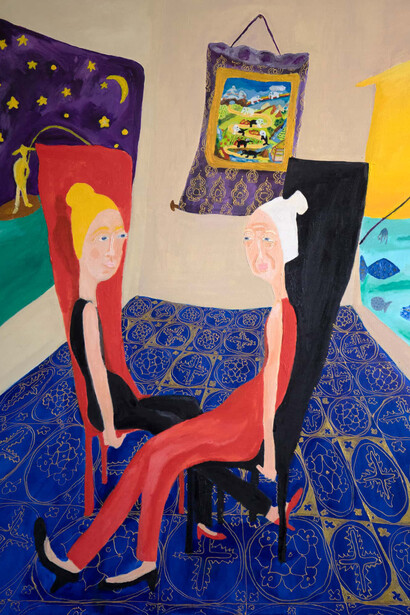
The works presented in the Cabinet of the Franz Gertsch Museum as part of this year’s edition of Cantonale Berne Jura depict dwellings of various forms: stable and unstable, closed and open, lived-in spaces and empty ones. Generations of inhabitants gather there; relationships are formed. Human beings, still hunters and gatherers at heart, bring their acquisitions home. At times, nature is contained within interior spaces. And what takes place in the minds sheltered beneath these roofs? What are their thoughts, memories, and dreams, beyond physical space?
Cantonale Berne Jura brings together eleven art institutions to present works by artists from the cantons of Bern and Jura in a shared annual exhibition. This intercantonal exhibition has been organized and funded by the Cantonal Association since 2012 and originated in 2011. Emerging from the tradition of regional Christmas exhibitions, Cantonale Berne Jura makes an important contribution to supporting regional and national art. By strengthening the institutional network of the two cantons, it has established itself as a key platform for encounters between artists and audiences. A joint pass granting access to all partner venues of the Cantonale is available at the ticket offices of the participating institutions.
(The exhibition is organized by Anna Wesle, in collaboration with jury members Catharina Vogel [Research Assistant, Franz Gertsch Museum] and Rebecka Domig [art historian, independent author, and curator]).