English
 Español
 Français
 Deutsch
 Italiano
 Português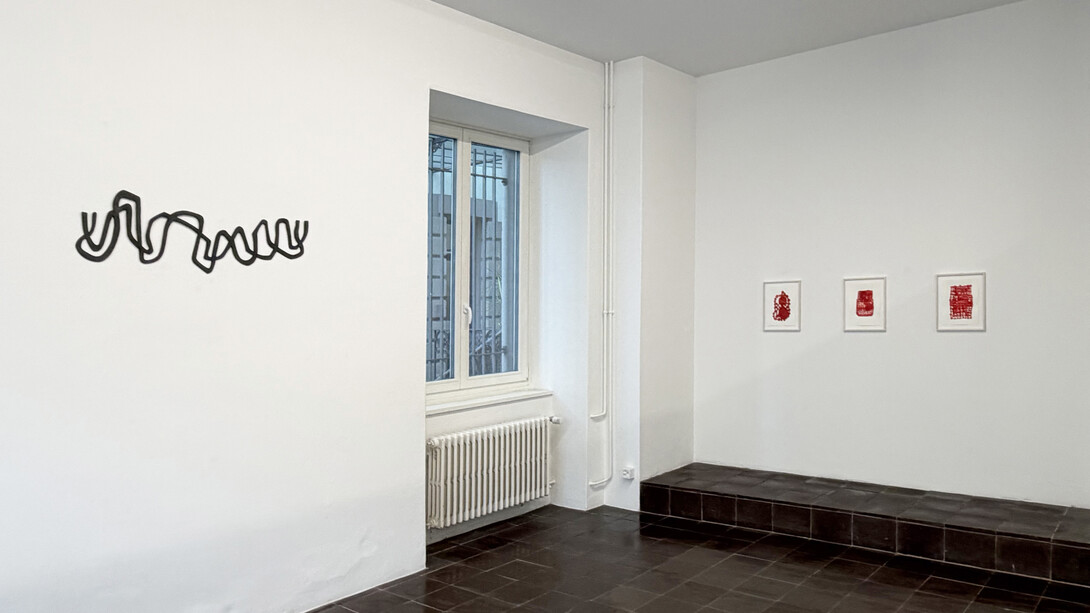
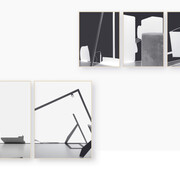
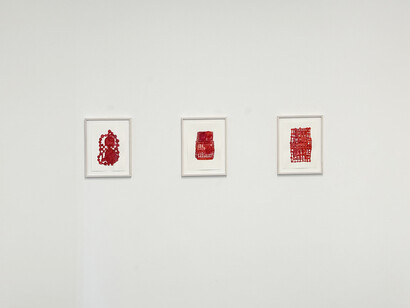
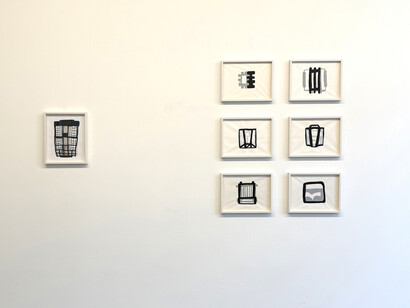
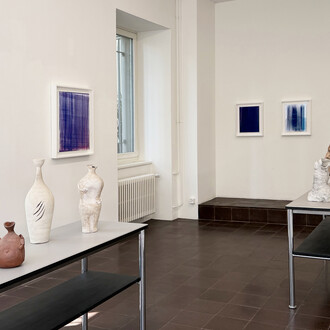
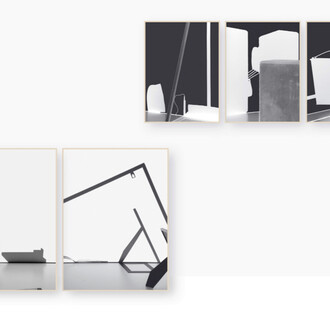
The joint exhibition of Susan Hefuna and Abraham David Christian takes drawing as its conceptual and material point of departure. Drawing is not approached as a preliminary or preparatory medium; instead, it constitutes the foundation of both artistic practices. The probing quality of the line generates forms that encounter one another, overlap, and interlock, establishing a dynamic field of visual relations. For both artists, the bodily dimension of drawing is central, though articulated through distinct temporal structures. Hefuna’s serial works on paper develop cyclically over extended periods, while Christian works in a daily rhythm, producing individual drawings that are later brought together in groups. Despite these differing cadences, their practices converge in a shared attentiveness to drawing as a site of inquiry and knowledge production.
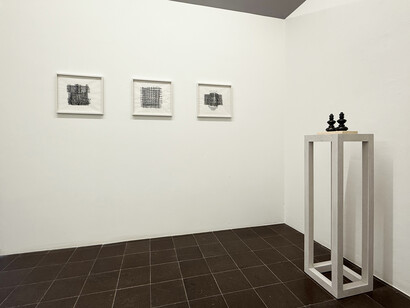
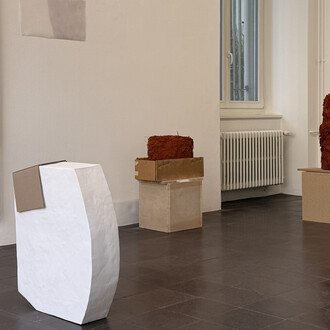
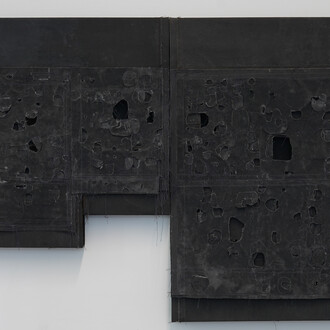
Susan Hefuna’s cycles are created in changing locations and emerge from an intense engagement with her immediate environment. An initial impulse sets the drawing process in motion, free from preconceived imagery. The direct contact between hand and paper allows thought to unfold intuitively, as geometric structures oscillate between abstraction and figuration. The grid functions as a central formal and conceptual element in her work. It references the mashrabiya, ornamented wooden lattice screens in Islamic architecture that mediate light, air, and visibility. A denied view from the outside is countered by a view into public space. In Hefuna’s drawings, expanding networks unfold that evoke multiple registers of meaning, ranging from urban infrastructures to human systems of circulation. In Abraham David Christian’s work, the two-dimensional form of drawing at times extends into the sculptural, with both formats existing on equal footing. In wall-based reliefs, intersecting lines retain the fine, linear quality of drawing, suggesting winding river systems or cartographic traces whose inner landscapes exceed the confines of the wall. The line, cast in bronze, transforms the sculptural vertical into a filigree, seemingly floating horizontal. In other works, formally related bodies are repeatedly stacked, recalling archaic markers in the landscape or stone stupas in high-altitude terrains.
These objects in bronze or iron emanate a calm, almost meditative presence that draws the viewer into a space of heightened perception. Between concentration and openness, the drawings of Susan Hefuna and Abraham David Christian’s sculptures establish a perceptual field that resists representation in favor of orientation and reflection. Their visual language tran- scends cultural boundaries, directing attention through an inner coherence, toward the immediate experience of form.
(Text by Barbara Ruf)