English
 Español
 Français
 Deutsch
 Italiano
 Português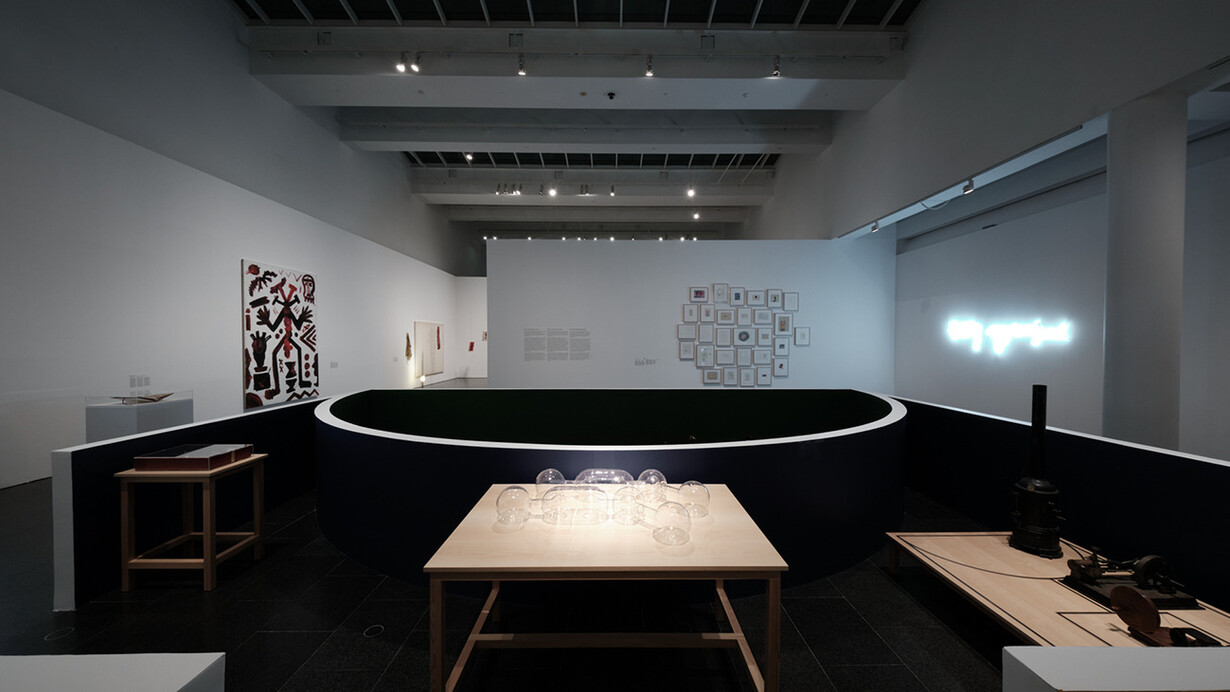
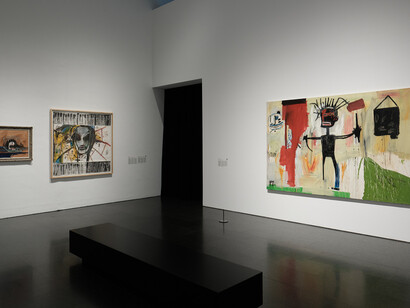
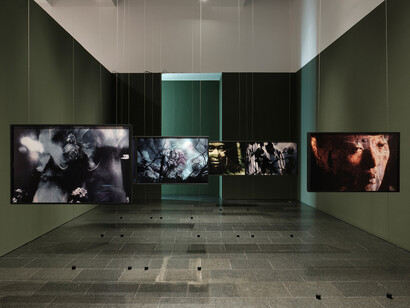
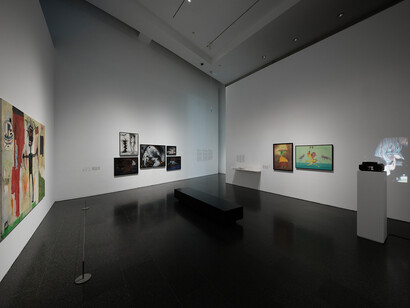
The new presentation of the MACBA Collection, which forms part of the museum’s Year Thirty celebrations, explores the emergence of a porous being ready to spread its wings and unfurl its subjectivity as a liberating space. Eschewing a chronological approach, it revisits the works in the collection by striking up dialogues with new ways of being and acting in the world. It offers a plural gaze that reaffirms the collection as a growing, open, diverse and mutable murmur.
They fly in groups. Hundreds of thousands of birds moving in unison across the winter sky. Precisely choreographed, they twist and turn, swirl and swoop, forming vast pulsing swarms: the dance of the starlings. No one can predict what their next move will be—not even the birds themselves know where they will be flying in the next few seconds. The result is a perfectly synchronised aerial ballet. And it is with these unique aerial dances in mind that we have designed our direct, twofold approach to the MACBA Collection: celebrating its thirtieth anniversary while also reflecting on contemporary processes of subjectivation. Echoing how a flock of starlings’ synchronised moves conjure up a billowing cloud of ever shifting images—a display known as a murmuration—the works in the collection also adjust and regroup with each new presentation, revealing different nodes or maps of meaning.
The celebration of MACBA’s thirtieth anniversary is an apt moment to take stock and look back over how the museum’s past has shaped its present, as well as a welcome opportunity to appreciate how it has evolved. This is not only a tribute but also a critical reassessment of the interwoven threads that have fashioned the museum we know today. From the outset, the MACBA Collection has gradually taken shape by embracing the challenges of its contemporaneity and taking the necessary risks to become a platform for bold, politically engaged practices. Year on year, it unfolds like a growing murmuration, a constellation of voices emerging from the past to produce a polyphonic resonance with infinite, boundless and diverse ambitions.
Although this introduction forms part of our thirtieth anniversary celebrations, the exhibition itself is not a commemorative survey but a show with its own identity. This particular murmuration of the collection is a choreography of the contemporary subject. Eschewing a chronological narrative, the exhibition is structured around connective nodes that explore ideas of the subject as a malleable entity whose identity is constructed not in isolation but collectively, in dialogue with shared experiences, social struggles and intercultural contexts. Intertwined and constantly shifting existences are the focus of many works in the MACBA Collection and offer a range of plural, flexible and dynamic perspectives.
Here, then, we explore the concept of the hybrid subject, which challenges rigid identities fixed by categories such as gender, race, nationality or class. This hybridisation flows from ongoing interactions between different worlds and, like birds in collective flight, lets us present works that evoke a self that has been forged organically through community and nature, without neglecting the vital role played by sacred relationships with spiritual worlds. The experiences of dreaming, play and ritual will be key to portraying an identity that connects with the invisible, transcendental dimensions of existence, and even with delirium as a source of strength.
To tie in with this exhibition, three delocalised works are each being presented in a primary or secondary school in Barcelona. These pieces, by Alán Carrasco, Dora García and Tanit Plana, feature in the latest edition of MACBA’s Out from reserve programme, which works with Barcelona City Council to place works from its contemporary art collection in educational establishments across the city.