English
 Español
 Français
 Deutsch
 Italiano
 Português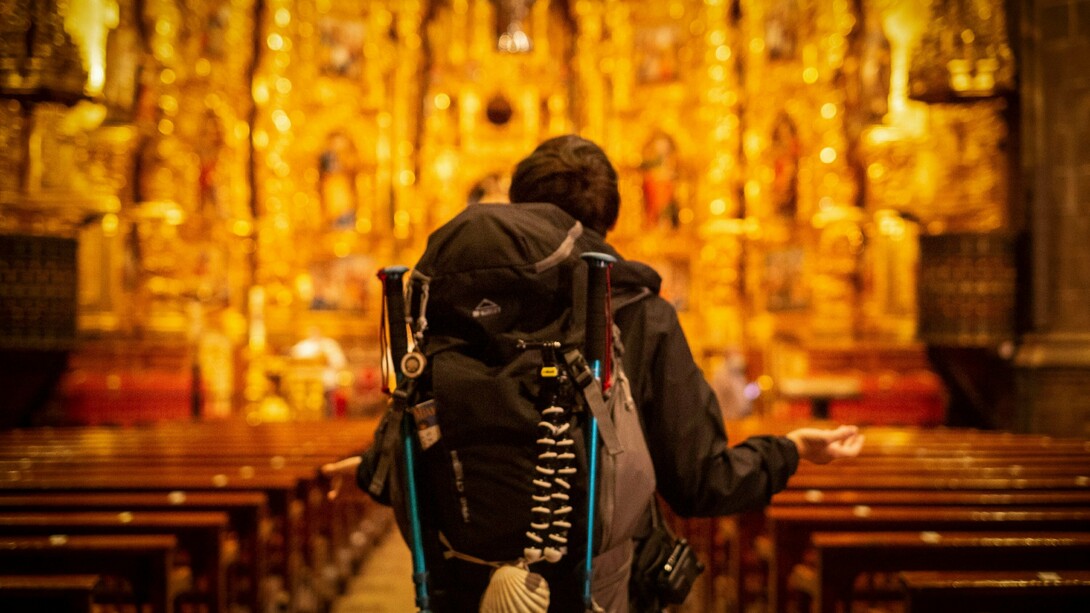
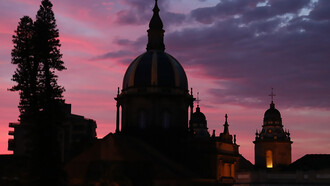
The tourist and the pilgrim stand in the same cathedral, yet inhabit different universes. One collects an image for later display. The other kneels in the presence of something that annihilates and rebuilds them.
We have trained ourselves to ask the wrong question when it comes to luxury travel. Not "Where should I go?" but "Who will I become?" This shift—from destination to ongoing growth, from experience to excellence—recovers what luxury has always meant beneath its corrupted surface: real abundance is that which enables us to be more fully human1.
Excellence is not achievements set in marble. Excellence is a living commitment to perpetual becoming—what the Greeks called arete2, that quality of reaching always toward one's highest nature. Travel, when approached with this intention, becomes the most potent catalyst for such transformation. Not because it “entertains” us, but because it unmakes and remakes us.
Redefining luxury: from consuming to creating excellence
We have mistaken luxury for its trappings. The Egyptian cotton sheets. The Michelin stars. The private villa with infinity pools dissolving into pure blue horizons. These are pleasant, certainly, but they represent luxury's shadow rather than its substance. They easily become mere transactions—something we purchase and consume, leaving us fundamentally unchanged and unchanging.
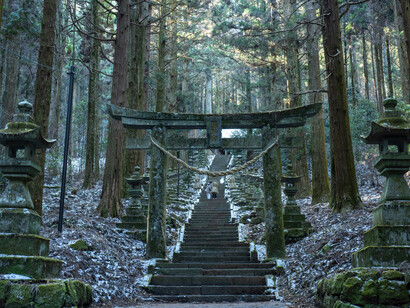
Consider two travelers in Kyoto. One photographs temples between courses at exclusive restaurants, collecting moments like stamps in a passport. The other rises before dawn to sit zazen at a neighborhood monastery, struggles with the uncomfortable silence, but then gradually comes to perceive how attention itself can be refined into an art form. Both have spent considerable sums. Only one has invested in excellence.
The pursuit of excellence transforms luxury from acquisition into aspiration. It’s not the question "What can I afford?", or, worse, “What will others think of me?” Instead, it’s "Who am I becoming?" and “What can I now make with this to make my own contribution to the world?” This shift can transform our entire relationship with travel. The finest hotels and meals become not ends in themselves, but conduits that allow us to focus on the inner work, which can then elevate the work we bring to the physical world, in an ongoing spiral of creative expansion.
Excellence in travel means curating journeys that refine character as deliberately as a sommelier refines a palate. It means choosing challenge over comfort when growth demands it, seeking depth and breadth, and measuring wealth by creation rather than accumulation.
The architecture of transformative travel
Most trips are designed to please and content us. Transformational travel is designed to push us to become better versions of who we can be, to awaken capacities lying dormant beneath the sediment of routine. This requires a fundamentally different architecture.
Where conventional travel offers activities—zip-lining through cloud forests, wine tasting in Bordeaux caves—excellence-oriented travel requires participation and co-creation. You don't merely taste wine; you learn the patience of the vintner waiting years for a vintage to mature, and carry that patience into your own creative work. You don't simply take stock photos of Machu Picchu; you hike and grapple with the physical limits that reveal mental ones, and discover what lies beyond both.
The shift from spectator to co-creator is crucial. Research on transformative travel experiences3 indicates that such journeys can significantly alter travelers' values, worldviews, and behavioral intentions, leading to lasting personal development. In a medieval workshop in Florence, you might observe a master craftsman restoring a fresco using techniques unchanged for centuries—the patience of layering pigments, the reverence for materials, the absence of hurry. You return home not with photographs of the Uffizi, but with a transformed understanding of your own creative work. That artisan's devotion to excellence over efficiency becomes the blueprint for your novel, your startup, your approach to design. You become not a spectator of mastery, but someone who carries its principles into your own making.
This requires intention at every stage. Before departure, we clarify what excellence we're pursuing—whether courage, creativity, compassion, or wisdom. During the journey, we build in reflection: journaling at dawn, silent walks, conversations that probe beneath surface politeness. We seek guides who are teachers and accommodations that foster contemplation, not distraction.
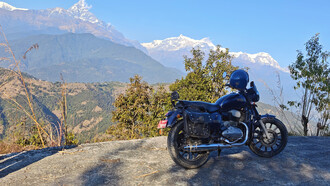
The internal dimension matters more than the external spectacle. Yes, the Himalayas possess a grandeur that stops the breath. But the true transformation occurs when that grandeur cracks open something calcified within us—a narrow conception of possibility, perhaps, or the illusion that we're separate from the vast processes of nature. The mountains become mirrors showing us our own potential magnitude.
Excellence as moral and personal development
Travel at its best is ethical education in the form of adventure. This is travel that places us in circumstances where our default assumptions fail, where we must question inherited certainties and examine the foundations of our values.
Research indicates that [intentional travelers report greater self-awareness and commitment to social impact4 years after their experiences. This is excellence as moral refinement. Travel confronts us with difference—not the sanitized difference of cultural performances, but the genuine strangeness of other ways of being. In that confrontation, we develop virtues that elevate us: the humility to recognize our perspective as partial, the courage to question our certainties, the wisdom to perceive universal humanity beneath cultural particularity, the empathy to feel the legitimacy of worldviews radically unlike our own.
The challenges matter. Swimming in bioluminescent waters is beautiful; swimming to a remote village to deliver medical supplies builds character. Luxury becomes not the absence of difficulty but the presence of meaningful struggle—obstacles that demand we surpass our previous limits.
Further, a deep connection to the place can serve as moral tutelage. Spending time in nature5 has been shown to reduce stress and promote healing and wellness. Studies indicate that as little as two hours per week6 in natural environments substantially increases reports of good health and psychological well-being. This connection between nature immersion and human flourishing reminds us that excellence isn't achieved in isolation from the world, but through deeper engagement with it.
The enduring legacy of excellent travel
The best test of transformative luxury is its half-life. Ordinary experiences fade like the sun on skin—pleasant while they last, invisible within weeks. A journey oriented toward excellence continues radiating through your life, altering choices years distant from the original catalyst.
A month of silence at a meditation retreat might seem the opposite of luxury. Yet those who undertake such journeys often describe them as the most luxurious experience of their lives—not despite the austerity, but because of the spaciousness it created within. That spaciousness persists. Years later, they still access the stillness learned there, still carry the clarity earned through weeks of confronting their own minds.
Integration is where transformation solidifies. The insights gained while trekking alone through Patagonia will mean little if they dissipate upon returning to familiar patterns. Excellence requires embodiment—translating peak experiences into daily practice, letting travel's revelations restructure ordinary life. Make that early morning discipline learned in Bali become a meditation practice maintained at home.
This is luxury as lasting wealth: not possessions that depreciate, but capacities that compound. Each excellence journey builds on previous ones, creating an upward spiral of development. You become someone capable of more beauty, deeper relationships, and greater contribution. The ripples extend beyond yourself—into your family, your community, your work. Excellence, like all virtue, can be contagious.
Conclusion
The ultimate luxury is not what we acquire, but who we become. True luxury travel invites us into that ancient, essential project: the cultivation of excellence through continuous growth. It asks us to be brave enough to change, humble enough to learn, and committed enough to practice. This is an abundance of the highest order—an inheritance we cannot lose which death cannot diminish.
Notes
1 A quest to become fully human at Meer.
2 Ancient Greek definition of arete.
3 Transformative experiences in tourism: where, when, with whom, and how does tourists' transformation occur? at Frontiers.
4 How Travel Sparks Personal Development: 7 Life-Changing Lessons With Erin Lewellen at The Thought Card.
5 Ecopsychology: How Immersion in Nature Benefits Your Health, published at the Yale School of the Environment.
6 The mental health benefits of nature: Spending time outdoors to refresh your mind at Mayo Clinic.