English
 Español
 Français
 Deutsch
 Italiano
 Português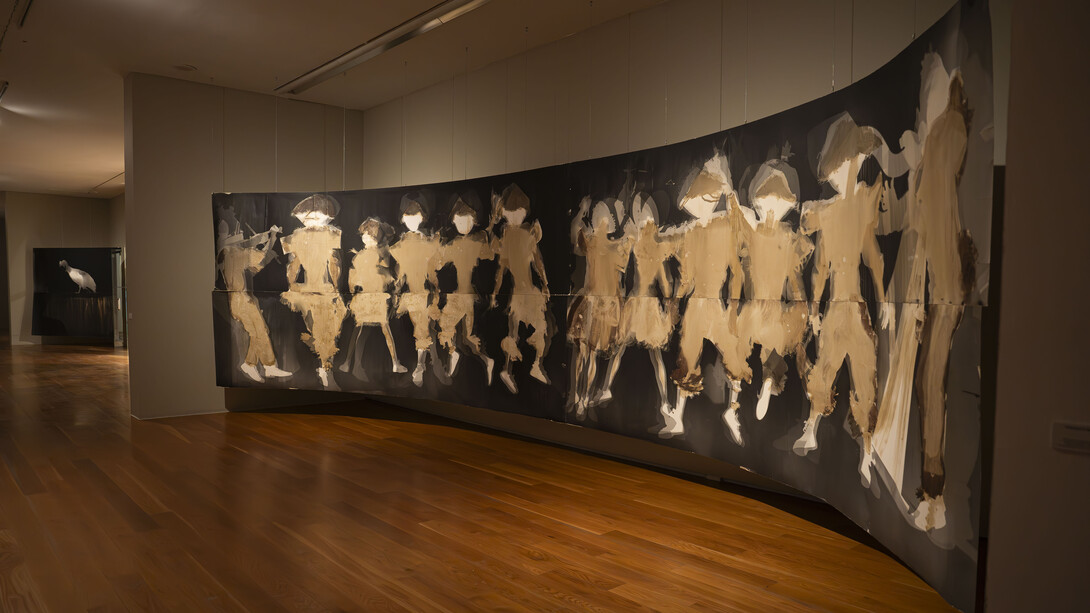
Regarded as an essential artist in the exploration of experimental photographic techniques and in the representation of the relationship between humanity and nature, Roberto Huarcaya (Lima, 1959) has developed an artistic practice focused on the use of large-format photograms, created without a camera, which capture the essence of various Peruvian landscapes and figures through the direct contact of natural elements with photosensitive paper. This approach has allowed him to create emblematic series such as Amazogramas, Andegramas, and Océanos, which have been exhibited in major institutions and international festivals, including the Venice Biennale, Paris Photo, and Les Rencontres d'Arles.
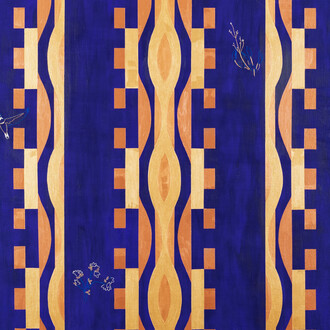
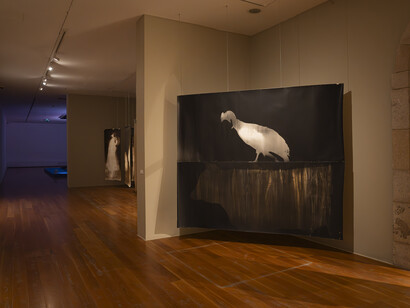
Huarcaya appropriates the photogram—a photographic technique predating the invention of the camera—to produce works on a monumental scale. These records, created using processes such as cyanotype or Van Dyke brown, are the result of extensive expeditions across various territories in Peru. The artist unrolls large sheets of photosensitive paper, capturing the physical traces of natural and cultural elements: leaves, branches, roots, stones, ritual objects, masks, garments, musical instruments, or the bodies of the portrayed subjects. This handcrafted process, which challenges the immediacy of contemporary digital imagery, articulates an alternative approach to photography. It is not about capturing a single moment but rather allowing time, matter, and light to interact with the surface over hours, sometimes days, in a gesture that connects photography with sculpture, performance, and ritual. The viewer is confronted with bodies and landscapes that have not simply been photographed but are, in fact, literally touched by the image. This strategy questions conventional logics of framing, composition, and perspective, shifting the gaze towards a form of knowledge that is sensitive, corporeal, and immersive.
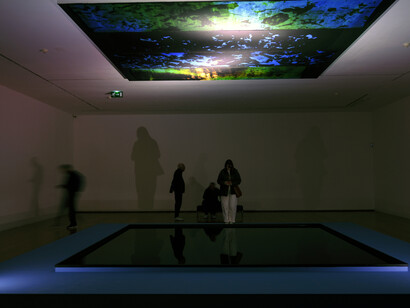
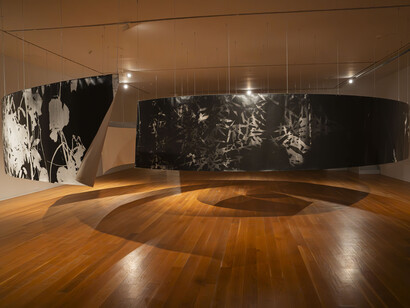
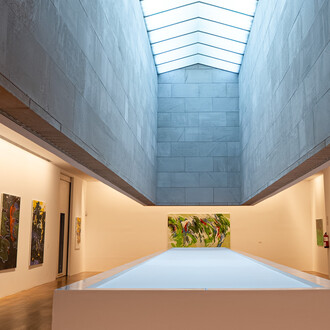
![Alberto Ardid, Hay un lugar [There is a place], exhibition view. Courtesy of MARCO](/attachments/a5de2fceff4f455f7d933f2aee54b5c7679fcbf3/store/fill/330/330/2d9a1e586b2cace3f02e7f4d8ba7dcb1948945c92f1ec82fd5f5be19b4c4/Alberto-Ardid-Hay-un-lugar-There-is-a-place-exhibition-view-Courtesy-of-MARCO.jpg)