English
 Español
 Français
 Deutsch
 Italiano
 Português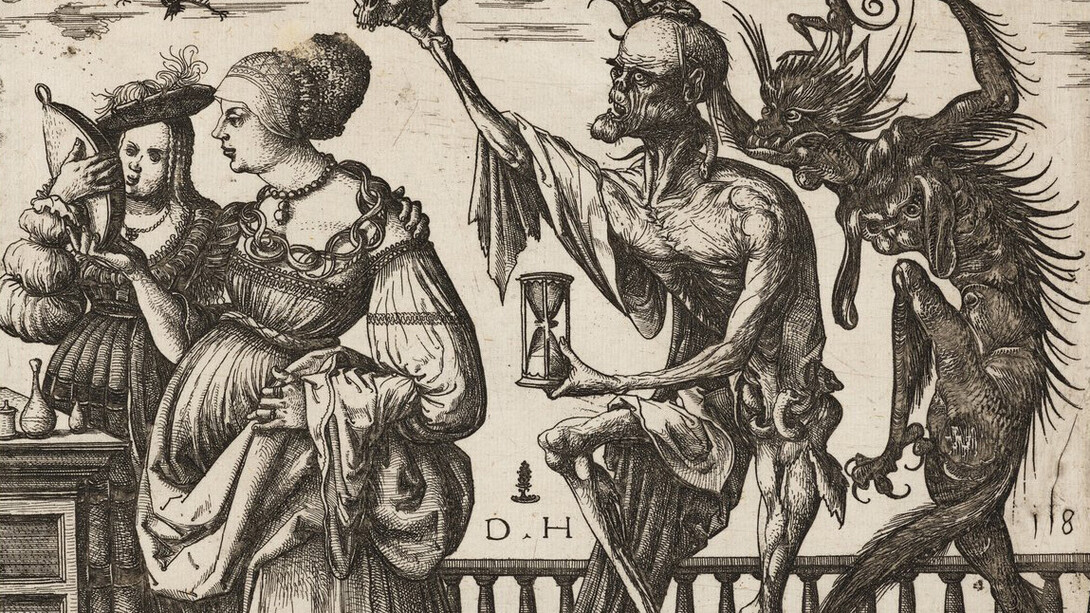
The German artist Georg Baselitz (1938, Deutschbaselitz) is known around the globe for his monumental paintings and sculptures, and his uniquely visionary prints. What is less well known about him, however, is that he is also a passionate art collector with a very particular taste: for over sixty years, he has been exclusively pursuing and purchasing Mannerist prints. The works he has amassed constitute one of the most significant collections of Mannerist prints in the world.
Prints by the generation of artists active in the mid-sixteenth century are presented in our exhibition from the perspective of Baselitz the artist-collector, evoking the main focuses of his collection. His specialism as a collector is not unrelated to his creative credo as an artist. Throughout his career, Baselitz has stood outside the prevailing trends and categories, and he shares this autonomous attitude with the Mannerists. Mannerism shifted away from the harmonious forms of the Renaissance and introduced a revolutionary aesthetic based on the unusual and the irregular, whose bizarre imagery and bold visuality are what captivated Baselitz. Since his youth, he has devotedly collected Mannerist prints – the genre that for its directness he considers the most fundamental and original.
In the 1960s, when Baselitz began to purchase Mannerist prints, hardly anybody else was interested in them. The popularity of Mannerism declined from the seventeenth century onwards, and works from that period were largely ignored for hundreds of years. Mannerism was not reassessed by art history until the second half of the twentieth century – Baselitz was therefore far ahead of his time, and only today has the zeitgeist caught up in its appreciation of the complex phenomena of Mannerism.
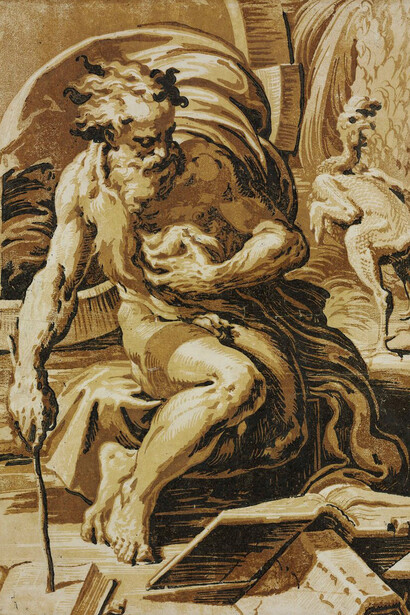
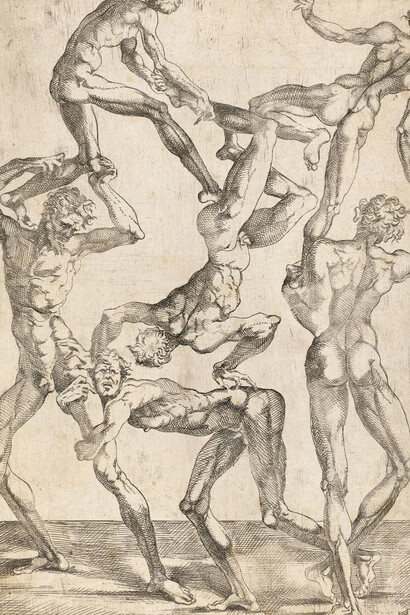
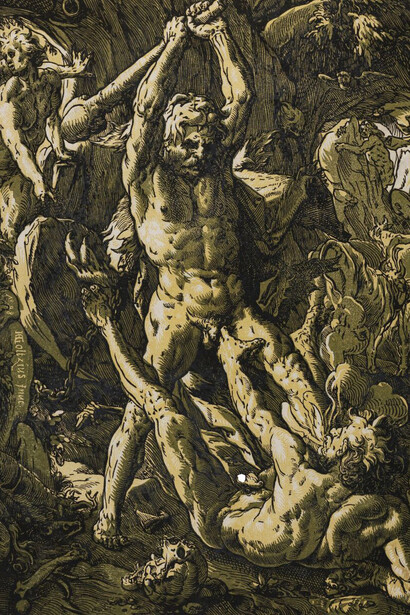
The exhibition focuses on the pieces that mean the most to Georg Baselitz, whether for their quality, rarity, exceptional technique, or remarkable provenance. Baselitz’s favourite printmakers are prominently featured: Fontainebleau etchers (Antonio Fantuzzi, Léon Davent, Geoffroy Dumonstier, Juste de Juste), Italian Mannerists (Parmigianino and Andrea Schiavone), and chiaroscuro woodcutters (Ugo da Carpi, Antonio da Trento, Domenico Beccafumi). Works by outstanding Netherlandish (Hendrick Goltzius) and German artists (Lucas Cranach the Elder, Sebald Beham, Hans Baldung Grien) are also on display.
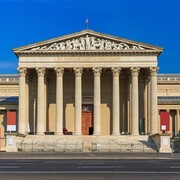
The mere act of displaying Baselitz’s Mannerist print collection at the Museum of Fine Arts, Budapest provides an opportunity for two collections to meet: a public one, safeguarding the collective cultural memory, and a private one, embodying the personal dispositions of the contemporary artist. The works from the Georg Baselitz Collection are accompanied by pieces from the Museum of Fine Arts, Budapest’s Collection of Prints and Drawings, which also has rich holdings of sixteenth-century prints. By presenting them in parallel, we aim to shed light on the similarities and differences between the characters, compositions, and emphases of the private collection and the museum collection.
We would like to express our heartfelt thanks to Georg and Elke Baselitz and Daniel Blau for generously lending works from the Baselitz/Blau Collection, for supporting the exhibition, and for their close cooperation in its realisation.