English
 Español
 Français
 Deutsch
 Italiano
 Português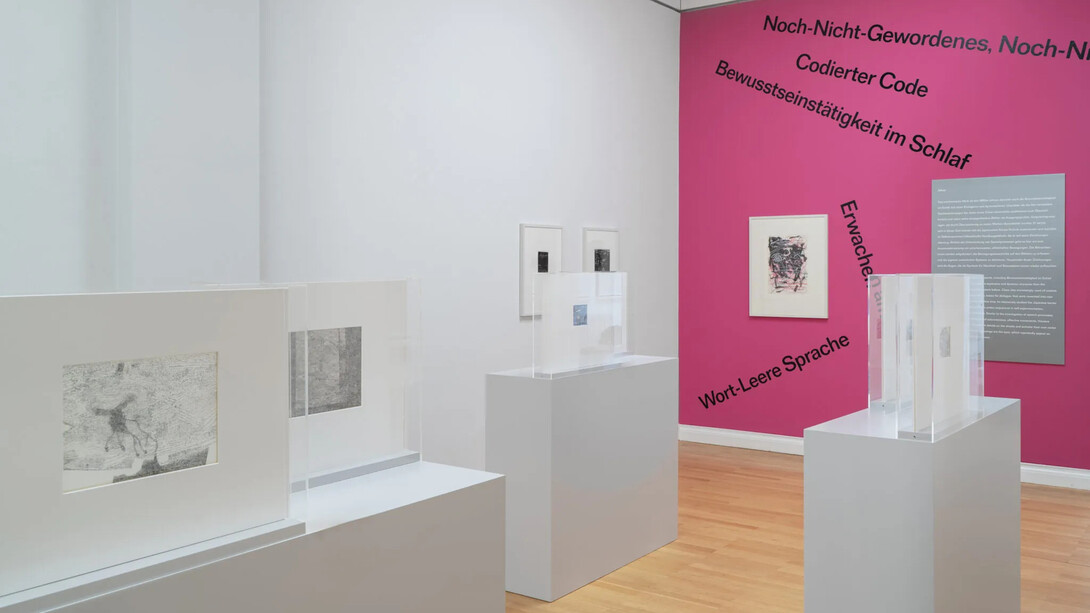
Carlfriedrich Claus is one of the most important representatives of international visual and phonetic poetry. In the 1950s, he began examining language and writing in terms of their tonal and visual content, based on his first experimental poems. At the time, writers and artists around the world were exploring similar questions, and a network of like-minded individuals developed, in which Claus was a highly regarded figure despite being isolated in the German Democratic Republic.
Claus understood his life, and with this also his artistic work, as a continuous self-experiment. He created his first acoustic works in the late 1950s as an extension of his written sound notations. His speech exercises, in which he superimposed his own voice with ambient noises, broke with traditional articulation techniques. At the same time, he produced intricate drawings that visualise the process of speech and vibrations in the body. From the 1960s onwards, Claus processed his theoretical reflections on phonetics and human communication in the form of his speech sheets. He always considered these works to be a distinct form of literature. Combining symbolic elements with legible and illegible writing, they stimulate viewers’ thought processes.
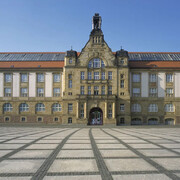
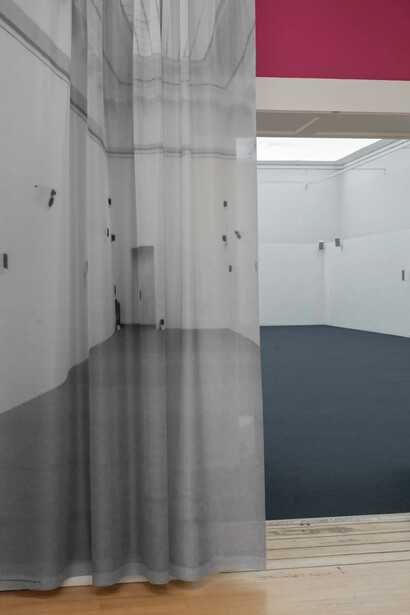
After a break, Claus only continued his work on acoustic literature in the 1980s. Independent of the written or spoken word, he investigated pre-linguistic processes – the sounds that arise before articulation and thus capture emotional states. Through this work, he explored themes such as human consciousness and subconsciousness, both in his written pieces and in his sound processes. His self-experiments were intended to continue to stimulate the audience and encourage self-reflection. In 1995, he developed the Lautprozessraum (Sound-Processing Room), a sound installation at the Kunstsammlungen Chemnitz that allowed visitors to control sound events independently through their movements.
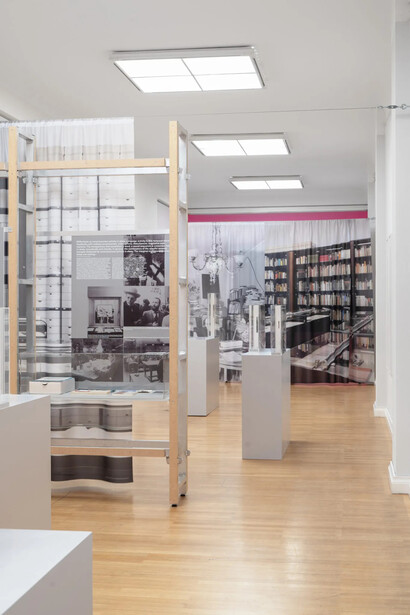
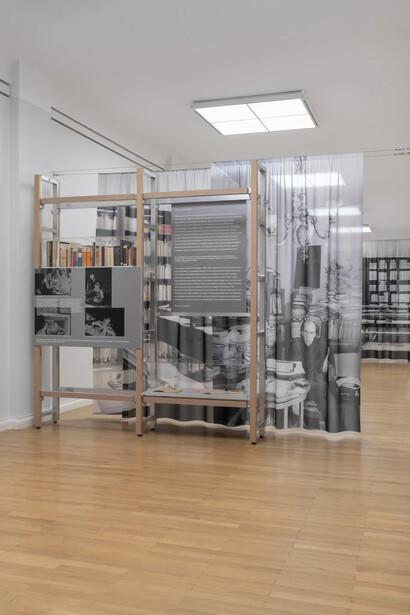
To mark the thirtieth anniversary of this installation, it is being reconstructed as part of the exhibition Carlfriedrich Claus. At the Edge of Now at the Edge of Here. The sound pieces are complemented by early texts, drawings and portfolios spanning forty years of the artist’s creative work. Documents, books and photographs from the Carlfriedrich Claus Archive also offer a comprehensive insight into the artist’s vast cosmos of ideas.