English
 Español
 Français
 Deutsch
 Italiano
 Português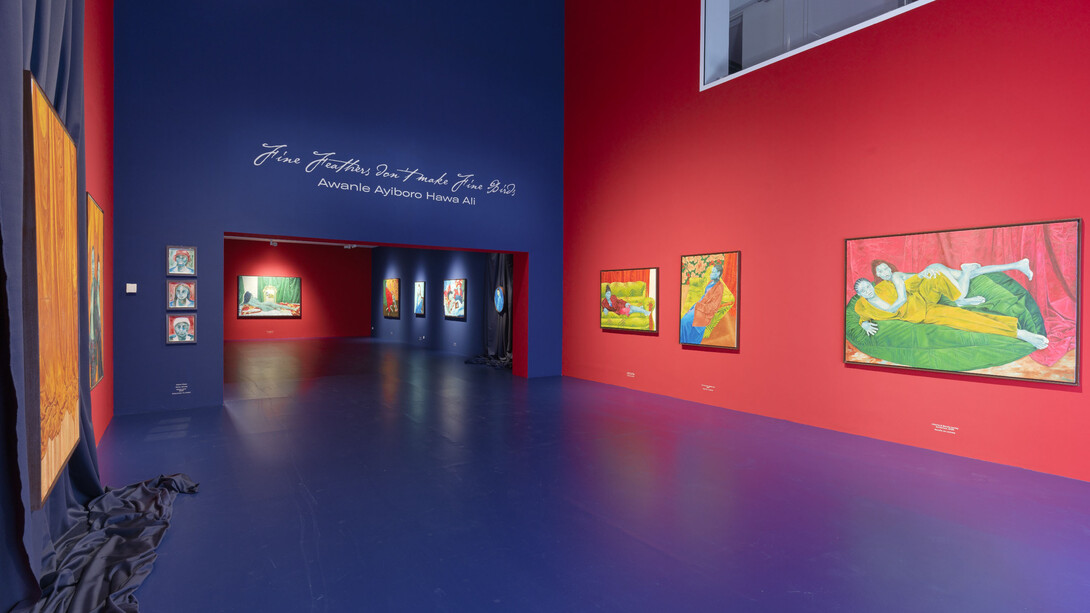
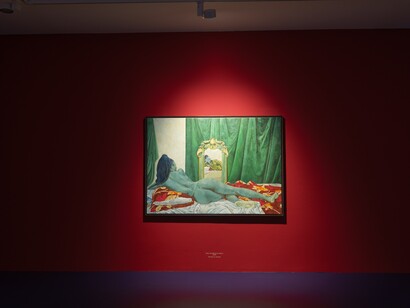
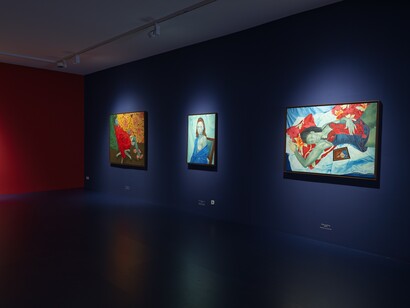
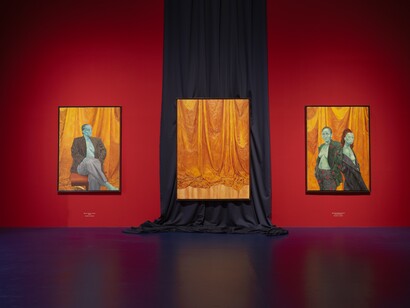
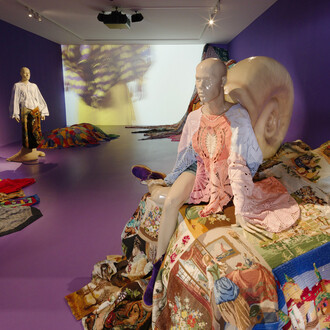
Awanle Ayiboro Hawa Ali's series of paintings entitled Fine feathers don't make fine birds addresses the lives of two marginalized groups of young women in Accra: the "Kayayei girls," female porters who migrated from northern Ghana, and the "Girly Girls," sex workers on Oxford Street. Through her narratives, Ayiboro questions themes such as power, gender, survival, and agency, as well as Ghana's entrenched social norms, and raises questions about class, morality, and representation
Ayiboro's protagonists exist at the intersection of societal exploitation and economic contribution. Despite persistent systemic prejudices and limited opportunities for women in Ghana, both groups play a vital, yet often overlooked, role in the country's economy. What does it mean for these women to be both exploited and indispensable? How does their contribution alter the narrative of who holds power and agency within Ghana's socioeconomic landscape? At the heart of Ayiboro's work lies an intense tension: these women's roles are bound by societal taboos that restrict them, yet they carve out spaces for survival and self-realization.
Ayiboro also draws provocative parallels to the history of the Baroque. Her opulent sets claim the narrative for themselves and draw attention to the fact that the splendor of the Baroque – its excess and decadence – was inextricably linked to the colonial exploitation of Africa, including the Gold Coast.
Ayiboro's work becomes an act of reclaiming, making visible the colonial history embedded in art and culture. By anchoring her depictions of contemporary Ghanaian women within this historical framework, she positions their stories as central to both past and present, making a powerful statement about resilience, erasure, and the enduring legacy of exploitation and beauty.