English
 Español
 Français
 Deutsch
 Italiano
 Português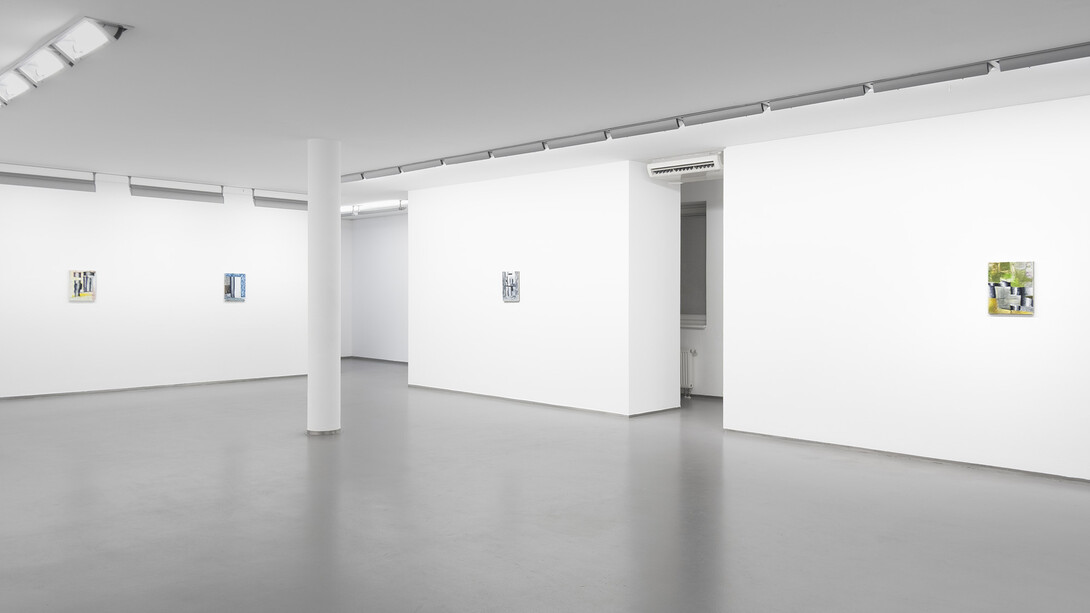
If I had to write a contemporary press text about my painting, it might read something like this:
René Luckhardt’s works do not combine painting with drawing, video, or photography, nor are they based on technological or cybernetic experiments. Luckhardt has never developed a painting machine. He does not explore conceptual paradigms, nor does he create luxurious icons or elaborate tableaux. He does not draw the viewer into a metaphysical dialogue with the history of visual culture. In his art, he does not engage with themes, nor does he accompany the democratization of media at the threshold of the digital age. Furthermore, in his works he ignores the psychological currents underlying narratives of progress, and so on.
But what, then, do I actually do? Can I even call my works “works” (dt. Arbeiten)? Of course, I know that the word is readily and frequently used in art. But what does “work” (dt. Arbeit) have to do with painting? We look at paintings with different expectations and for various reasons. But surely not because we enjoy looking at toil, hardship, and strain, or at something made for the money. In English, there is “work” or “piece,” which is not much better—but there is also the word “painting.” It refers at once to the painted object, the act of painting, and painting as a practice.
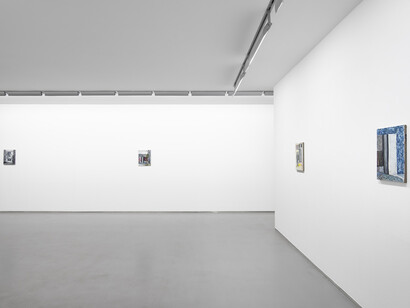
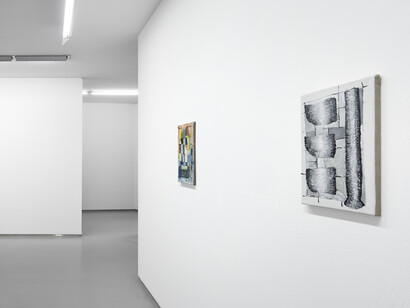
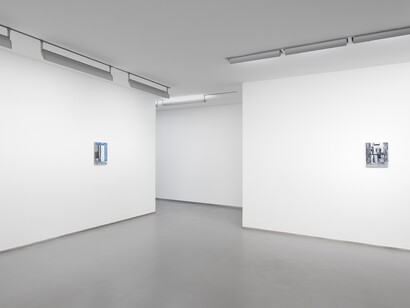
I paint flower still lifes—a very specific flower still life, or the flower still life as such? Who knows. In any case, I paint it as seen: through a windowpane that may not always be well cleaned, reflected in the window frame, shifted, anamorphically distorted beyond the canvas, or fragmented so that sometimes we recognize only a morphed vase or its shards … The motif is therefore in flux and can no longer be clearly grasped, yet it is most certainly there.
(Text by René Luckhardt)