English
 Español
 Français
 Deutsch
 Italiano
 Português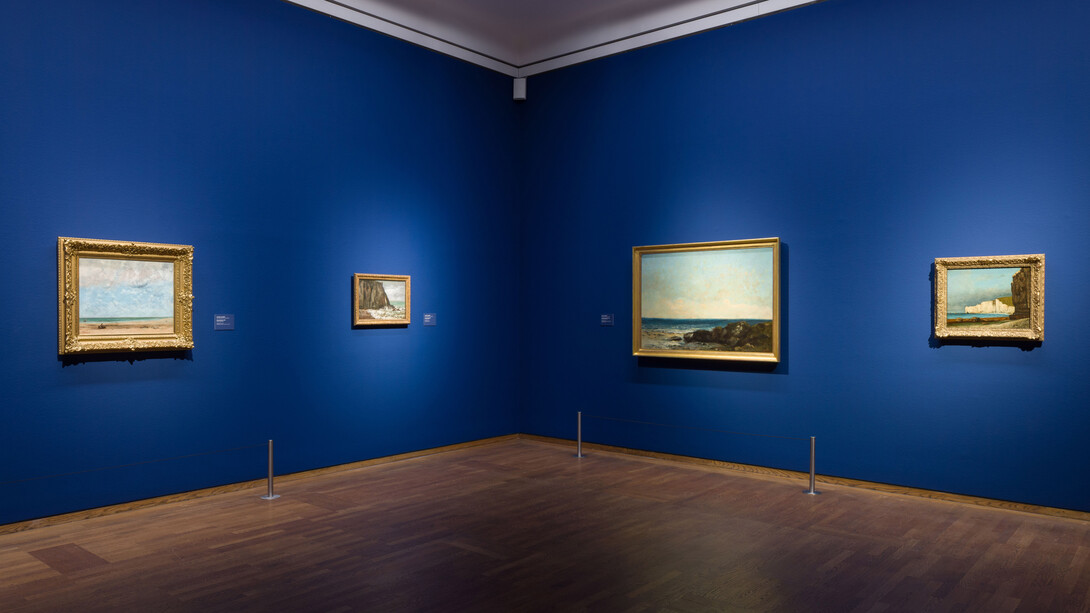
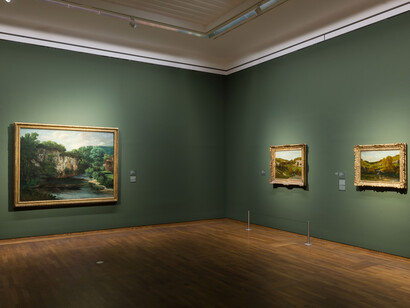
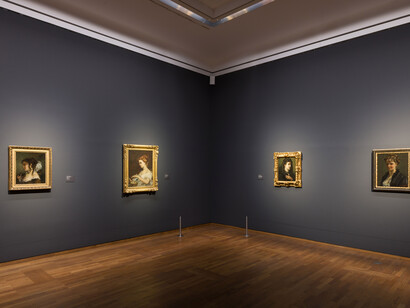
With this large-scale retrospective presentation, the Leopold Museum is dedicating the first extensive monographic exhibition to the exceptional French artist Gustave Courbet (1819–1877) in Austria. Around 130 exhibits – including 90 paintings and 20 graphic works from all the periods of the artist’s oeuvre, as well as a large number of archival materials – afford a comprehensive overview of the painterly and graphic work of this pioneer of realism who, in his ground-breaking portraits, nudes, landscapes and still lifes, broke with the idealizing conventions of 19th-century art in a radical manner.
After years of intense conceptual preparations and strategic networking, the presentation “Gustave Courbet. Realist and rebel” has finally become a reality, and we are delighted to show our visitors this highly comprehensive solo exhibition. In light of the extraordinary extent of the artist’s oeuvre, we were tasked with making a careful selection that would be representative of all the periods of his work and accommodate all the facets of his art, both formally and in terms of content, in his roles as a painter, draftsman and political player. Gustave Courbet was an out standing avant-gardist who kept defying conventions.
(Hans-Peter Wipplinger, director of the Leopold Museum and curator of the exhibition)
Gustave Courbet recognized early on that scandals helped his success. He revolutionized the pictorial language of 19th-century art by making the visual reality of his time the subject of his art. Instead of historical and mythological subjects, he presented scenes from everyday life. He showcased ordinary people from his im mediate environment – farmers, workers and other townsfolk – in monumental formats and with a presence hitherto reserved to heroic figures. To Courbet, real ism did not merely mean rendering reality but rather a programmatic orientation on the present, a deliberate dispensation with any kind of idealization and a near pastose manner of painting.
An early main work epitomizing this artistic re-orientation, and an indisputable highlight of the exhibition, is the painting After dinner at Ornans (1849, Palais des Beaux-Arts de Lille). The large-format depiction of an everyday scene from his hometown received a prize at the Paris Salon and was acquired by the French government. It was the first time that an unspectacular motif, depicted on the scale of a large-format history painting, won an official distinction. That this painting, which is rarely loaned to exhibitions, is shown in Vienna underscores the importance of this presentation which unites numerous eminent international loans.
Courbet’s artistic position is closely linked to his under standing of autonomy. In his work The meeting or bonjour Monsieur Courbet (1854, Musée Fabre, Montpellier), the painter greets his patron with confidence and on an equal footing, formulating his claim for independence. When too few of his works were included in the 1855 World’s fair in Paris, he responded by building his own exhibition pavilion. This step marks a turning point in the relationship between artists and institutions, and is considered a milestone in modern exhibition practice.
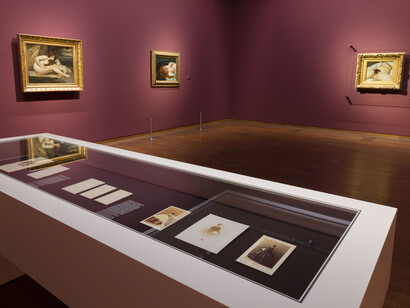
The radicalness of his realism is further apparent in his painting The origin of the world (1866). With his direct, un idealized rendering of the corporeality of this female nude, Courbet broke with traditional iconography and defied the moral conventions of his time. The work, which has been housed by the Musée d’Orsay since 1995 and which is now being shown only for the fourth time outside of France, is among the central exhibits of this Vienna retrospective.
Courbet’s manner of depiction marks a decisive break with romanticizing painting. Through his intense use of the palette knife, he composed his pictures from various paint layers, one applied on top of the other, in an almost sculptural manner, and thus created a radically realistic, close-up visual cosmos which, rather than being deceptively illusionistic, was aimed at making materiality tangible. It is precisely this unconventional technique and manner of representation that made Courbet a pioneer of modern painting.
(Niklaus Manuel Güdel, curator of the exhibition)
Courbet’s understanding of himself as an independent artist was also mirrored by his political activities. After the proclamation of the Third Republic in 1870, and especially during the time of the Paris Commune in 1871, he took on political responsibility in the cultural sector. Art and political commitment were closely linked in Courbet’s biography – in both areas, he was guided by his aspiration towards independence and his sense of social responsibility. Following the violent crushing of the Commune, he was arrested and later sentenced to paying exorbitant fines. His increasing political and financial isolation forced him into exile in Switzerland where he died in 1877 at the age of 58.
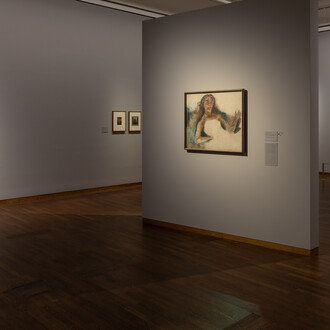
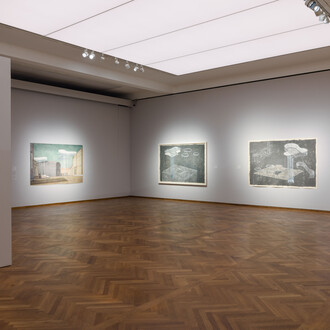
As early as 1873, Courbet had entertained the idea of presenting his works in the Danube metropolis in an extensive retrospective. He had high hopes for his appearance on the Viennese stage – hopes that were unfortunately not fulfilled during his lifetime. Now, more than 150 years later, it has finally been possible to realize Courbet’s ambitious wish for a comprehensive Vienna exhibition with this presentation at the Leopold Museum, which serves as an impressive reminder of his oeuvre’s continuous significance and relevance. Alongside his iconic chief works, the exhibition also focuses on aspects of his oeuvre that have received little attention up until now – including his drawings and defining pe riod in exile – and places these facets into an art historical context. The impres sive scope of the presentation ranges from early self-portraits, landscapes from his native Ornans, via hunting scenes, seascapes and depictions of grottos, to nudes and works created during his imprisonment and in exile. His drawings and graphic works are presented on a par with his paintings, and help to broaden our perspective of Courbet’s artistic practice.
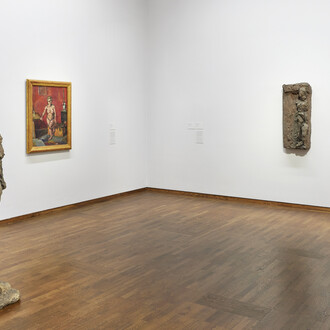
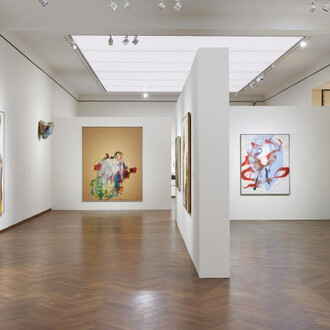
In the museum’s atrium, works by Yan Pei-Ming and Georg Baselitz enter into an imaginary dialogue with Courbet. The juxtaposition not only helps to understand Courbet’s technique and manner of painting but also underscores the current ness of this artist whose uncompromising understanding of autonomy and reality challenges art to this day.
The exhibition has been placed under the honorary patronage of Alexander Van der Bellen, Federal President of the Republic of Austria, as well as under the high patronage of the President of the French Republic, Emmanuel Macron, and the President of the Federal Republic of Germany, Frank-Walter Steinmeier.